



4 min readNew DelhiUpdated: Apr 14, 2026 06:33 PM IST
In Jharkhand’s Simdega, near the borders of Odisha and Chhattisgarh, a colonial-era administrative building has been turned into a museum, transforming a site once tied to authority into a space for memory, learning, and community engagement.
Reopened on March 7, 2026, it now houses the Simdega Heritage Centre cum Museum.

Located in the forested southwestern part of the district, the building carries a layered history. A photograph from 1947 shows it as one of the earliest sites in the region where the Indian tricolour was hoisted, marking the end of colonial rule.
“The districts of India are not merely administrative units shaped by governments,” said Dipankar Choudhary, secretary of the museum’s management committee, during the inauguration. “They embody distinct cultural and historical identities. In a country where local cultures are rapidly eroding, institutions like district museums become essential,” Choudhary added.
Where histories meet
Today, its rooms tell a different story.
The museum brings together colonial records and objects from everyday tribal life. Visitors can see bamboo tools, fishing traps, oil-pressing devices, and hunting instruments alongside archival documents. Curated with inputs from local communities, these artefacts reflect knowledge systems passed down through generations.
A recreated British-era courtroom offers a glimpse into colonial justice, while a small library provides space for reading and reflection. Together, these elements shift the building’s role—from administration to interpretation.
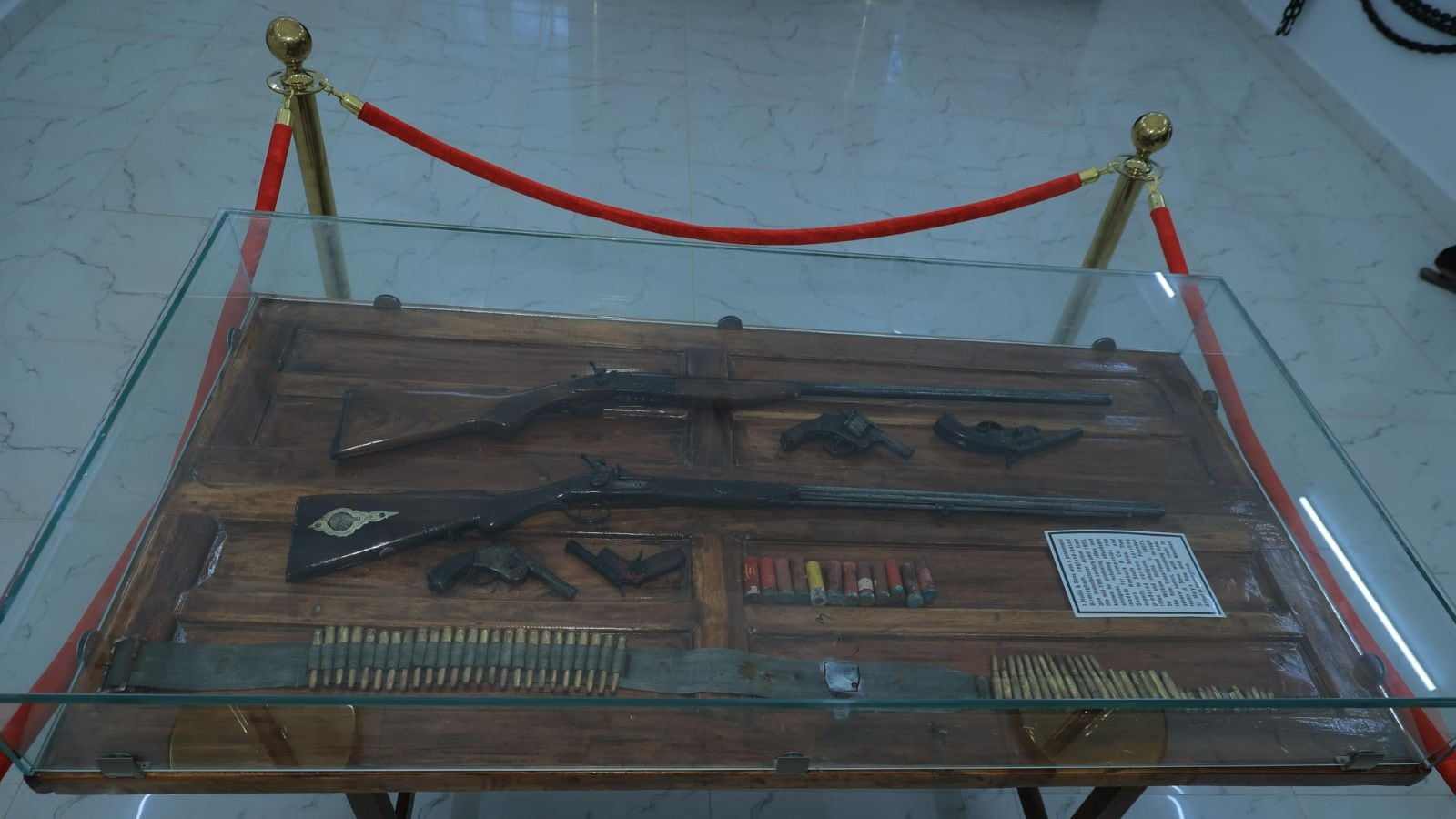 The Simdega museum has interesting exhibits such as guns, cartridges and a lot more from the colonial era. (Express photo)
This contrast is deliberate. On one side are official records and correspondence from the colonial period; on the other are the tools and traditions of the communities that lived through it. By placing these narratives side by side, the museum presents a fuller account of the region’s past.
Story continues below this ad
What sets the initiative apart is its community-led model. Local women from self-help groups manage the museum, with support from the Jharkhand State Livelihood Promotion Society. They guide visitors, maintain exhibits, and run a small café, making the space both a cultural centre and a source of livelihood.
The museum also encourages intergenerational exchange. Older residents explain traditional tools such as Sunum Patta and Kumni to younger visitors, many of whom are seeing them for the first time. These interactions help ensure that cultural knowledge is not only preserved but also understood.
Difficult past, remembered
The building’s history also reflects more difficult and painful memories.
Archival records from 1917 show that British officials stationed here coordinated the recruitment of tribal labourers during World War I. A letter dated May 28, 1917, attributed to E H Johnston, an Indian Civil Service officer and an Indologist, refers to funds requested for this effort.
Story continues below this ad
Many of these men were sent to Europe as labourers, tasked with digging trenches, laying tracks, and supporting wartime logistics. For many, it was their first time leaving home, and for families, their absence left lasting scars.
While colonial records document numbers and movement, they say little about lived experience. That history survives largely through oral traditions.
The museum displays a Mundari song that describes France not as a land of opportunity but of sorrow: “People who went to France say it is a very prosperous land, but there is no happiness there. Streams of blood have flowed from all sides.”
These songs, which are passed down over generations, preserve emotional truths absent from official archives.
Story continues below this ad
For decades, these parallel histories, archival and oral, remained separate. The reopening of this building begins to bridge that gap. Today, the building stands both as a reminder of the past and a space where history is reclaimed and retold. By bringing together official records and community memory, it allows both to coexist.
In doing so, it changes how history is experienced, making it lived, shared, and still unfolding rather than distant.



