



In the August 2021 floods that ravaged Madhya Pradesh’s Sheopur district, Jairam lost more livestock than most in his village of Lalitpura: 40 rabbits, 15 chickens, 13 goats, four cows, two buffaloes, and two calves, besides three homes. What he didn’t know then was that much of the compensation meant for families like his would never reach them.
While the money remains elusive, the case has been thrust into the limelight once more with the arrest of a tehsildar, Amita Singh Tomar, on allegations of irregularities. Tomar, a key accused in the case, had gained fame in 2019 after winning Rs 50 lakh on Amitabh Bachchan’s Kaun Banega Crorepati.

“We got only Rs 5,000,” Jairam’s wife, Urmala, alleged when The Indian Express visited their home. “Everyone in our family had to take up work; three children dropped out of school. We built a two-room house with loans taken from relatives.”
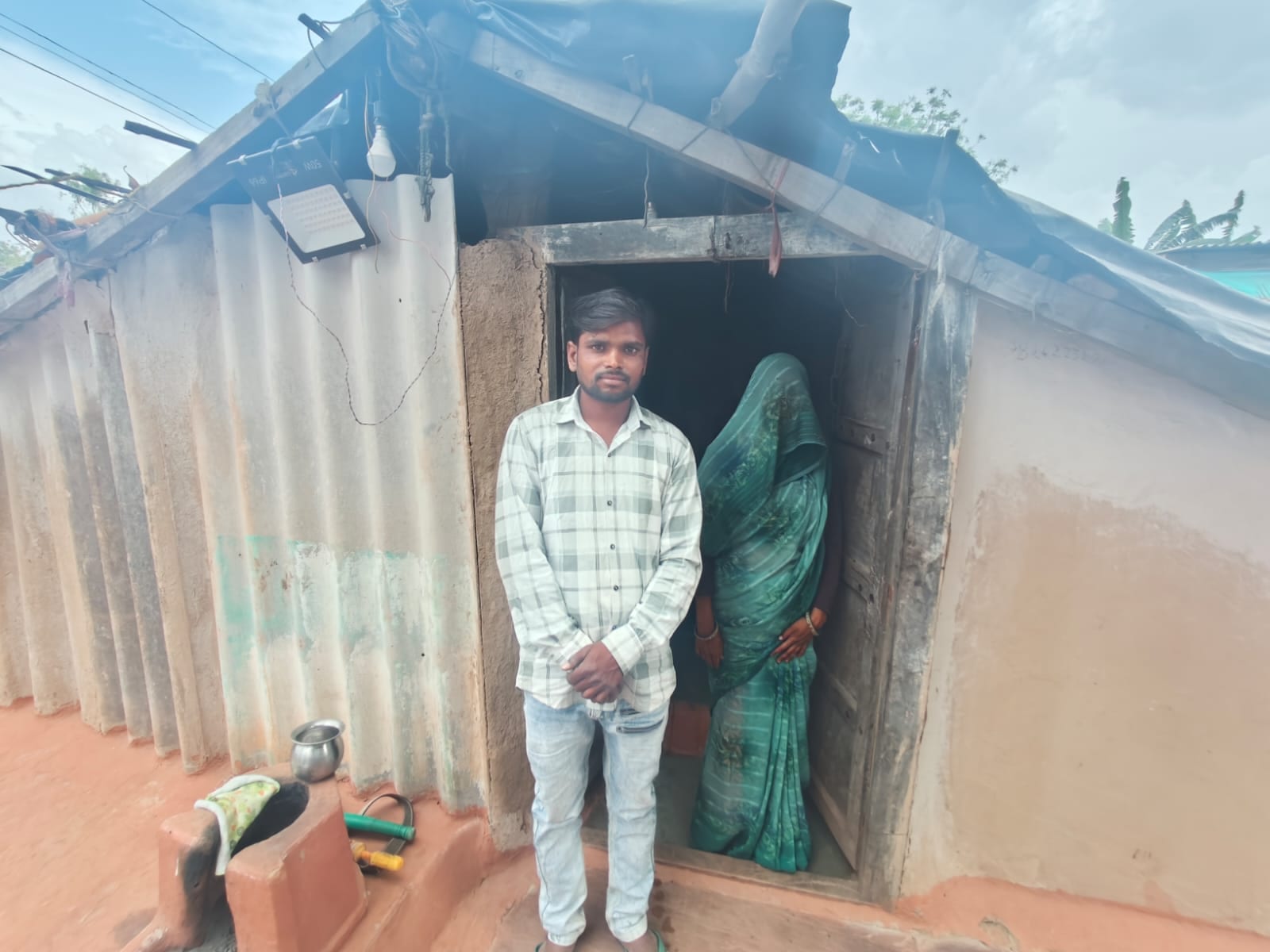 Vishnu Kushwaha and his wife live in a makeshift tin shed home after they did not receive compensation. (Express photo by Anand Mohan J)
Official records in Sheopur show 960 farmers were listed as beneficiaries in Badoda tehsil, with a modest Rs 2,40,68,720 allocated after the survey.
Investigators say much of the money never reached the beneficiaries and instead found its way into 127 bank accounts held by people with no connection to the flood victims – residents of towns as far as Shivpuri and Manpur, and, in some cases, relatives of the patwaris who prepared the compensation lists.
Tomar, who was arrested in March, is among 30 arrested in the case, with police alleging the involvement of a network of revenue officials siphoning money meant for farmers.
Of the Rs 2.4 crore allocated for 960 farmers, less than Rs 30 lakh meant for 133 reached the intended beneficiaries. The rest was allegedly funnelled into unrelated accounts – on average, relief meant for six farmers was pooled into a single account, then withdrawn in careful fragments to avoid detection.
Story continues below this ad
These transactions were allegedly cleared with Tomar’s digital credentials.
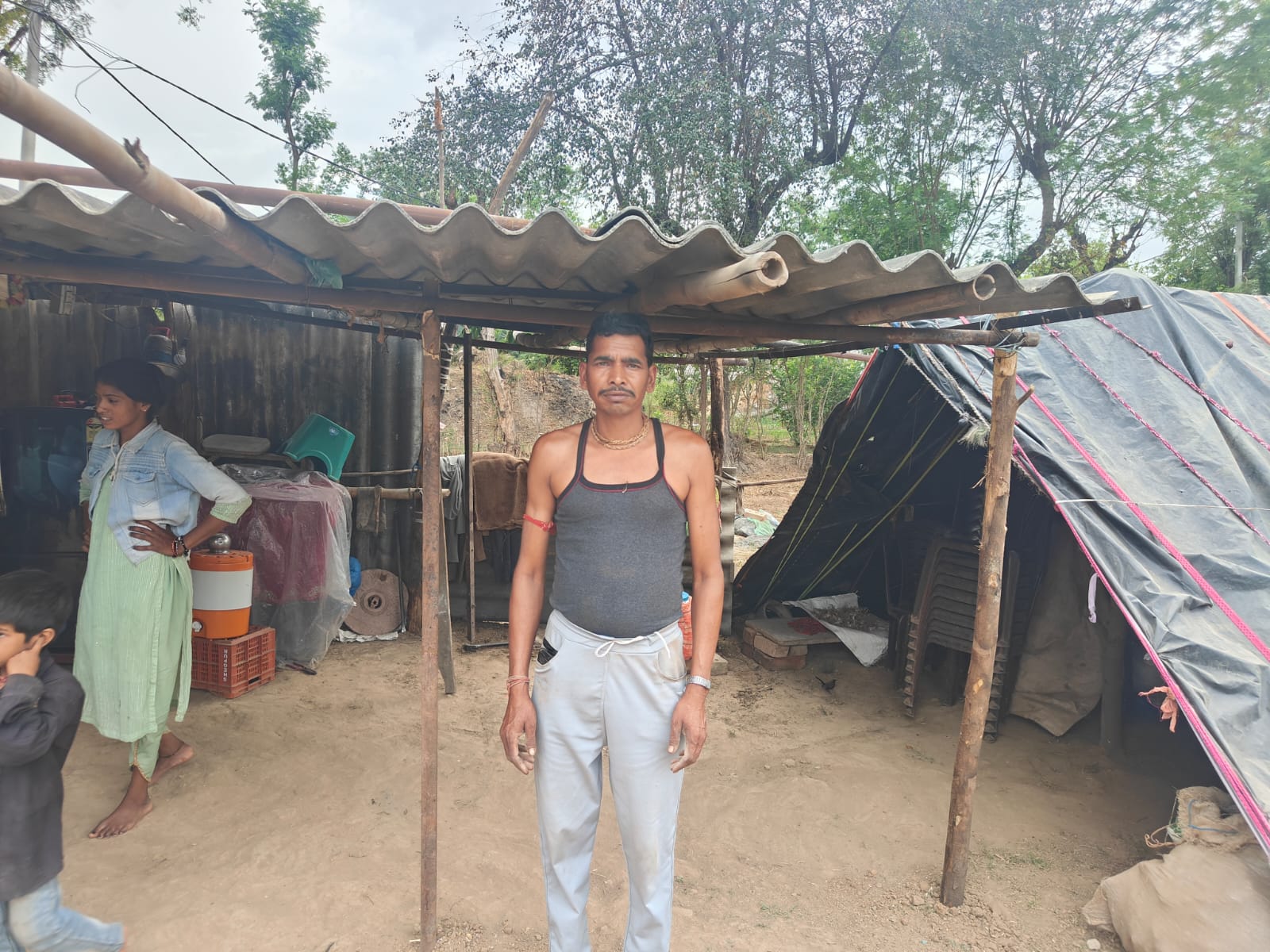 Sugreev Kushwaha and his family have been living in a black tent for years now. (Express photo by Anand Mohan J)
While 110 accused have been identified, at least 30 have been arrested, police said. Tomar and 18 patwaris have been sanctioned for prosecution. Three of those arrested are private computer operators, with police relying on their statements to untangle the alleged racket.
“The accused patwaris revealed that the tehsildar (Tomar) was to receive around Rs 75 lakh to Rs 80 lakh, and the rest of the amount was disbursed to the other accused,” SDOP (sub-divisional police officer) Avneet Sharma said. “Most of the accused are relatives of patwaris who offered their bank accounts as vehicles for the diversion.”
Additional District Magistrate Rupesh Upadhyay, who oversaw relief operations before being transferred, said, “I was transferred after the floods inundated the district in August 2021. Had I been there, this fraud would not have taken place. Tomar was previously attached to the land records office and was posted as tehsildar a few months after the floods.”
Story continues below this ad
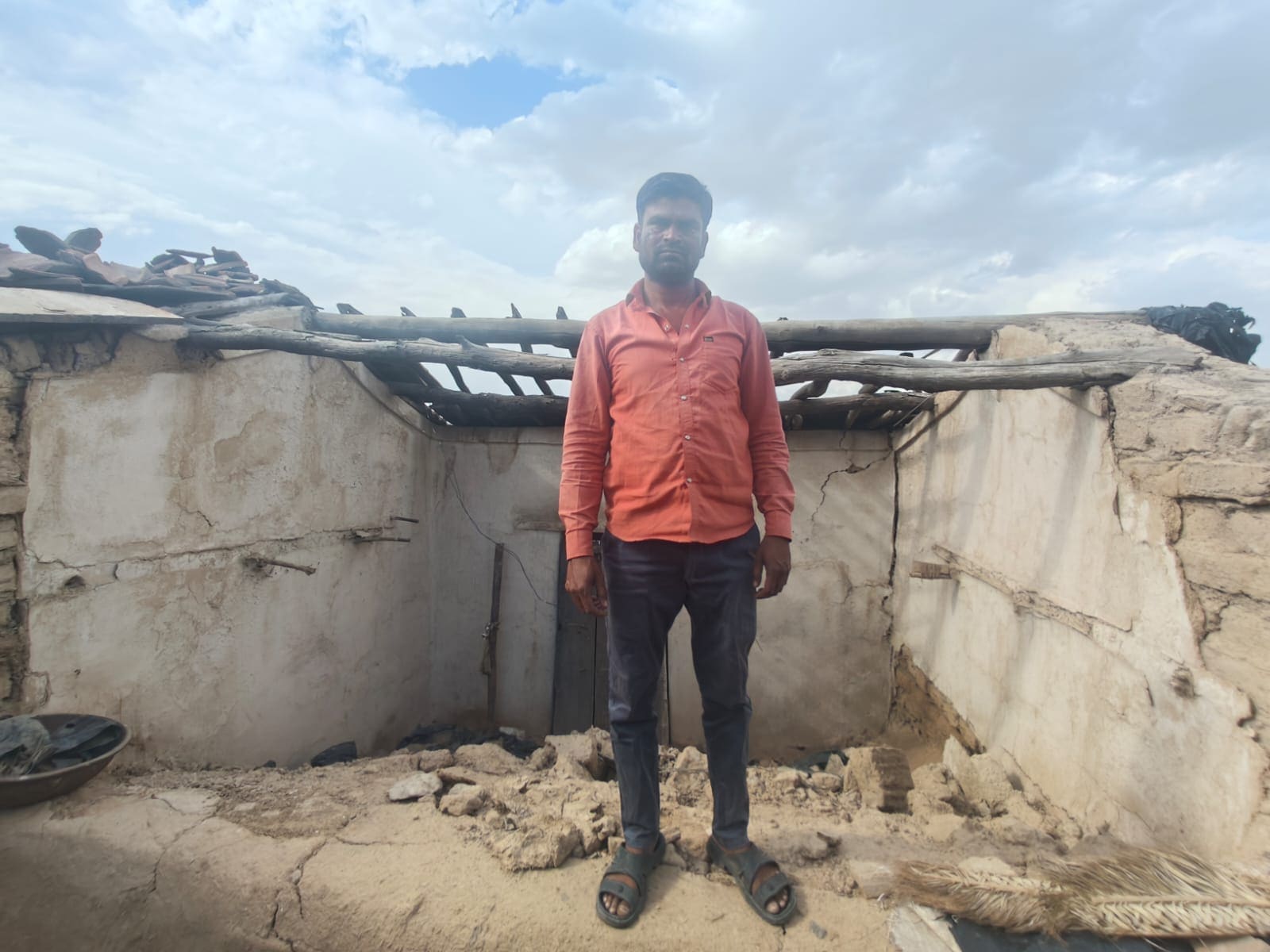 Makand Suman at his home in Lalitpura which has not been repaired since the floods.. (Express photo by Anand Mohan J)
The alleged scam: Wrong accounts, silent withdrawals
Flood relief begins with a joint survey by the panchayat sachiv, an agriculture department official and the patwari. The gram panchayat then publishes the list of beneficiaries and eventually sends it to the tehsildar for sanction. Once cleared, the tehsil generates payment bills and issues an OTP to the tehsildar, whose authentication is required for the bill to be sent to the treasury. “A patwari cannot move money unilaterally,” Upadhyay said. “The tehsildar’s digital credentials are required to clear each payment.”
The allegations first surfaced in 2021 when the district administration complained to the police that over Rs 2 crore had been transferred to unauthorised accounts. An FIR was registered in September 2023 against six revenue officers. The case gained momentum this March after Tomar’s alleged role surfaced and the Prevention of Corruption Act was invoked.
According to investigators, while beneficiary names were retained during disbursement, account numbers were swapped. Money was then funnelled into 127 accounts that acted as “collection points”, pooling funds meant for multiple beneficiaries.
Story continues below this ad
“The money was withdrawn in parts: Rs 50,000, Rs 60,000, Rs 90,000, and just over Rs 1 lakh, meant to resemble ordinary rural transactions,” an officer said.
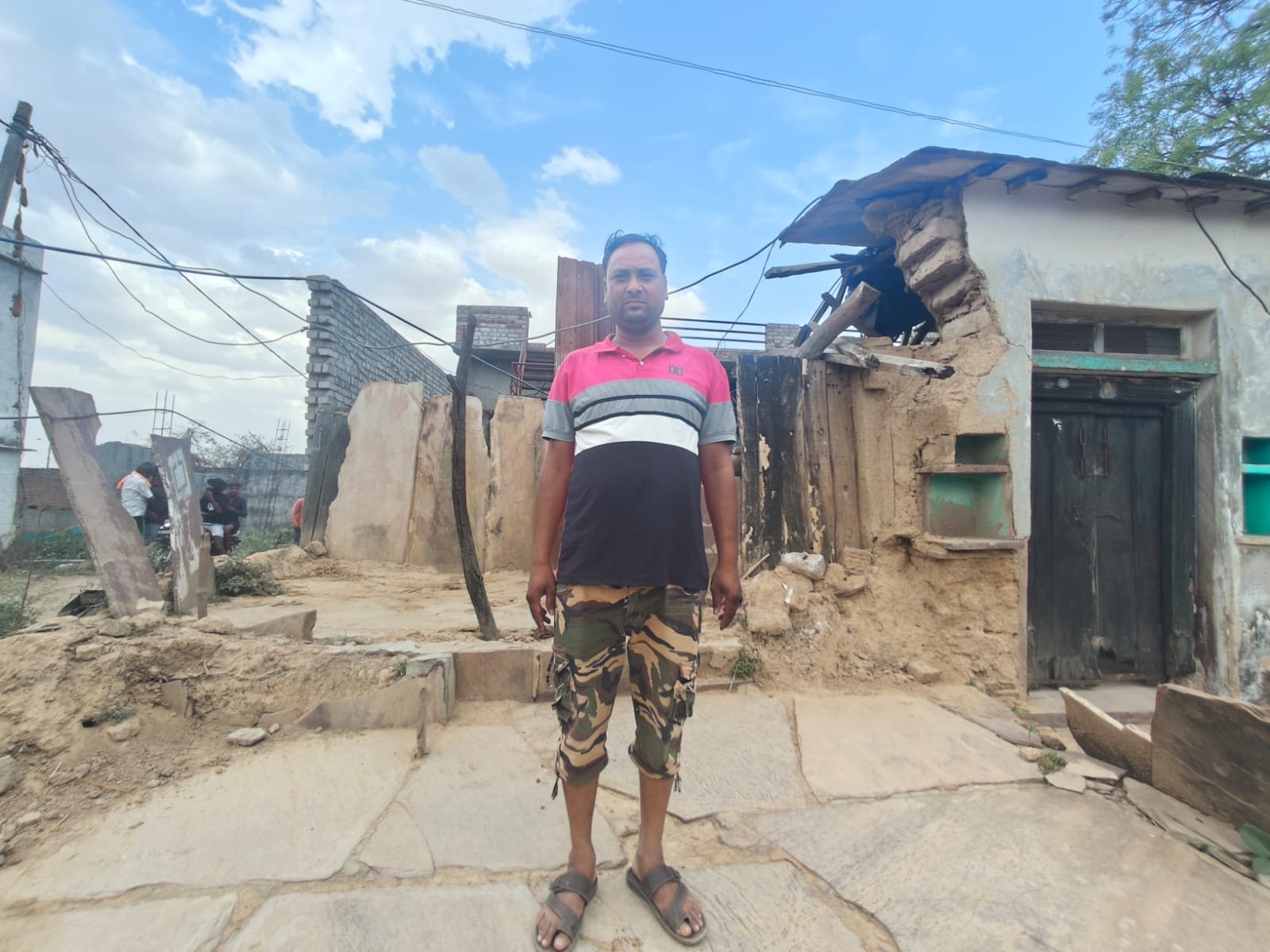 Dara Singh Meena waits for the government compensation to build his home. (Express photo by Anand Mohan J)
Scrutiny of records showed some officials allegedly linked to large diversions: Patwari Laxminarayan Gorchiya to nearly Rs 89.6 lakh meant for 312 farmers, Inayat Khan to over Rs 40 lakh meant for 213 farmers, and Mewaram Gorchiya to Rs 15.6 lakh meant for 62 farmers. None responded to queries. All are among those arrested.
With transfers requiring a tehsildar’s authentication, investigators are probing how they were cleared. A 2023 inquiry committee found that records allegedly bore only the tehsildar’s and patwaris’ signatures, though rules require verification by revenue inspectors or clerical staff.
Tomar joined the Madhya Pradesh revenue service in 2003 as a Naib Tehsildar and was promoted around 2011, moving across 25 tehsils over two decades. In February this year, the Sheopur district administration granted sanction to prosecute her for alleged criminal breach of trust, cheating, forgery and criminal conspiracy, as well as under provisions of the Prevention of Corruption Act. On February 11, the Madhya Pradesh High Court cancelled her anticipatory bail.
Story continues below this ad
Public Prosecutor Anurag Sharma, who opposed her anticipatory bail, had stated that Tomar “defalcated an amount which was required to be transferred to the persons affected by floods”.
In her response before the court, Tomar said she signed only after proper verification. She maintained in court that she was the “procedural endpoint in a chain she did not control”, that she neither handled the financial transactions nor received direct monetary benefit, and that her name did not appear in the original FIR.
Upadhyay said it is the tehsildar’s duty to verify bank account details. “All of the digital work was undertaken instead by private computer operators,” he said. Three of them – Ram Avtar, Dheeraj Suman, and Yogesh Gautam – were arrested on April 1, with police alleging some funds were diverted to their accounts.
Ram Avtar worked as a computer operator in Manpur. His wife Lalitesh said, “He knew the local patwari. We don’t know why the patwari transferred money to his account. They should not have played with poor people’s money.”
Story continues below this ad
In Lalitpura, Dheeraj Suman’s father said his son had worked at the tehsil office for about a month during the floods. “My son was taken by the tehsildar for relief-related work for a month. I am yet to meet him and ask him what happened,” he said.
Yogesh Gautam, a computer operator earning Rs 3,000 a month, was also arrested. His father said, “I don’t think a small-time operator can pull this off without the higher officials.”
The men, women and children impacted
Among those who did not receive the full compensation is 29-year-old Hemant Kushwaha, who attended four public grievance hearings over his father Murari Lal’s Rs 49,500 soil loss. He claimed he received only Rs 5,000, while the rest went into someone else’s account. Several families that The Indian Express spoke to narrated similar ordeals.
Another resident, Dinesh, claimed he should have received Rs 48,000 for soil degradation. He alleged his money was “transferred to the bank account of a computer kiosk operator in the village who helped farmers process compensation paperwork”. The kiosk operator denied this: “Neither my family nor I have received compensation that was not ours. My family also sustained losses, and I received compensation that was legal.”
Story continues below this ad
Harimohan’s walls collapsed, and two rooms were destroyed. His family of 10 now sleeps in the concrete rooms that survived. He was on the compensation list but received Rs 5,000. “We don’t know whose bank account the money went to,” he said.
Ramesh Prajapati and his family of 10 people still live inside the unfinished shell of a home. “Six kaccha homes were destroyed, a cow died, and a nearby temple was swept away. I had to pay a bribe of Rs 5,000 to get my compensation of around Rs 40,000,” he claimed.
Chotulal lost five bighas of onions, one and a half quintals of wheat, one quintal of gram and two kaccha homes. “The state gave me a bag of flour. We could not even buy clothes for ourselves,” he claimed.
Ramchandra Suman, who lost his home and received Rs 5,000 for crop damage, claimed, “My money went into someone else’s account. The police are finding out who.”
Story continues below this ad
Ramkishan Kewat, who lost five animals and two homes, claimed that he, too, received Rs 5,000. “I need money to take care of my bedridden son,” he said.
ADM Upadhyay said the state government has initiated recovery proceedings of Rs 1 crore, with interest, from the patwaris, but admitted the process is difficult. “It’s tough to say if the money will be reimbursed to the victims due to a lack of government orders on this front,” he said.



