


3 min readJaipurMar 10, 2026 07:15 AM IST
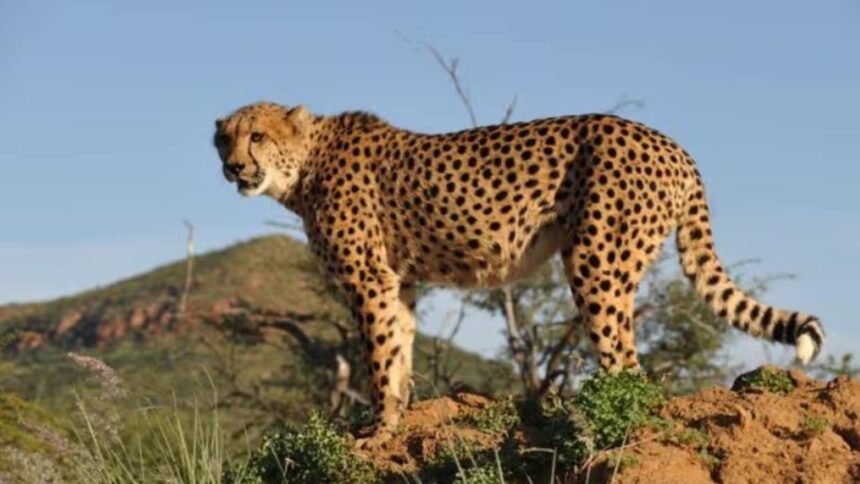
Cheetahs from Kuno National Park in Madhya Pradesh are now venturing into Rajasthan, with wildlife experts saying it was not a surprising development as the state has areas that are conducive to them.
India-born cubs KP-2 and KP-3 are currently in Rajasthan’s Baran district, feeding on nilgai. They are being monitored by the forest officials in Madhya Pradesh and Rajasthan, officials said.

Forest officials in Baran district told The Indian Express that the cheetahs are spending more time in Rajasthan of late.
“Around February 14, KP-2 entered Rajasthan, and KP-3 entered around the time of Holi. They are both currently in Rajasthan. Both of them have spent time in Banjh Aamli, an important protected forest area located in the Kishanganj tehsil of Baran district near the Rajasthan-Madhya Pradesh border, covering approximately 14,500 hectares. KP-3 was there for a week,” said Vivekanand Bade, DFO of Baran.
He further said that KP-2 is currently in the Baran area in the Anta ranges, and KP-3 is currently venturing in Banjh Aamli. Officials from Kuno National Park and a local team are monitoring the cheetahs and their movement in the region for their safety.
Bade said, “We usually maintain a distance of 100-200 metres while observing the cheetahs… They are safe and trying to make a space for themselves.”
The cheetahs’ origins can be traced to the semi-arid region of Namibia, and wildlife experts said areas of Rajasthan can provide a similar habitat.
Story continues below this ad
Sunil Mehta, president of the World Wilderness Congress, told The Indian Express that it is best for the cheetahs to be at the Desert National Park in western Rajasthan, where he said they would find a suitable environment and prey base.
“Cheetahs are meant to roam in dry and semi-arid regions with vast landscapes, which means around 25,000 sq km to 30,000 sq km. They are looking for plains and gazelles, which is their favourite food. So, Rajasthan’s western region, with chinkaras, is suitable for them,” said Mehta.
Cheetahs can travel up to 1,200 km, experts say.
In India, cheetahs were reintroduced in batches starting in 2022. The cheetahs were brought to Kuno National Park in Madhya Pradesh. India’s cheetah reintroduction programme marks the return of the species nearly 70 years after it was declared extinct in the country. Since 2023, 39 cubs have been born at Kuno, of which 27 have survived.