

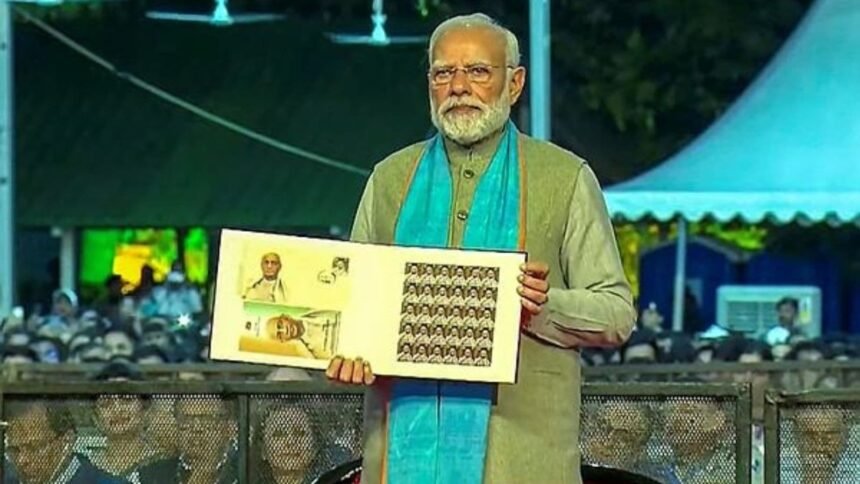
Prime Minister Narendra Modi is in Gujarat today to pay tribute to Sardar Vallabhbhai Patel on his birth anniversary, celebrated as ‘Rashtriya Ekta Diwas’ or National Unity Day, and recalled his immense contribution towards unifying India.
PM Modi arrived at Patel’s 182-metre-tall statue, near Ekta Nagar in Gujarat’s Narmada district, in the morning and paid his respects to the Iron Man of India by offering flower petals.

This year marks Sardar Patel’s 150th birth anniversary.
Why is National Unity Day celebrated?
National Unity Day is observed every year on October 31. The day marks the birth anniversary of Sardar Vallabhbhai Patel and honours his pivotal role in fostering national and political integration and unity in India.
What is National Unity Day?
Sardar Vallabhbhai Patel, India’s first Deputy Prime Minister and Home Minister, played a key role in bringing the country together after independence in 1947. He was responsible for uniting more than 560 princely states, which made up about 40 per cent of India’s land and population, into one nation. The Indian Independence Act had allowed these states to choose whether to join India, Pakistan, or remain independent. Patel used a mix of negotiation, persuasion, and firm action when needed to make sure India didn’t break apart. Through the States Department he led, most princely states had joined India by or soon after August 15, 1947, helping secure the country’s unity. His strong and steady leadership during the challenges of partition earned him the title “Iron Man of India”. Patel also set up the All-India Services, known as the “Steel Frame” of the nation, to help maintain India’s stability and integrity in the years ahead.
When was it first celebrated?
National Unity Day was first observed in 2014, following the Government of India’s decision to honor Sardar Patel’s exceptional contributions to nation-building. During the Rashtriya Ekta Diwas on October 31, 2015, Prime Minister Narendra Modi launched the initiative ‘Ek Bharat Shreshtha Bharat,’ aimed at fostering sustained connections and cultural exchange between different regions of India. Since then, multiple central ministries, state governments, educational institutions, and youth organizations have actively celebrated the day through various activities that promote unity and bonding across the country.