


5 min readUpdated: Mar 27, 2026 07:47 PM IST
A week ago during Lucknow Super Giants’ preparatory camp in Chennai as Mukul Choudhary kept sending the ball effortlessly out of the park delivery after delivery, their batting coach Lance Klusener watched it all in astonishment. As the 21-year-old continued his rough treatment of pacers and spinners alike for a good 45 minutes, the former South Africa all-rounder would turn to captain Rishabh Pant and remark, “Kids, these days!”
Pant, himself an audacious batsmen irrespective of the format, would point to Choudhary’s hand speed.

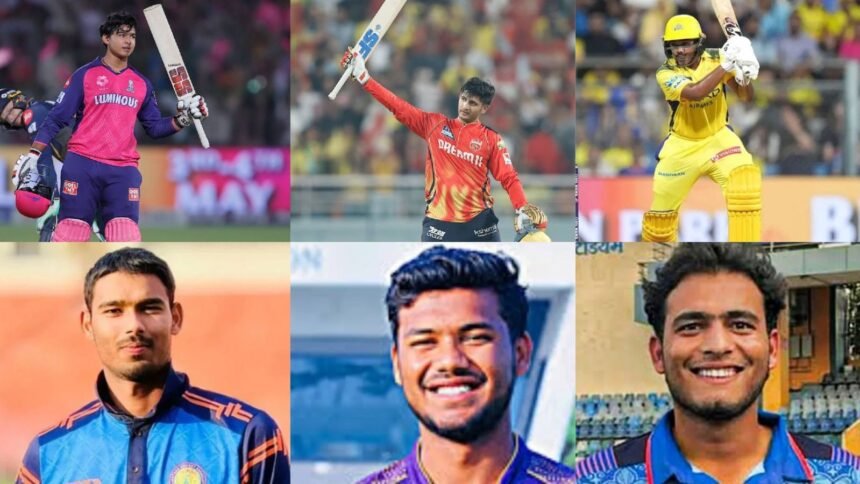
As the IPL turns 18, new-age T20 players, whom Chennai Super Kings head coach Stephen Fleming termed ‘T20 babies’, are lining up to take the format to the next level. While par scores have been on an upward curve in recent years – especially after the Impact Player rule came in – last season witnessed the arrival of youngsters Vaibhav Sooryavanshi, Priyansh Arya and Ayush Mhatre. And padded up waiting for their opportunity this season are Choudhary, Kartik Sharma, Prashant Veer and Aman Rao. They are not the future of the IPL anymore, but its present.
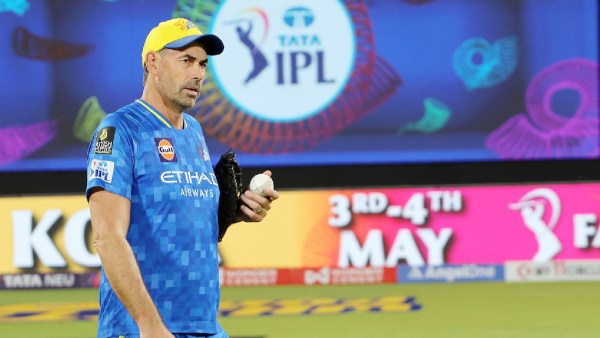 CSK head coach Stephen Fleming in action. (FILE photo)
In a tournament where the likes of Abhishek Sharma, Ishan Kishan and Shubman Gill are expected to take the mantle from MS Dhoni, Virat Kohli and Rohit Sharma, these T20 babies have also entered the ring. In many ways, despite the lack of experience, their arrival is no longer something even most orthodox T20 outfits like CSK could delay. For a team that always banked on experience, Fleming openly had doubts last season as to whether the brand of batting exhibited by ‘T20 babies’ can succeed in the long term.
But as he watched his own ‘Dad’s Army’ struggle to keep up with the T20 generation, the former New Zealand captain changed his mind. Having watched what Mhatre provided at the top and Dewal Brevis offered in the middle order, Fleming went in search of those ‘T20 babies’ and bought Kartik and Prashant at the auction for Rs 14.20 crore each – very un-CSK buys, but ones that shed plenty of light on where the IPL is headed.
“My view used to be that experience was going to win, but now you have this fearless athlete that’s been brought up on T20 cricket and has a skillset that’s mouthwatering, and they just have no fear about what environment they need to exhibit these skills. So that is one thing to acknowledge, that T20 babies are now coming through,” Fleming said.
In a format in which batsmen with strike rates in the range of 135-150 were considered assets, in the last 18 months Abhishek (173.14), Tim David (162.31) and Brevis (153.77) altered perceptions. And then Sooryavanshi (204.37), Mhatre (175.46) and Arya (169.10) showed how far T20 batting has evolved on the domestic circuit. Beyond the trio who made their IPL debuts last season, came the likes of Kartik (162.92), Prashant (167.16), Aman Rao (162.70) and Mukul (165.35), who have all found a home in the IPL.
Story continues below this ad
Mentality shift
While batsmen with such strike rates were usually seen as ideal finishers, the thinking is witnessing a major shift. “India have been phenomenal in the last 12 months. There are a lot of them coming through their domestic system with phenomenal hitting power. Tim (David) and Brevis were looked at as finishers, but that is changing now and they are batting higher because teams are seeing their potential. They are all destructive batsmen. So the other teams need to identify similar players or else they are going to be left behind further,” renowned power-hitting coach Julian Wood had told this masthead earlier.
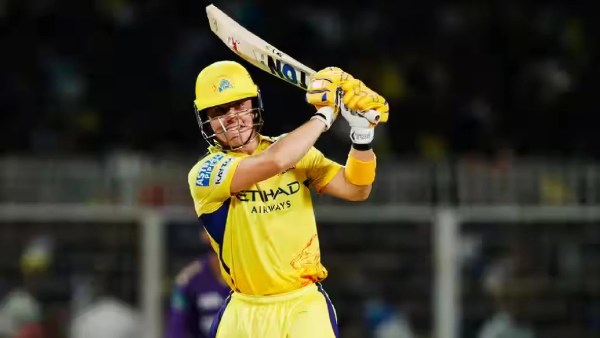 Dewald Brevis in action. (FILE photo)
The new breed that Wood refers to and what Fleming calls ‘T20 babies’ have one aspect common in their batting. In a format in which hand-speed supersedes footwork, each of them have quick hands. And with the remarkable ability to pick length early, and having grown up after T20 became the popular format, their batting doesn’t just speak of their boldness but also that of the format itself that has evolved and is vastly different to what it was when the IPL began in 2008.
Not being exposed much to red-ball cricket, they have learnt to bat only in top gear, where intent overshadows other metrics. Fleming explains why the T20 babies are different.
“It’s just that mental aspect. Sometimes an experienced player can get caught up in himself, trying to work out where the game’s going and what’s going on. But these young players these days, they’re just very free and only know one way. So there’s real appeal, especially when the game is being played faster and faster. I think it’s a byproduct of T20 being around for some time now and we’re all learning, being involved with it, and the faster it gets, these young players seem to play better,” the CSK coach said.
Story continues below this ad
Over the next two months, in a tournament where the Kohlis, Rohits and Dhonis would bring crowds to the stadium, the T20 babies are waiting to carve out a world for themselves. Fasten the seatbelts. Enjoy the breathtaking ride.