


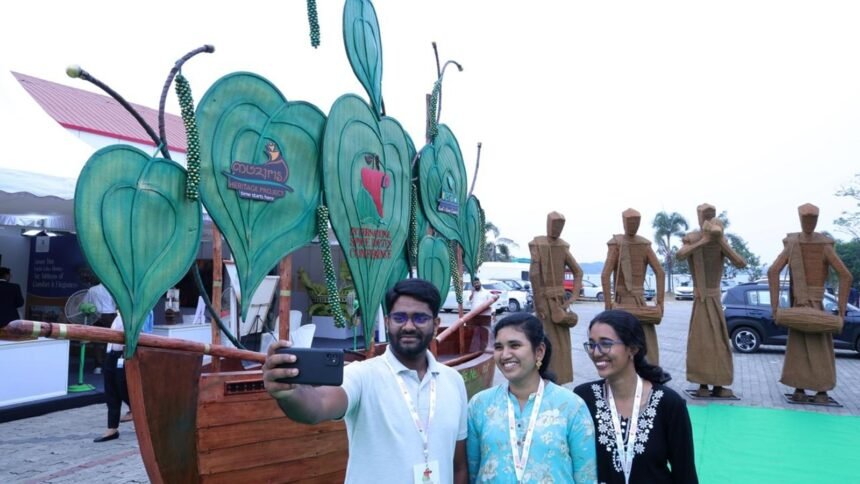
At the historic Bolgatty Palace in Kochi, built by Dutch traders in 1744, historians, researches, archaeologists, policy makers, tourism stakeholders and cultural practitioners from all over the country and the world came together on Tuesday to revisit the past to envision a shared future.
As the three-day International Spice Routes Conference, the first-ever of its kind, opened in Kochi, participants from all parts of India, and about 38 delegates from 22 countries gathered to share their research and stories on an ancient trail that put Kerala on the cross roads of a global encounter.

From its imprint on trade, culture, language, faith, to its culinary traditions, the legacy of the ancient spice routes that connected Kerala to the rest of the world lives on in myriad ways. Between the 1st century BC and 4th century AD, the port town of Muziris, located on the mouth of the delta of the Periyar river, was a hub of trade, linking Southeast Asia, Africa, West Asia and Europe, exporting pepper, beads and silk and importing gold coins and grain among other things. No one is certain exactly how but gradually Muziris fell off the map. But the many influences that blew in with the trade winds through it, endured.
Organised by the Muziris Heritage Project in collaboration with the Kerala Tourism Department, the conclave aims to forge new paths for heritage conservation and responsible tourism.
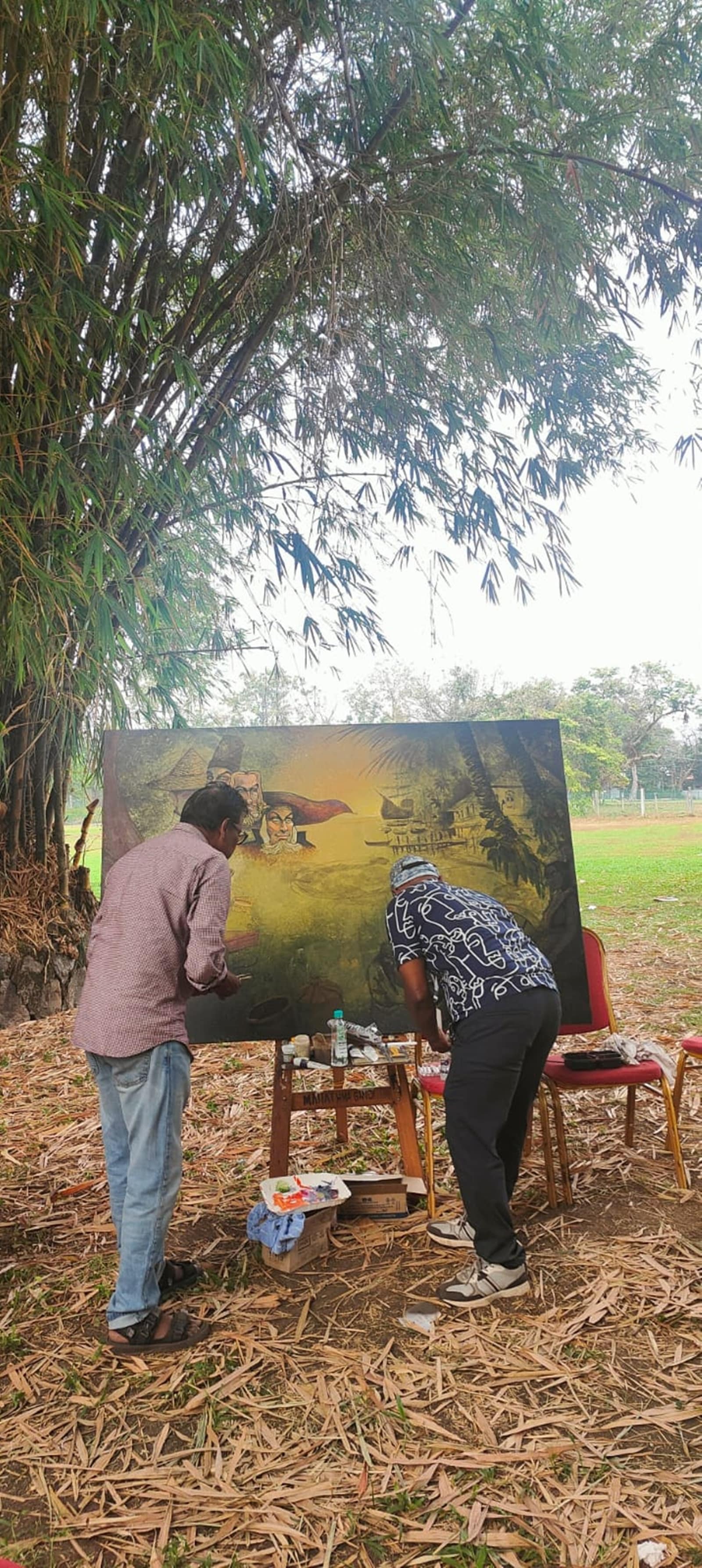 Artists are putting the final touches on a painting depicting cross-cultural encounters at the International Spice Routes Conference in Kochi on Tuesday. (Express Photo by Devyani Onial )
It was inaugurated by Kerala Tourism Minister PA Mohammed Riyas who joined the ceremony over video. “Movements of people brought deep, underlying cultural and material commonalities across cultures in areas such as faith, language, food, agriculture, clothing and a bundle of other things. Cultures that often seem so widely divergent were, in fact, in constant contact and exchange with each other. The Muziris Heritage Project identifies the cultural, social, religious, commercial and tourism potential of those networks and wishes to revive them for the benefit of present,” he said.
K N Unnikrishnan, MLA, presided over the inaugural ceremony while Manal Ataya, Director General, Sharjah Museums Authority, was the chief guest.
The opening session, ‘Spice Routes: People, Goods and Ideas in Motion’ set the tone of the event with an eminent panel displaying log books and personal accounts to show ancient interactions. Talking on the fiery trail that pepper blazed in various geographies, historian Pius Malekandathil elaborated on how traders and commercial intermediaries who participated in the pepper trade began to acquire an identity intrinsically connected with it. This, he said, “fetched for them the surname of Pfeffer (pepper) in Germany and Hungary. Similarly in Portugal, the surname Pimenta got allocated to some people, obviously as an identity marker, indicating their linkage to the pepper trade.”
Story continues below this ad
From exploring linguistic and cultural fusions, indigenous food systems, colonial interventions, diasporic networks and the future of heritage interpretation, the panel discussions over these three days aim to cover a vast ground.
The venue is also hosting three photography exhibitions, held in association with Aazhi Archives: — Chavittu Nadakam (KR Sunil), Seeing is Believing (Biju Ibrahim) and Migrant Dreams (archival photographs).