


2 min readMar 12, 2026 01:01 PM IST
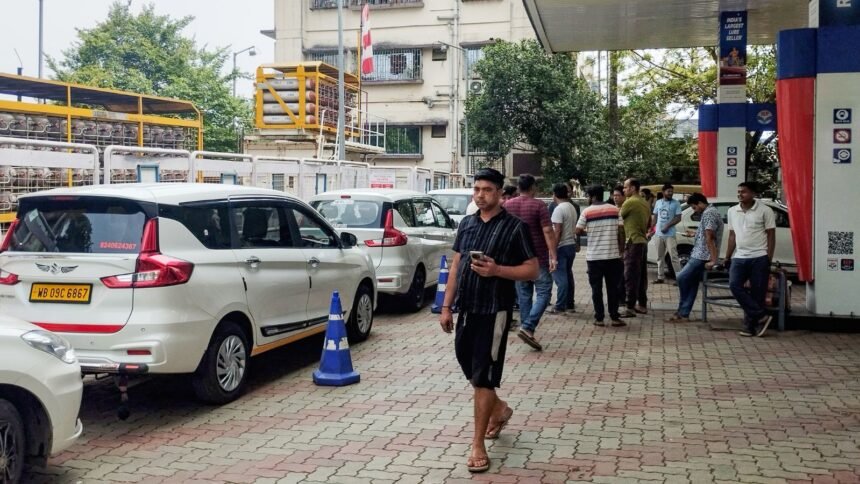
With the war in the Middle East and the Strait of Hormuz blocked, people are worried about a possible increase in fuel prices. Although, their has been no indication from the government of any increase in petrol and diesel prices in India, the worry persists due to the current volatility in the global market. Long queues outside petrol pumps in major cities like Kolkata, Chennai, Noida, among others showed the state of worry among Indians.
Despite the volatility in global market, fuel prices have recorded only slight variations across cities.

After dropping to 77 USD per barrel on March 10, the price of benchmark Brent crude oil is on a sharp upward trend again. In the early trade it breached the $100 per barrel mark again, before trading around $98 around 13:30 PM. The WTI index was trading at a little over $92. This has concerns over rising inflation and broader economic stability.
Petrol, diesel prices in India
In India, petrol and diesel prices are updated daily at 6 am, based on international benchmark rates and fluctuations in foreign exchange.
Cheapest
₹94.30
Chandigarh
Costliest
₹107.50
Hyderabad
Above ₹100
8 cities
of 14 tracked
Price Ladder — Cheapest to Costliest
1
Chandigarh
₹94.30
—
7
Bhubaneswar
₹101.19
—
8
Bangalore
₹102.96
—
13
Thiruvananthapuram
₹107.48
—
14
Hyderabad
₹107.50
—
🔴 Above ₹100/litre Club — 8 Cities
Chennai ₹100.90
Bhubaneswar ₹101.19
Bangalore ₹102.96
Mumbai ₹103.50
Jaipur ₹104.72
Patna ₹105.23
Kolkata ₹105.41
Thiruvananthapuram ₹107.48
Hyderabad ₹107.50
Source: Indian Oil Corporation | Data as on March 12, 2026
Cheapest
₹82.45
Chandigarh
Costliest
₹96.48
Thiruvananthapuram
Price Spread
₹14.03
across 14 cities
Price Ladder — Cheapest to Costliest
1
Chandigarh
₹82.45
—
12
Bhubaneswar
₹92.77
—
13
Hyderabad
₹95.70
—
14
Thiruvananthapuram
₹96.48
—
Source: Indian Oil Corporation | Data as on March 12, 2026
Meanwhile, the government expects state-run oil marketing companies (OMCs) to absorb the current impact of rising global oil prices. According to sources, these companies may have to settle for reduced profit margins as international crude prices climb, while retail fuel rates remain unchanged for now.
Earlier, the government had asked OMCs to maximise their production.