


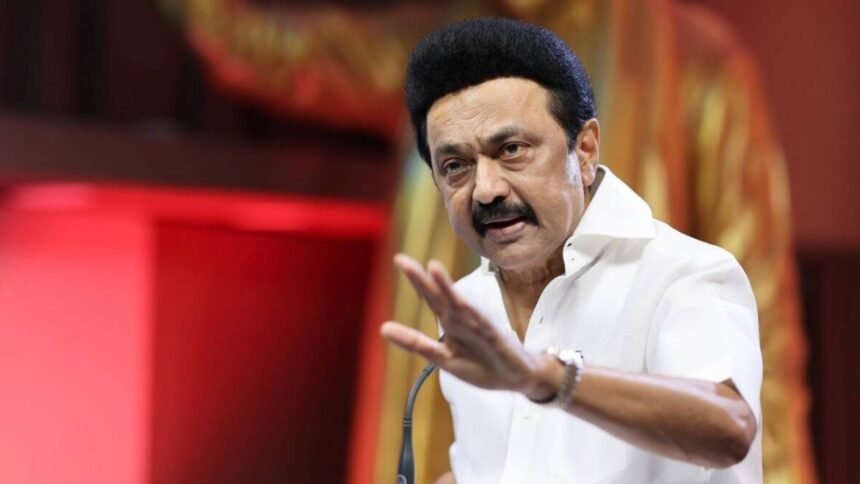
Tamil Nadu Chief Minister M K Stalin on Friday said that the fight for the state’s rights and federalism will continue, asserting that elected governments cannot be pushed to the backseat when it comes to decision-making. “Our fight for State rights and true federalism will continue,” he said a day after the Supreme Court’s advisory opinion on the Presidential Reference. He added that he will not “rest until the Constitution is amended to fix timelines for Governors to clear Bills”.
On the Supreme Court’s advisory opinion, he stated that it will have no impact on the April 8, 2025 judgment in the case of State of Tamil Nadu vs Governor of Tamil Nadu.

Taking to X, Stalin said that the Bench tendering the advisory opinion has reaffirmed that the elected government should be in the driver’s seat, and there cannot be two executive power centres in the State. He also noted its position that constitutional functionaries must act within the constitutional framework, never above it.
“The Governor has no fourth option to kill the Bill or exercise a pocket veto (as was done by the TN Governor). He has no option to withhold the Bill simpliciter,” the CM asserted.
☀️ Our fight for State rights and true federalism will continue!
☀️ No rest until amending the Constitution to fix timelines for Governors to clear Bills!
The Supreme Court’s opinion in its answer to the Presidential Reference will have no impact on the April 8, 2025 judgment… pic.twitter.com/YHnD6pxs7c
— M.K.Stalin – தமிழ்நாட்டை தலைகுனிய விடமாட்டேன் (@mkstalin) November 21, 2025
He also referred to the court’s stance that the Governor cannot indefinitely delay acting on Bills and that “states can approach the Constitutional Courts and hold Governors accountable for their deliberate inactions.”
Quoting the nine-judge bench ruling in Ahmedabad St. Xavier’s College Society vs State of Gujarat, he said: “Advisory opinion of the court would have no more effect than the opinion of the law officers.” Stalin said the Supreme Court’s view rejects the Governor’s “theory of pocket veto” and the claim that Bills can be killed or buried by the Raj Bhavan.
He emphasised his position that “no constitutional authority can claim to be above the Constitution,” following it up with saying that “when even a high constitutional authority breaches the Constitution, the constitutional courts are the only remedy, and the doors of the court must not be closed.”
He warned that this would undermine the rule of law in our constitutional democracy and encourage breaches of the Constitution by Governors acting with political intent.
Story continues below this ad
Stalin closed with the statement, “I have promises to keep, and until our people’s will in Tamil Nadu is fulfilled through legislation, we will ensure that every constitutional apparatus functions in this country in accordance with the Constitution.”
Supreme Court on Governor’s powers
In a significant verdict settling the law about the legislative interaction between Governors and state governments, a five-judge Constitution Bench of the Supreme Court delivered its opinion on the Presidential Reference regarding the assent to Bills by the Governor.
The opinion, delivered days before Chief Justice of India BR Gavai’s retirement, addresses 14 specific questions of law referred to the court by President Droupadi Murmu.
While the court ruled that Governors cannot sit on Bills indefinitely, it also held that the judiciary cannot impose rigid timelines on constitutional authorities.