


As much as 72% of China’s Xiaokang or “well-off villages” along the Line of Actual Control (LAC) have been constructed across the northeastern states, of which 90% have been built across Arunachal Pradesh, Deputy Chief of Army Staff (Strategy) Lieutenant General Rajiv Ghai said on Tuesday, adding that many of these settlements are in areas that are contested between the two countries.
He also said that the “uncertain trajectory” of the relationship with Bangladesh has compounded the problem of India’s strategic Siliguri corridor, which has been vulnerable due to its proximity to the Chumbi Valley in the Tibet Autonomous Region – even as he highlighted that India has also progressed well in terms of developing infrastructure in the area.

The strategic Chumbi Valley lies adjacent to Doklam, which was the site of a border standoff between India and China in 2017.
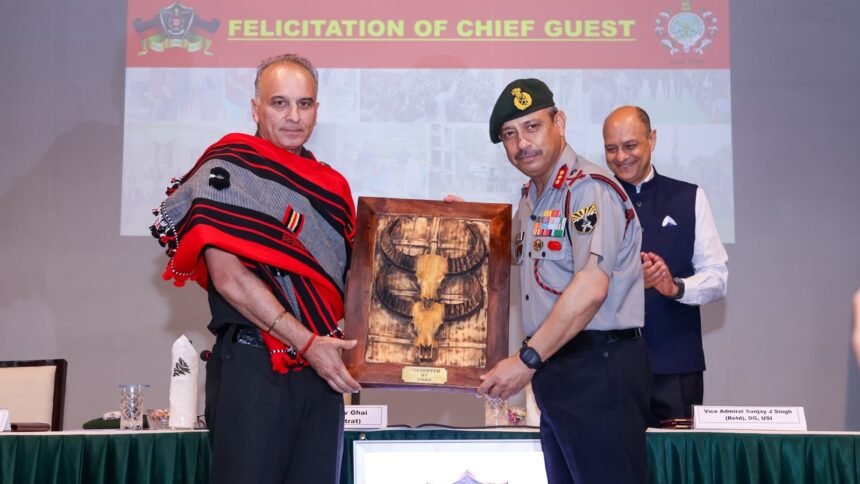
Lt Gen Ghai was addressing the Assam Rifles’ annual seminar, organised in collaboration with the United Service Institution of India (USI), themed – “Security Challenges to the North East: Assessment and Way Forward.”
He said that over the last two decades, roads, rail, bridges and dams have been developed by the Chinese at a phenomenal speed.
“..Not to mention the Xiaokang project of about 600 odd villages across the northern borders. But more importantly, almost 72% of these 628 villages are across the northeastern states. That translates to about 450, and out of these, almost 90% are opposite the state of Arunachal Pradesh. No marks for guessing why that is so,” he said.
“These border settlements, villages are definitely a challenge. They’re coming up very rapidly. And many of these are in areas that are contested between the two countries,” he added.
Story continues below this ad
Referring to the Siliguri Corridor, or ‘Chicken’s Neck,’ which is a 22-km-wide and 60-km-long, strategically vital strip of land in West Bengal that connects India’s North-East to the rest of India, Lt Gen Ghai said its vulnerability is compounded by the fact that it’s close to the Chumbi Valley.
Ties improving, but need to stay vigilant
“That’s not lost on anyone. And therefore, the uncertain trajectory of our relationship with Bangladesh, in recent times, has compounded this problem, which is already there as far as the northern adversary (China) is concerned,” he said.
“So, securing the corridor, therefore, is an imperative. And I think it will hearten everybody to know that there is a lot of work and thought in that direction,” he said.
“…There is a substantial amount of forces that are deployed near the corridor. As far as infrastructure is concerned, both road and rail and underground infrastructure, a lot of work is happening,” he said.
Story continues below this ad
He said that despite the North-East facing numerous security challenges, the region is becoming the frontrunner. “I think we made progress, maybe not as rapidly as our northern adversary. But there is work that has been done,” he said.
Lt Gen Ghai added that several strategic infrastructure projects have come up in the North-East, such as the Se La tunnel, bridges over the Brahmaputra, the rail and road Bogibeel bridge in Assam, bridge on the Lohit river, and the emergency landing facility on the Moran highway.
“These are not development projects alone… This is a dual-use asset that reduces logistics vulnerability and enhances our ability to induct forces, fortifying the Siliguri Corridor,” he said.
Referring to the underground rail connectivity in the corridor, he said, “We’ve already conceived a 24-km tunnel in the first phase, and this will go up to about 62 km. That will take the rail below the Siliguri Corridors.”
Story continues below this ad
Lt Gen Ghai said there is work happening towards fencing the Indo-Myanmar border despite the challenges on the ground and over the next five years, the fence could come up in a significant way. This would be particularly beneficial since infiltration and narcotics-smuggling are among the key challenges along the border, he added.
Lt Gen Vikas Lakhera, DG, Assam Rifles, said that geography, terrain, social diversity and long international borders combine to make the region different from the rest of the country. “Over decades, we have dealt with insurgency, ethnic tension and external influences. It would be fair to say that the situation today is far better than it was in the past,” he said.
He added: “The only way it has become a little murky is because earlier, the battle lines were clearly drawn. But today, the shades of grey dominate the entire security and strategic landscape in the Northeast.”