

2 min readJammuMar 22, 2026 07:00 AM IST
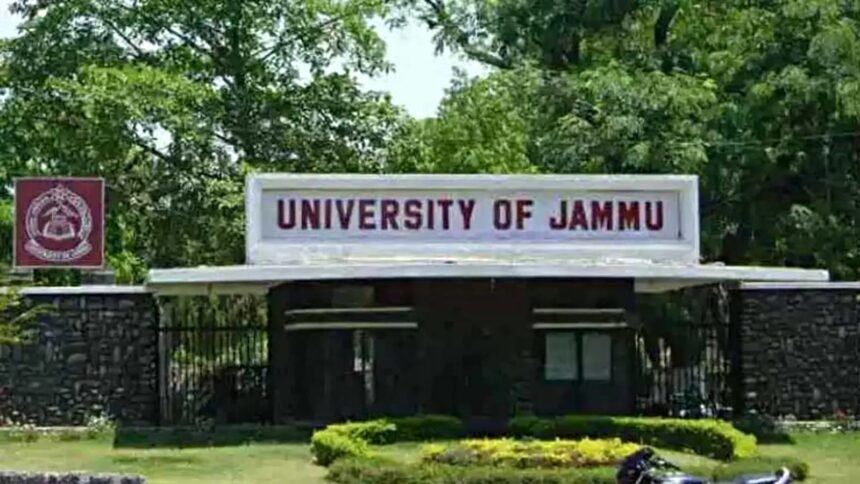
A chapter on minorities and nations vis-à-vis Pakistan founder Muhammad Ali Jinnah in the M.A. Political Science syllabus has sparked controversy at Jammu University, with Vice Chancellor Umesh Rai constituting a committee to examine the issue.
Headed by Professor Naresh Padha of the Physics Department, the committee has been tasked with examining the “syllabus of political science” in light of concerns raised by some students.

Jinnah has long figured in the postgraduate political science syllabus on campus.
Earlier, Jinnah appeared in a chapter on the “two-nation theory” as a mindset behind the Partition of India, said Sannak Shrivats, ABVP’s J&K state secretary who led a protest on campus Friday.
Now, in the revised syllabus for PG Political Science, Jinnah appears in a chapter on “Minorities and the Nations”, portraying him a leader of minorities in India, he added.
Seeking withdrawal of the chapter, he said students have no objection to Jinnah being taught as a mindset behind the Partition of India.
He said that if there has to be a chapter on people representing minorities, the syllabus should include B R Ambedkar or Frontier Gandhi Abdul Gaffar Khan, who had truly worked for them.
Story continues below this ad
Head of the Political Science Department at Jammu University, Baljit Singh Mann, however, defended the syllabus, saying the inclusion of Jinnah and other thinkers is purely academic and consistent with curricula followed by universities nationwide, as well as UGC norms.
Pointing out that an unnecessary controversy is being created over a purely academic issue, he said the university does not promote any ideology but presents diverse viewpoints to enable critical evaluation.
This is not the first time the university’s political science department has courted controversy.
In 2018, a row erupted after a video clip showed a professor from the department calling freedom fighter Bhagat Singh a terrorist.
Story continues below this ad
The professor was suspended and an enquiry initiated following the controversy. He later expressed regret, saying he was quoted out of context, and clarified that he was teaching Lenin–whose brother was killed in a terror act–and mentioned Bhagat Singh from the British perspective of that time.