


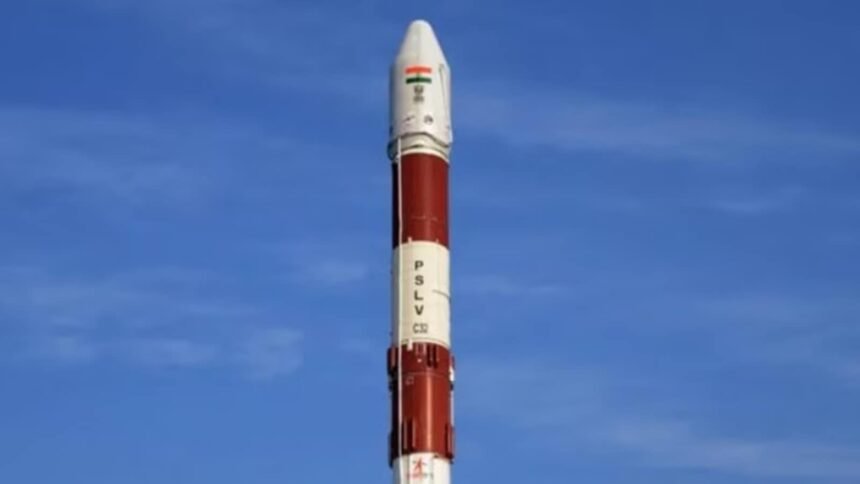
The first flight of privately-built PSLV rocket is likely to happen early next year, with at least two more launches planned for next year, according to one of the industry partners developing the rocket.
“We have started delivering the PSLV hardware and we are hopeful that next year we will have two or three launches. This will of course depend on the payloads being ready as well as available slots with respect to ISRO’s launch calendar,” said AT Ramchandani, senior VP and Head, L&T Precision Engineering & Systems, which is a part of the consortium manufacturing the private PSLV launchers.

For the first launch, the PSLV-N1 will carry on-board earth observation satellite EOS-10.
Initially, the mission was scheduled for the first quarter of 2025. According to sources, at least one mission with the privately manufactured PSLV would have been possible this year itself, however, it got delayed as the satellite it is to carry was not ready.
“There were a few components or systems in which we faced challenges, but ISRO helped us out. We are geared up for launch,” said Ramchandani.
The future, the need
The Indian Space Research Organisation had called for commercialisation of its workhorse launch vehicle PSLV in 2022, making it the first vehicle to undergo the process after the space sector was opened up to private players. While the contract awarded to the HAL and L&T consortium calls for manufacturing five launch vehicles for the space agency, there may be a possibility of more in the future.
“I believe that ISRO feels that the demand is there and we may end up doing another ten launches after these,” said Ramchandani.
Story continues below this ad
And, while the space agency is currently responsible for contracting or providing payloads for these PSLV mission, going forward, it is likely that the consortium will be able to create its own client base, market the launches, and schedule them as well.
“This is different from the SSLV model about which ISRO was very clear upfront about the companies having to produce the launch vehicle, sell the launches from day 1. It was on the company to see the potential demand and cater to it,” he said.
The SSLV technology was transferred to HAL, which is also a part of the PSLV consortium.
Ramchandani added that companies manufacturing satellites have reached out to them, especially those working in domains such as communication and earth observation that usually require satellites heavier than ones that can be carried on smaller launch vehicles such as SSLV or Vikram-I.
Story continues below this ad
“After a couple of launches the confidence will come. Today, we are also not stepping out and reaching out to customers, but I suppose that is the next step after a couple of launches,” he said.