


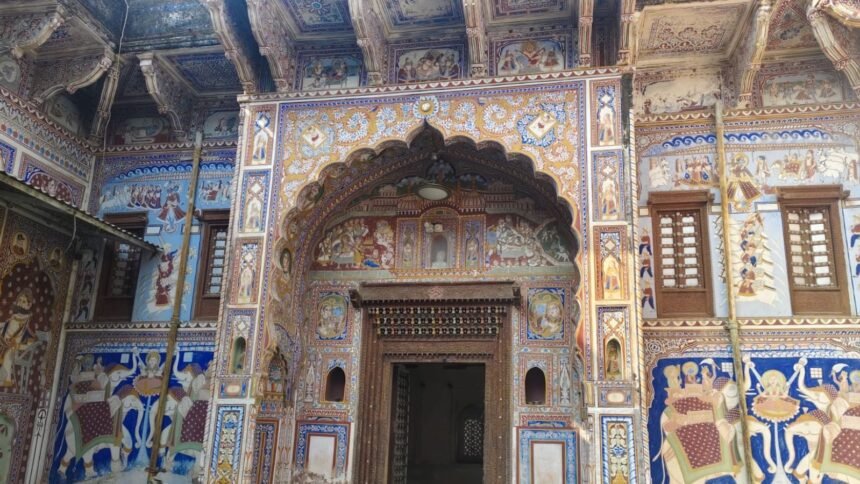
In one corner of Fatehpur — a town of rambling havelis in Rajasthan’s Sikar district — the 19th-century Nevatiya ki Haveli announces itself with a blue board. Inside, Kaalu Sharma is adjusting some French books on a large wooden table.
He keeps glancing at his watch: he expects some French tourists anytime now, and over the next 40 minutes, he will show them everything from the haveli’s latticework and arched doorways to its USP — a painting of Queen Victoria.
“The owner of this haveli lives in Canada,” Kaalu, the haveli’s caretaker, says. “This is the only haveli in the Shekhawati with Queen Victoria’s painting, which gives it a unique identity.”
The Nevatiya ki Haveli is among Fatehpur’s 146-odd Shekhawati havelis. Built by wealthy Marwari merchants in the 18th and 19th centuries in northeastern Rajasthan, these havelis are known for folktale frescoes, elaborate entrances and impressive courtyards.
On February 11, 2026, the Rajasthan government allocated Rs 200 crore for conserving these 600-odd havelis across the Shekhawati region — spanning Sikar, Jhunjhunu and parts of Churu. The government hopes the push will not only give these havelis a facelift but also help secure a UNESCO heritage tag and boost tourism.
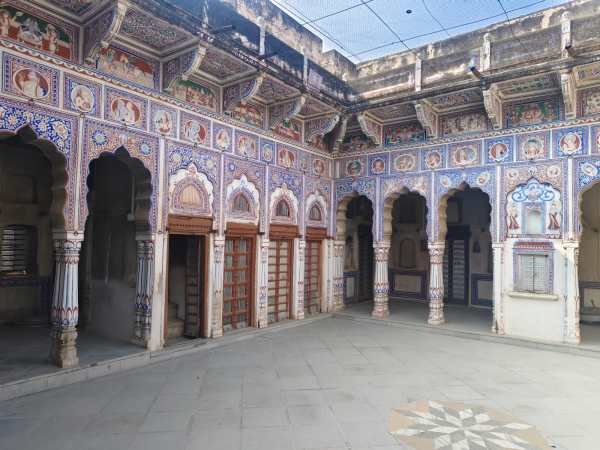 A courtyard at Seth Jagannath Singhania Haveli in Fatehpur, Sikar. (Express Photo: Parul Kulshrestha)
“The government is planning to send a proposal [to get these Shekhawati towns under the UNESCO Heritage Site lists],” Pankaj Dharandra, director at the state archaeology department, tells The Indian Express. “It’s a long process, and Deputy Chief Minister Diya Kumari has held two meetings on the preservation of these havelis. We’re now working on a blueprint for this.”
For the region’s havelis, long threatened by government apathy, lack of funds and illegal acquisition, the move offers an opportunity to restore their former glory.
Story continues below this ad
But on the ground, scepticism is writ large, with locals seeing the “land mafia” as the biggest threat.
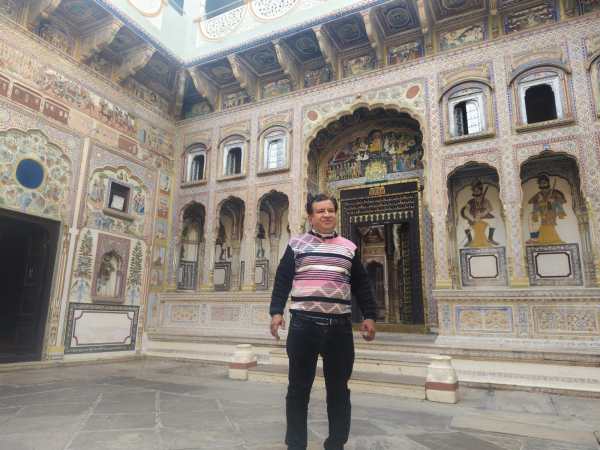 Sunil Sharma at the Dr Ramnath A Podar Haveli Museum in Nawalgarh, Rajasthan. (Express Photo: Parul Kulshrestha)
“[What] Madam [says] doesn’t matter. Whichever politician takes charge, his main focus is to be involved with the land mafia and destroy the havelis to build shopping complexes,” Sunil Sharma, a guide at the Dr. Ramnath A Podar Haveli Museum — a haveli-turned-museum in Nawalgarh town near Sikar — says.
Conservationists share this concern. “I have written multiple times to the state government for the preservation of these structures,” Raghvendra Singh Dundlod, a member of the former royal family of Dundlod who has been pushing for their preservation, says.
Raghvendra and his daughter Mallyka Dundlod are part of the Jhunjhunu chapter of INTACH, a non-profit working to preserve and document heritage structures.
Story continues below this ad
“The government should enact a law to protect heritage buildings over 100 years old — especially those with frescoes — and prevent their demolition,” he says.
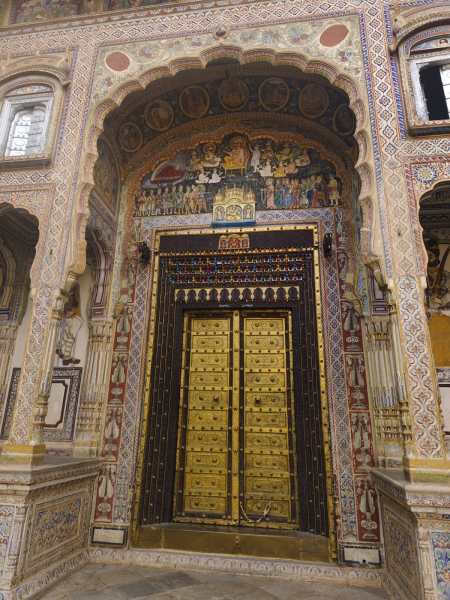 A view of a haveli at Fatehpur, Rajasthan. (Express Photo: Parul Kulshrestha)
The havelis of Shekhawati
The Shekhawati region — spanning Sikar, Jhunjhunu and parts of Churu — was founded in the 15th century by Rajput chieftain Maharao Shekha of the Kachhwaha dynasty of Amber and later became an important trading centre for opium, spices, cotton and silk.
Trade wealth was poured into havelis with chattris, carved doors, arches and latticework, and the famed Shekhawati frescoes — murals in indigo, red, ochre, green and white depicting mythology, folktales and themes such as the Independence Movement.
“After the arrival of the British, Shekhawati merchants went to other parts of the country — such as Assam, Calcutta and Bombay — for business,” Vinod Joshi, a heritage conservationist with the Jaipur Virasat Foundation, tells The Indian Express. “Those merchants, however, remained attached to their roots and invested their money into the havelis here.”
Story continues below this ad
A haveli typically had public and private sections — an ornate entrance, outer courtyards and baithaks for visitors, and inner courts, living quarters, tibaras and terraces with jharokhas, jalis, chhatris and frescoes.
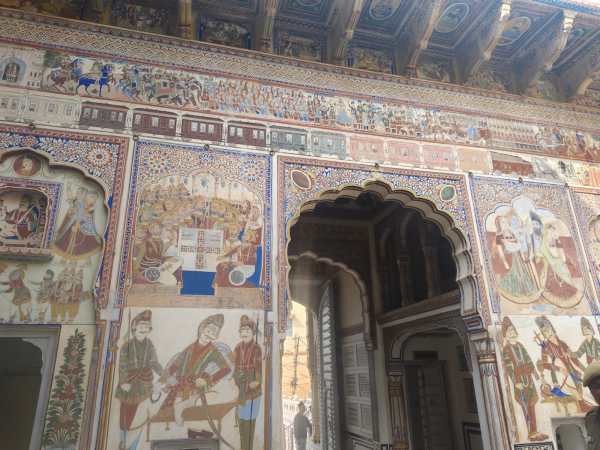 A view of the train fresco at the Dr Ramnath A Podar Haveli Museum in Nawalgarh, Rajasthan. (Express Photo: Parul Kulshrestha)
Wealth was directly proportionate to the number of chowks a house had.
“The more the chowks, the wealthier the merchant,” says Abha Narain Lamabh, an architect who prepared a blueprint for conservation in Sikar in 2008. “The paintings in the haveli centre on Lord Vishnu but also depict maharajas, maharanis, gardens, towns, streamers, or trains or anything else that these merchants saw in big cities.”
Occasionally, traders sent artisans to faraway lands to execute their vision. At the Dr Ramnath A Podar Haveli Museum in Nawalgarh, “the owner… called painters to Bombay to see the trains and replicate them at the haveli,” says museum guide Sunil.
Story continues below this ad
Conservation push
Today, most havelis serve as private residences, though several are open to the public. At the Seth Jagannath Singhania Haveli, the afternoon sun casts long shadows on a Radha-Krishna mural as foreign tourists amble. Here, caretaker Om Chotia lists the biggest problem — seepage. “The family paid to get sewer chambers on the road outside but it still gets clogged,” he says.
Despite this, the Singhania Haveli remains one of Fatehpur’s better-preserved ones. A walk down Fatehpur’s streets reveals others — cracked walls, faded paintings and padlocked doors telling a tale of neglect.
With many owners having moved out decades ago, the buildings now stand vulnerable to unauthorised acquisition, residents say.
“Several of the old havelis have now given way to shopping malls. The land mafia buys these from the haveli owners. Then, with the help of some local officials, they put up posters saying these buildings are dangerous. By the time the administration responds, it’s too late,” Sunil Sharma says.
Story continues below this ad
Mallyka Dundlod says that in a 2024 INTACH survey, six of 60 documented havelis in Nawalgarh had been destroyed.
“Since then, many more have been torn down,” she adds.
For a region already facing the threat of annihilation, a UNESCO World Heritage tag would be a significant boost — enabling access to conservation funds and boosting tourism.
That is why the government is pursuing it. While allocating Rs 200 crore on February 11, 2026, Rajasthan’s Finance Minister Diya Kumari said a total of Rs 200 crore will be spent over two years “to promote heritage conservation and economic growth” and that steps would be taken “to include them in the UNESCO World Heritage List.”
Story continues below this ad
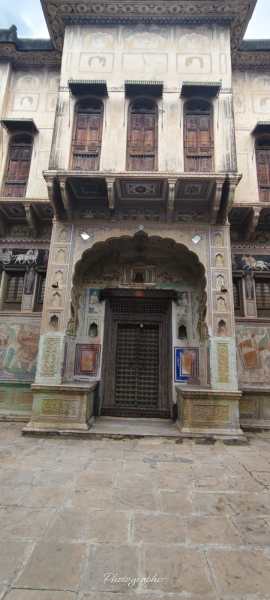 Nevatiya ki Haveli in Fatehpur, Sikar. (Express photo/By special arrangement)
The plan includes converting some havelis into heritage hotels, using Mandawa in Jhunjhunu — known for its haveli-turned-hotels — as a model.
So far, 600 havelis have been identified, but how restoration will be carried out remains unclear.
“It’s still unclear how this restoration project will be undertaken, which department will implement it, and whether — given that these properties are still privately owned — their owners will have any say in it,” one official says.
Meanwhile, Shikha Jain of DRONAH — part of a government panel on the UNESCO bid — says the process could take up to six years.
Story continues below this ad
“We aim to get a tentative listing, which can take up to a year. From there, the World Heritage tag could take between three and five years. There’s an urgent requirement to preserve these havelis. A lot of private investors have already started doing it by converting them into museums or hotels,” she says.
But many experts — as well as caretakers such as Kaalu Sharma — say this will be difficult without a law. Conservationist Raghavendra Dudlod says he had submitted recommendations in 2024, chief among them a law to protect heritage buildings.
“Sale of such properties must require the district collector’s approval after verification of ownership,” he says, adding that these proposals have yet to be acted on.
An official from the Sikar tourism department agrees that legislation is key.
“Three years ago, one haveli was purchased and the owner legally decided to tear it down… unless there is a law, nothing prevents owners from demolishing these havelis,” the official says.
Meanwhile, Jhunjhunu Collector Arun Garg said current orders require buyers to submit an affidavit that they will not demolish the structure.
“But how much they can alter or renovate is unclear. If a haveli is demolished, the administration can act for non-fulfilment of the affidavit,” he said, adding that Chief Minister Bhajan Lal Sharma has announced a law will be framed soon. “We hope it will be taken into consideration.”
Even as officials debate, the fate of the havelis hangs in the balance. At the Nevatiya ki Haveli, its caretaker Kaalu Sharma is worried about his livelihood.
“This is the only source of livelihood in Shekhawati, and if we lose this heritage, we lose our identity,” he says.