


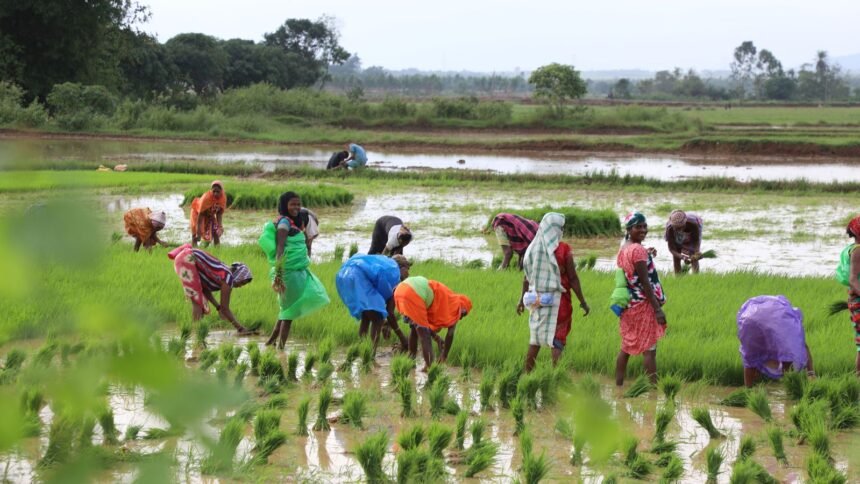
In Chizami village in Nagaland’s Phek district, women sit together sorting seeds into small woven baskets. Some will be sown next season, others shared, and many stored in a community seed bank — a modest institution that, in recent years, has become a form of insurance against climate change. There is nothing ceremonial about the act. But there is intention.
The seed bank, maintained by women farmers, preserves over 150 indigenous crop varieties, including traditional rice, millets, beans and gourds. Supported by the North East Network (NEN), these women are trained to select, preserve and document each seed variety. What appears routine is, in fact, a sophisticated knowledge system — one that determines what grows in the next season, what families eat, and how communities cope with erratic rains, floods and crop failures.

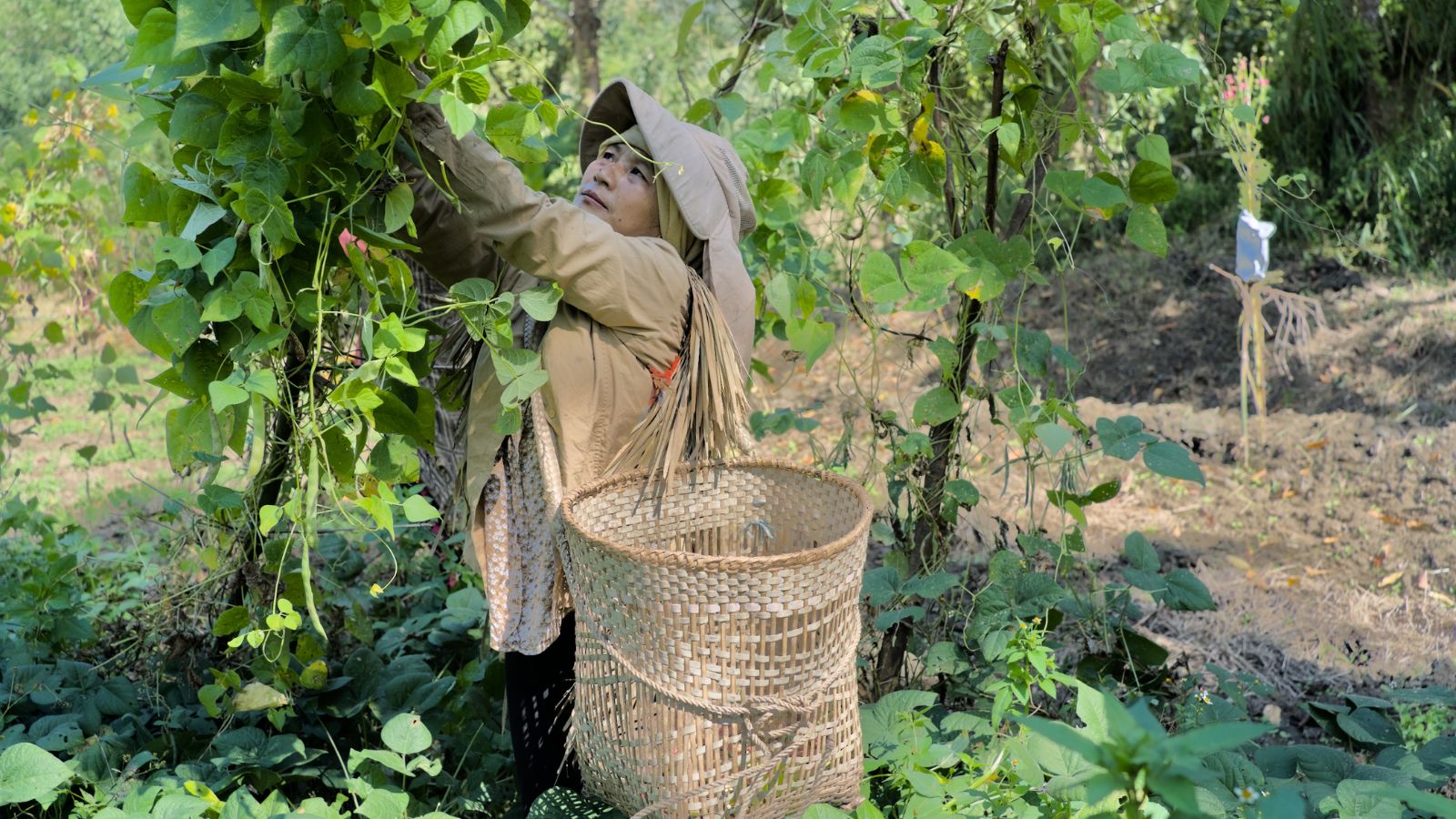 A woman farmer in Chizami (Ankha Millo/BfdW)
Chizami is not an exception. Across rural India, women sustain agriculture — selecting seeds, preserving landraces, managing livestock, processing food, and organising local markets. Yet their contributions remain largely invisible in policy and practice.
Guardians of biodiversity
In Odisha’s Koraput region — recognised by the Food and Agriculture Organization (FAO) of the United Nations as a Globally Important Agricultural Heritage System — women play a central role in conserving diverse crop varieties.
Among them is seedkeeper Dr Raimati Ghiuria, known as the “Millet Queen”. She has helped revive over 30 millet varieties and 70 indigenous paddy strains through a community seed house, or Beej Panthi.
Her work began with a simple observation after marriage — familiar grains grown in her new home. What followed was a deliberate effort to revive traditional varieties.
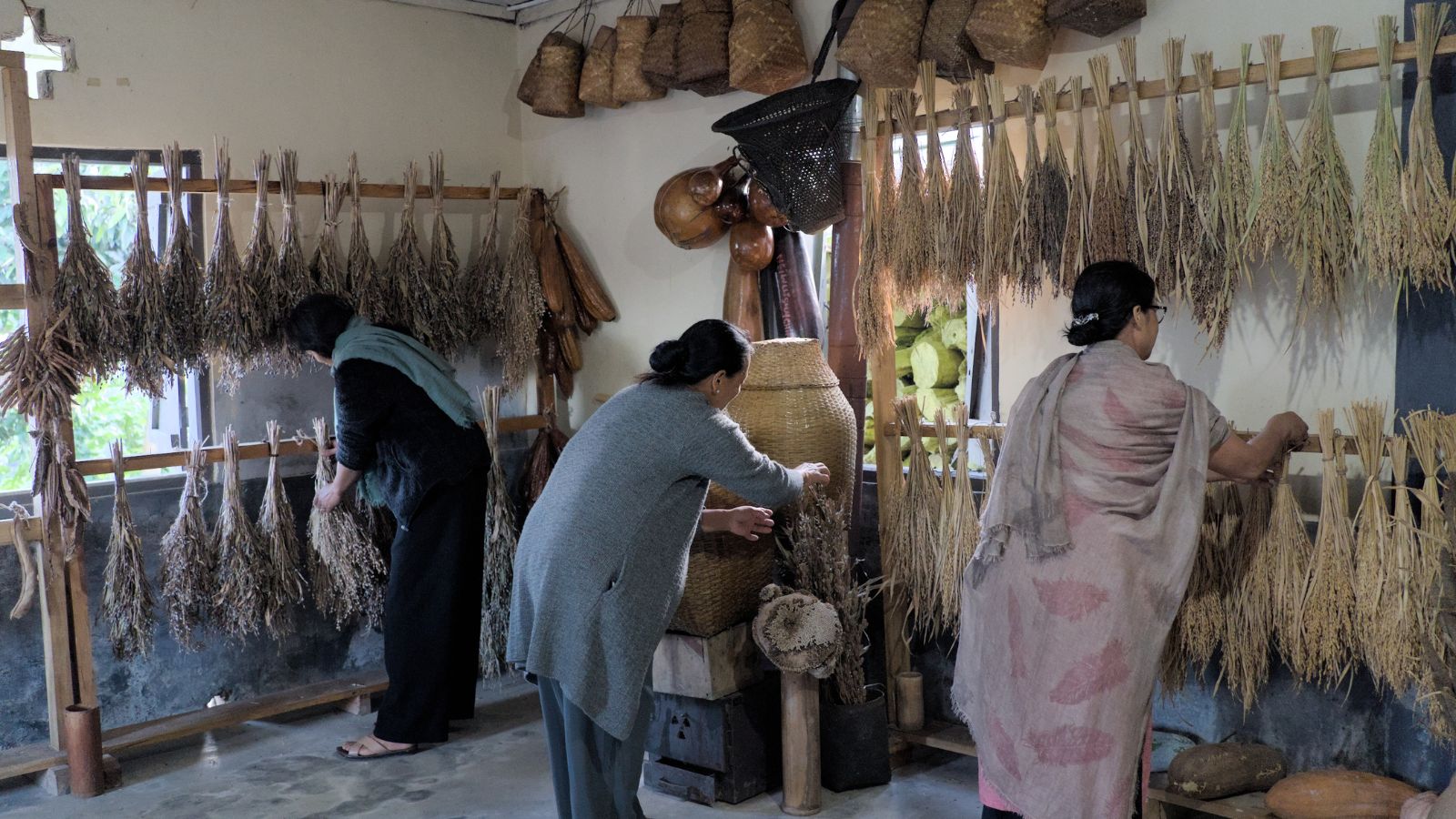 A community seed bank in Chizami (Ankha Millo/BfdW)
“When I came to my husband’s home as a young bride, I noticed that my in-laws also grew a few varieties of indigenous rice, just like the ones I had seen in my own home,” she recalls. “There was something comforting and familiar about those grains. But when I looked closely at them, I wondered what would happen if we nurtured these landraces separately, with more care and intention.”
Story continues below this ad
Over time, that instinct evolved into a larger effort to revive traditional crops.
“We gathered every seed we had and placed them in our Beej Panthi. Whenever a farmer lacked seeds, we offered them freely. The desi varieties that were disappearing, we have tried to bring them back,” Ghiuria says.
For Ghiuria, seeds carry memory as much as nourishment. “Every seed remembers where it came from,” she says, recalling her grandmother’s words.
A workforce without recognition
Women form the backbone of Indian agriculture. According to the World Bank report, they accounted for roughly 64.4% of the agricultural workforce in 2023-24. Yet policy frameworks have largely treated them as agricultural labourers rather than farmers or decision-makers.
Story continues below this ad
Without land titles or formal recognition, many women farmers remain excluded from institutional credit, crop insurance and government programmes designed to support agriculture.
Experts say the issue extends beyond land. Women are concentrated in low-return segments of the agrifood system, with limited access to markets, technology and decision-making.
“The priority is to support their transition from wage labour to enterprise leadership, through targeted training, digital inclusion, aggregation models, access to markets, improved labour conditions and social protection. The need is to invest in upgrading women’s position across value chains,” says Takayuki Hagiwara, FAO Representative in India.
Organisations working closely with farming communities echo similar opinions. Baishali Garg, Project Lead, NEN, says women often carry out the most critical agricultural work but have limited authority over farming decisions.
Story continues below this ad
“Although women carry out most of the labour related to seed selection, preservation, mixed cropping, soil care, and food storage, they often lack formal land ownership, which limits their authority over what is ultimately cultivated. In many households, women manage traditional food crops while men make decisions about cash crops, sale of produce, and income use, especially when farming becomes commercially profitable.”
Seeds as insurance against climate change
In Chizami, women have long been the primary seed selectors and knowledge holders in their communities. Today, their role has evolved from informal seed saving to collective leadership through community seed banks.
“Women play a very important role in saving and protecting traditional seeds. They act as the primary seed selectors, savers, and knowledge holders within their households and communities,” says Tshekhroweu T Mero, Associate Project Lead, NEN.
Traditional farming knowledge in many rural communities is also rooted in deep ecological understanding passed down through generations. Practices such as mixed cropping have long helped farmers improve soil health and reduce the risk of crop failure.
Story continues below this ad
In many regions today, however, women continue to maintain these diverse cropping systems as men increasingly shift towards commercial cash crops such as sugarcane, hybrid maize or high-yielding paddy varieties.
Mero says women’s knowledge of traditional farming systems plays an important role in sustaining agricultural resilience. “Women’s understanding of soil care using organic matter, traditional crop rotation and forest-based knowledge systems sustains productivity without chemical dependence. Their expertise in seed selection and storage ensures that resilient and locally adapted varieties are preserved across seasons to be cultivated for the next sowing season.”
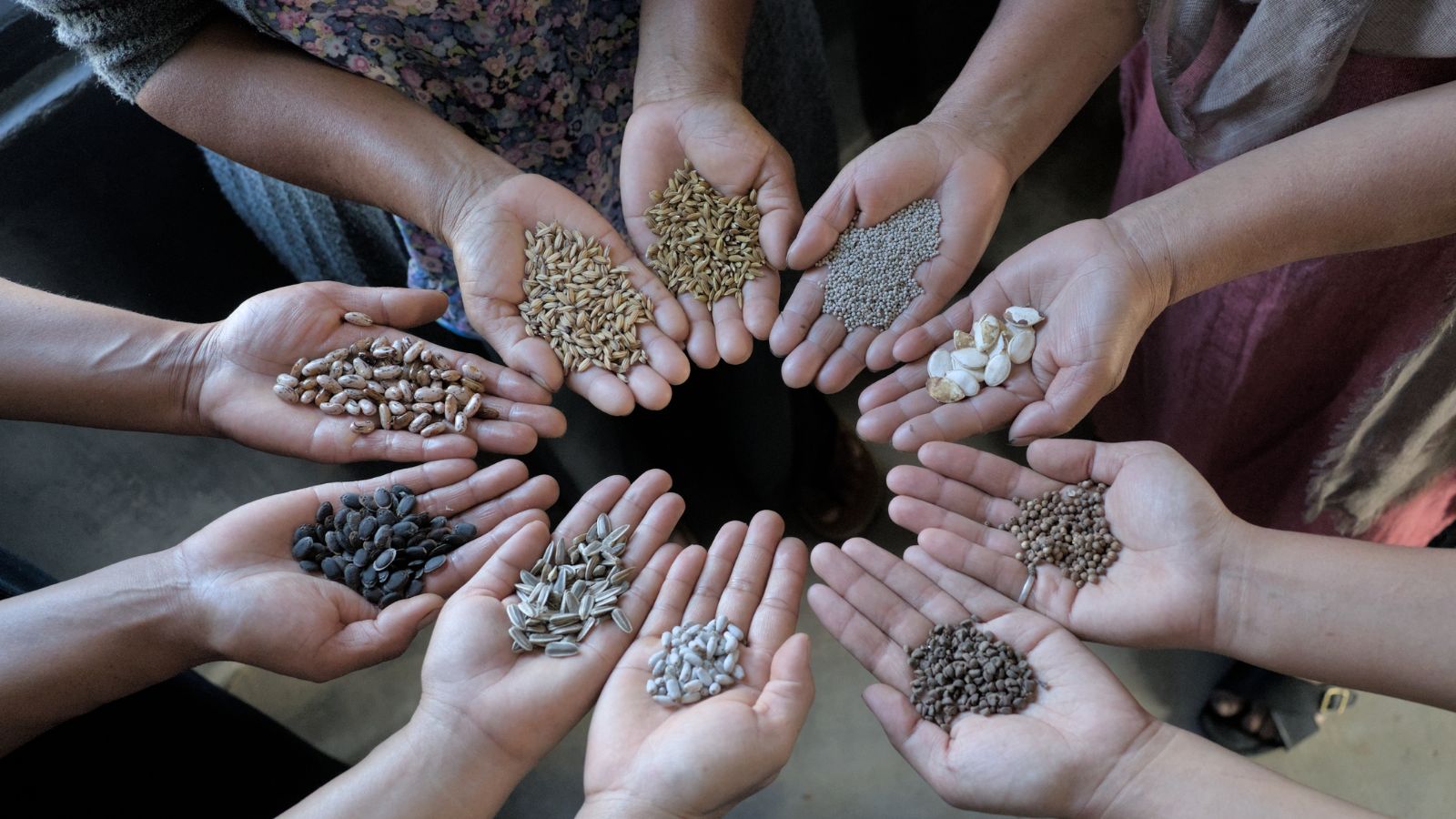 Display of preserved seeds in the community seed bank centre, Chizami, Nagaland, India
Farmers say these traditional seed systems are also helping them adapt to shifting climatic patterns. Crops that were once sown according to fixed seasonal cycles are now planted at different times of the year as farmers experiment with new cultivation windows.
For Lhikoweu Chirhah, a farmer from Chizami, the practice of saving seeds is guided by knowledge passed down through generations and follows seasonal cycles.
Story continues below this ad
“Seeds are carefully preserved according to the agricultural seasons so that they can be reused for planting in the following season. This traditional practice helps us maintain a continuous cycle of cultivation and ensures that suitable seeds are always available when the next planting period arrives,” she says.
Preserving seeds, she adds, also helps protect local crop varieties from disappearing. “If these seeds are not preserved, they may eventually become extinct in the village, leading to the loss of valuable traditional crops and biodiversity.”
Chirhah says changing rainfall patterns have already altered the village’s cropping calendar.
“Beans are usually sown in March and April, but due to seasonal changes, we now grow them in August or September,” she says.
Story continues below this ad
Farmers have also adapted to other challenges. When bird attacks began affecting millet crops, the community experimented with off-season cultivation from August to November — an example of how traditional knowledge combined with local innovation can respond to changing conditions.
“Millet seeds are often attacked by birds, so we sow them in August. We do not cultivate them in large quantities, but we continue to farm them to preserve the seeds”, says Chirhah.
Experts say these indigenous knowledge systems must be recognised as living practices that support resilience, sustainability and nutrition.
In agrarian states like Assam, women are central to farming, nutrition and the preservation of traditional crop varieties. Women conserve and cultivate climate-resilient indigenous crops, including short-duration paddy varieties that are particularly valuable during the Sali (Kharif) season as they can be sown after floodwaters recede.
Story continues below this ad
“The state’s agriculture department has increasingly involved women farmers in training and capacity-building programmes covering food processing, mushroom cultivation, nursery raising, floriculture and value addition activities. Integrated farming systems promoted under schemes such as Rain-fed Area Development encourage diversification through kitchen gardens, backyard poultry, goat rearing and duck farming — strengthening both household nutrition and rural incomes,” the Directorate of Agriculture, Assam says.
Invisible labour, unequal power
Despite their expertise, women farmers continue to face structural barriers.
According to the FAO’s 2023 report, The Status of Women in Agrifood Systems, 36 percent of working women globally are employed in agrifood systems. They are also responsible for an estimated 85-90 percent of household food preparation.
“Women may carry the responsibility for food production and household nutrition, but they often lack the authority and resources needed to make key decisions. This contradiction is particularly visible in farming households where men retain formal ownership of land and assets. As a result, women frequently struggle to access credit, crop insurance or agricultural subsidies, all of which typically require proof of land ownership,” says Dr Mamata Pradhan, Research Coordinator, International Food Policy Research Institute (IFPRI), South Asia Regional Office.
“Women have more responsibility in agriculture, but not necessarily more power,” she adds.
Migration has also increased the role of women in farming across India. Researchers observe that the feminisation of agriculture — the growing role of women in farming as men migrate for non-farm work — began to be observed from the 1960s and has intensified in recent decades.
“As men move to cities for work, women are taking on more responsibility for managing farms and rural livelihoods,” says Pradhan.
Despite these expanded roles, women often do not gain greater control over technology, markets, or income from agriculture.
Experiences from farmer collectives reflect these dynamics on the ground. In Tamil Nadu, Sreedevi Lakshmikutty, co-founder of Bio Basics, an organic granary, says women often form the backbone of FPOs even when they are not in formal leadership roles.
“Most of the FPOs bank on the women employees for the roles. They are more committed. They stay for the long term, and they are very good at what they do. So even though they do not lead it, they form the backbone of these collectives, and they also benefit the maximum from these organic value-added collectives.”
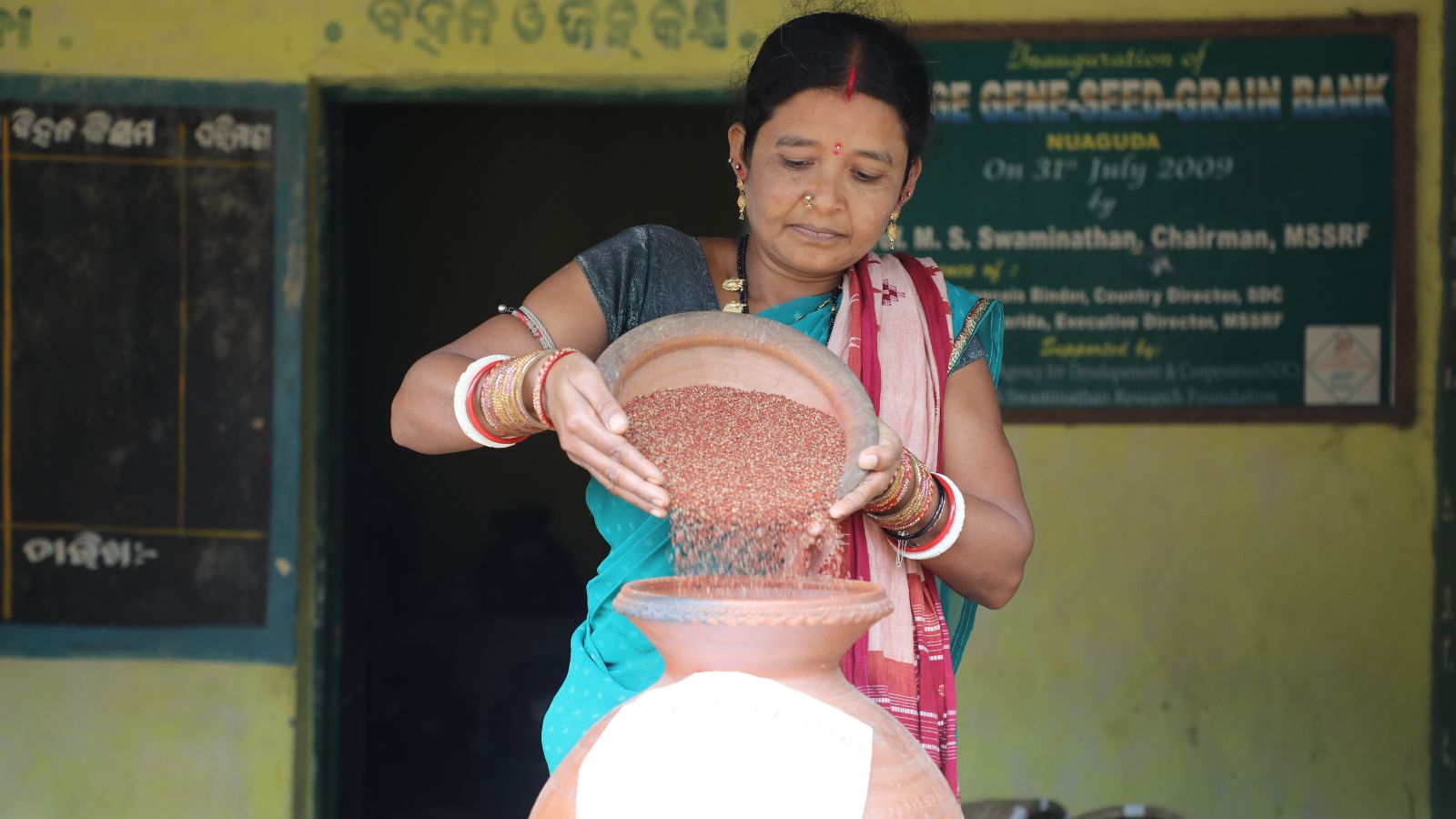 Raimati Ghiuria, known as the “Millet Queen”, has helped revive over 30 millet varieties and 70 indigenous paddy strains through a community seed house. (Pooja Chowdhary/FAO)
Lakshmikutty notes that male farmers still tend to be more visible in organic farming networks, particularly in sourcing and market-facing roles. Women, however, are deeply involved in processing and value addition within farmer collectives — producing snacks, spice mixes and other products that generate additional income.
The road ahead
As agriculture becomes more commercialised, cropping patterns are shifting. Hybrid and purchased seeds, along with market-driven cash crops, are gradually replacing many traditional varieties. At the same time, changing food habits and market pressures are leading to the decline of indigenous crops such as millets, weakening both local food diversity and the knowledge systems women have sustained for generations.
In villages like Chizami, this shift is already visible. Yet, each season, women gather to sort, preserve and exchange seeds — deciding which varieties will be sown, which crops will feed their families and which traditions will continue into the next generation.
“Farming needs to be studied, just like students study their syllabus, because farmers need to know in which season seeds should be preserved and sown. Without this knowledge, farming becomes very challenging,” says Chirhah.