


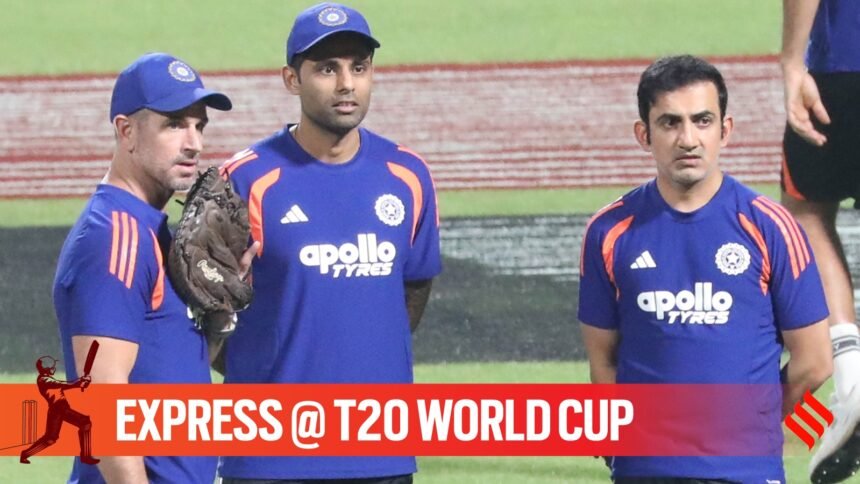
17 years is a long time to carry a question.
Long enough for an entire generation of Indian cricketers to come and go, for the IPL to be born and bend the format in its image, for T20s itself to evolve from a novelty to the sport’s commercial heartbeat. India had won the inaugural tournament in 2007 and then, for 17 years: nothing. When Barbados finally ended the wait in 2024, Gautam Gambhir was watching. Even as the celebrations took place, he was already plotting for the next one. How do you stay there? Gambhir gave the team his answer in Pallekele, barely a month later — two words, in their first huddle with him as head coach: Be fearless.
Not a toast. A thesis. What followed over the next 18 months was one of Indian cricket’s most deliberate acts of reinvention — conducted entirely in plain sight, in bilateral series the world filed away as routine, while Gambhir and the team management did something more interesting than winning. They were rehearsing.
The core of the side was sound. Gambhir knew this. But he’d spent the previous season mentoring Kolkata Knight Riders to an IPL title — a season in which batting units had fundamentally altered what a par score looked like — and he’d watched the national side from the outside, unconvinced it was keeping pace. The IPL had evolved. The game had evolved. India’s T20 identity needed to evolve with it. The blueprint had two pillars.
First: neutralise match-ups completely. Every batter had to handle every type of bowling — pace or spin, left-arm angles or off-spin. When opponents studied India’s order, they should find nowhere to aim. Second: a left-right batting order, as relentlessly alternating as possible. The idea was to make India’s line-up a puzzle with no clean solution — to force captains into reactive thinking rather than planned attacks.
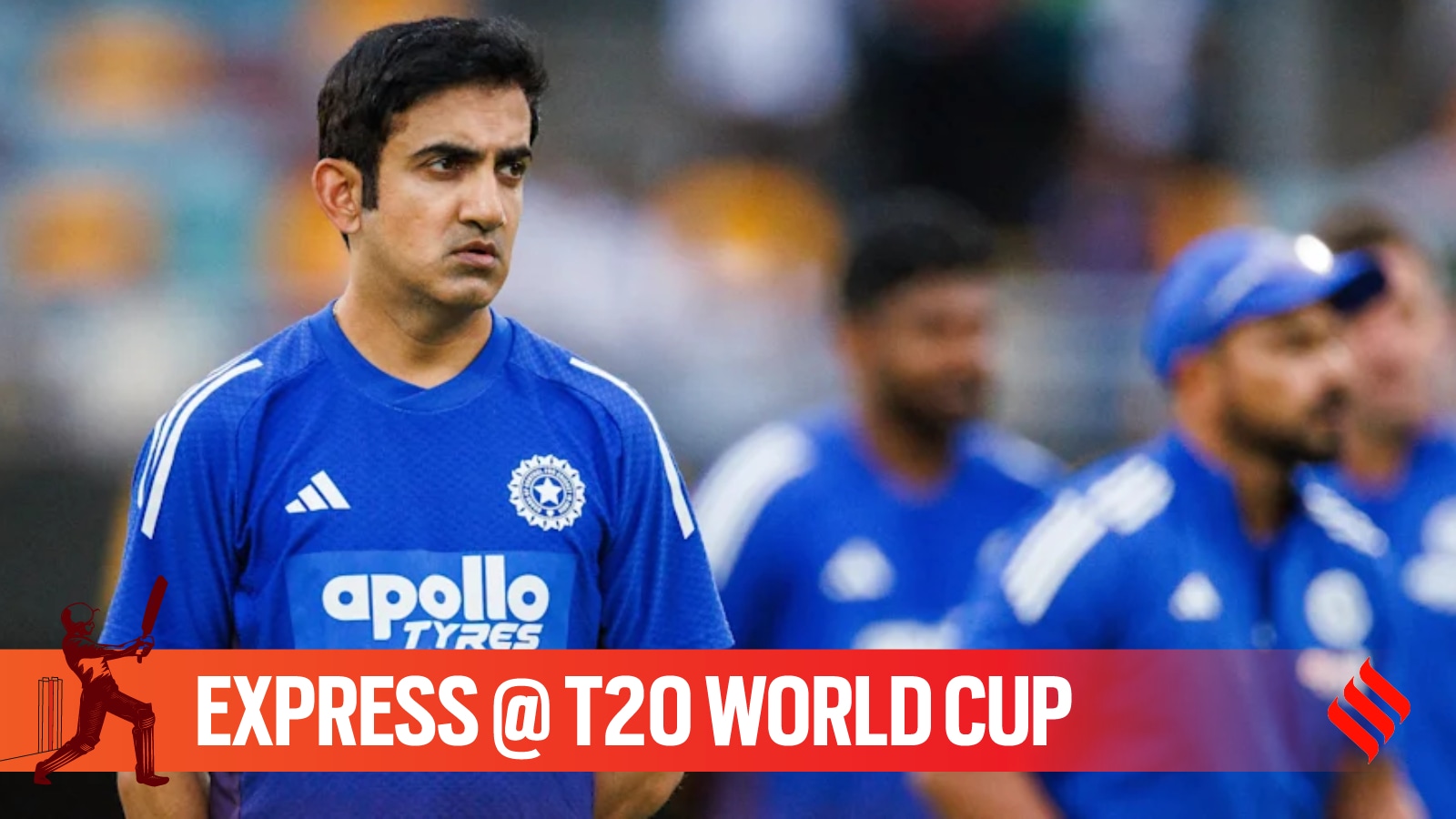 India head coach Gautam Gambhir in picture. (FILE PHOTO: ICC)
Together, the two principles were designed to do the same thing: ensure no opposition could ever arrive with a blueprint they could rely on.
There was one blind spot, and it took them a while to find it. “We play very few off-spinners in the IPL. Honestly, none of us thought it would be an issue. We thought all our bases were covered. But it was a small bump, which we had to overcome with a bit of tinkering,” a source said. And there was a second, more structural challenge. This Indian team — especially in white-ball cricket — had been almost supernatural when chasing. “Chasing a target was like having breakfast for the batsmen.”
Story continues below this ad
But setting totals? Batting first into the unknown, without a fixed destination? It’s a different creature entirely. In a knockout tournament played under lights, where dew tilts the balance towards the team chasing, India would need to bat first and not just survive, but weaponise it. They had to learn to post scores that made opponents feel, before a ball was bowled in reply, that the game was already lost.
So the bilateral series — India winning every T20I series for 18 months — became something more. Venues were chosen deliberately — Wankhede Stadium in Mumbai, Narendra Modi Stadium in Ahmedabad, where the World Cup knockouts would take place.
Scenarios were manufactured inside real matches: India would bat first when instinct said chase; the order reshuffled; roles tested against the grain. Pressure was imported into matches that didn’t require it. “You need to prepare for different situations so that when you face it in the game, you know how to handle it. Otherwise, players start searching for solutions under pressure.”
Most teams arrive at a World Cup hoping to figure things out if things go wrong. India arrived having already figured them out — in matches the world treated as routine. The World Cup wasn’t discovery. It was recognition.
Story continues below this ad
Strong suit
The bowling required less reconstruction. Jasprit Bumrah, Varun Chakaravarthy and Kuldeep Yadav were each capable of winning a match alone — the problem was fitting all three into the same XI. Arshdeep Singh provided early breakthroughs. But between Kuldeep and Varun, there was space for only one. Captaincy produced its own debate. Hardik Pandya was the nominal successor to Rohit Sharma, but injury concerns shadowed the conversation. Gambhir leaned toward Suryakumar Yadav — reasoning that in T20 cricket, the captain is only as strong as the leadership group around him. Around Surya sat Hardik, Bumrah and Axar Patel, plus a coach who had just won the IPL.
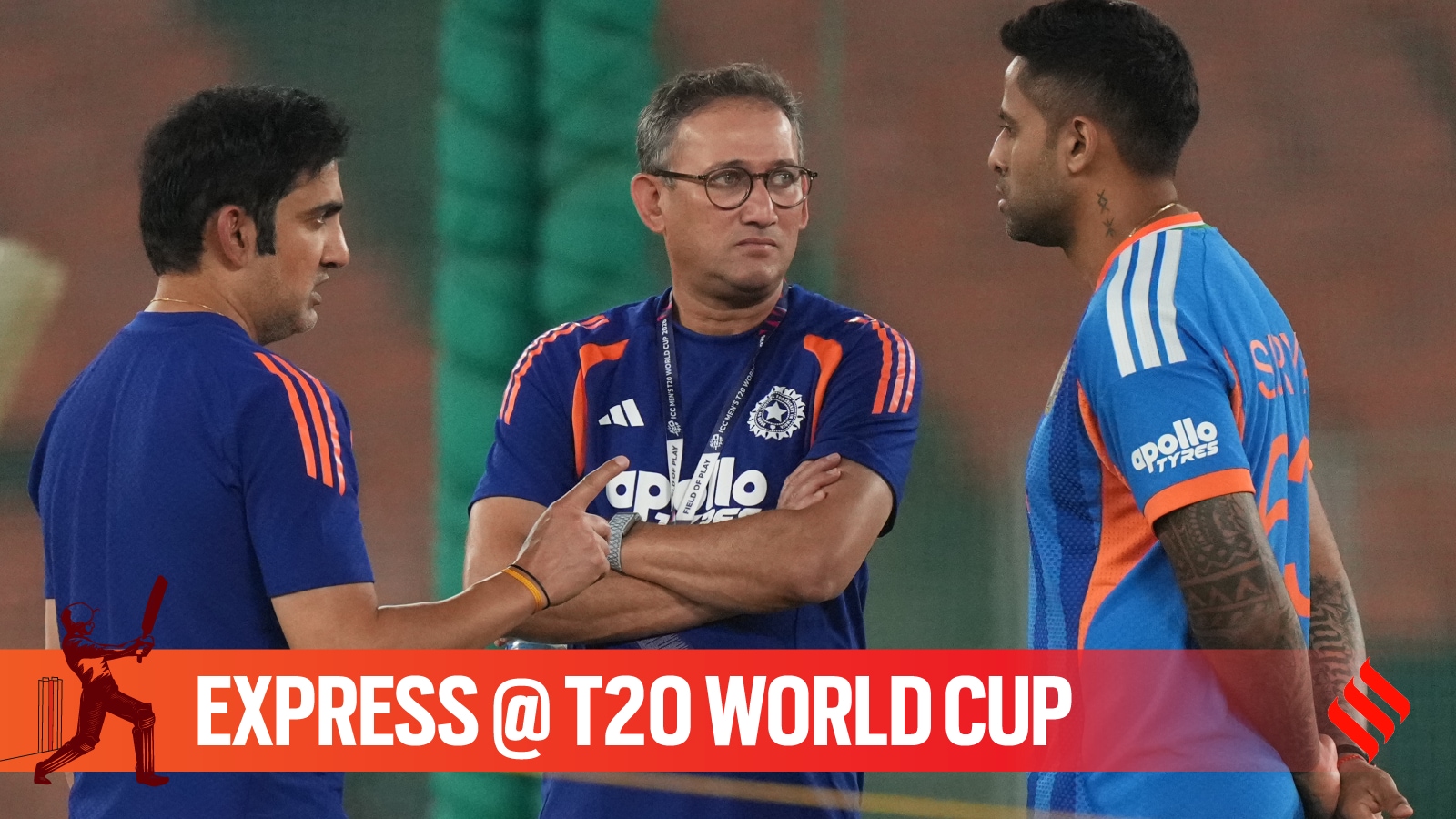 India’s head coach Gautam Gambhir, left, Chief Selector Ajit Agarkar, center, and India’s captain Suryakumar Yadav talks during a practice session ahead of the T20 World Cup cricket final match against New Zealand in Ahmedabad, India, Saturday, March 7, 2026. (AP Photo)
It was less a gamble on inexperience than a bet on the room. The nucleus held. Around them, the next generation — Abhishek Sharma, Varun, Rinku Singh, Washington Sundar, Ishan Kishan — arrived already moulded by the same IPL furnace.
Wankhede Stadium. Semi-final: England won the toss and sent India in. The exact scenario. The one they had manufactured, rehearsed, and solved while no one was paying attention. Sanju Samson walked out and took England’s bowling apart. India posted 253 for 7. Not a total scraped together under pressure, but one built with the calm of a team that had already been here, done this, many times over. England fell seven runs short.
In Ahmedabad, two days later, Surya lifted the trophy. Somewhere in that moment lived an echo — of a huddle in Pallekele, of scenarios solved long before the tournament required them, of two words that turned out to be a complete instruction manual. Be fearless. The World Cup was just the performance. India had already done the rehearsing.