

Many years after Dinesh Khanna won India’s first and only singles title at the Badminton Asia Championships, the Amritsar ace faced a ‘storm in a teacup’. His wife was glaring at the white metal tea set Khanna was given after winning the Asian title, in which she could never actually serve tea.
The rolling trophy that Khanna had won at Lucknow in 1965 ended up as a keepsake for the next Asian champion from Indonesia. The military junta commander from the next edition in Manila in 1969 had proposed that they would carve out a brand-new Asian rolling trophy. So, Khanna, who had won as an unseeded player, defeating Thai Sangob Rattanusorn 15-3, 15-11, was left with no trophy to flaunt on the shelves and a nonexistent gold medal, which is only mentioned on the Wikipedia page.

“After some years, my wife said, ‘What are we to do with the tea set? We couldn’t use it to drink tea. I couldn’t display a tea set in cabinets like a trophy. We got rid of it naturally!’” Khanna, now 83, laughs uproariously at the memory.
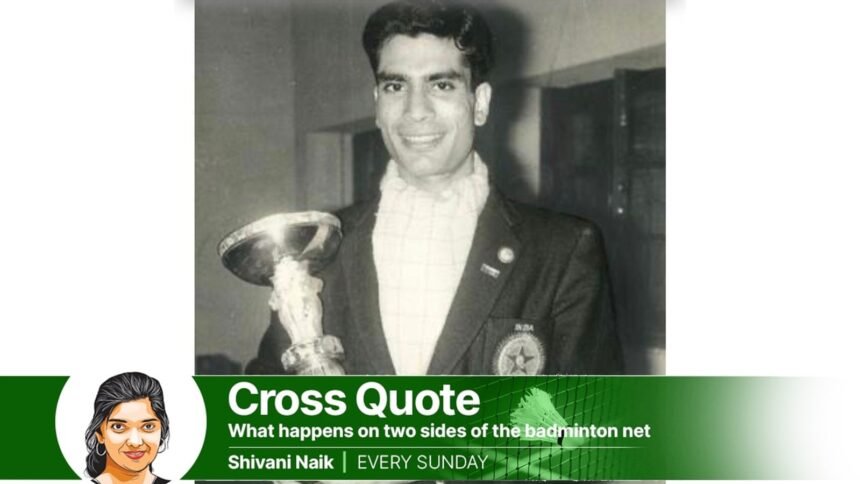
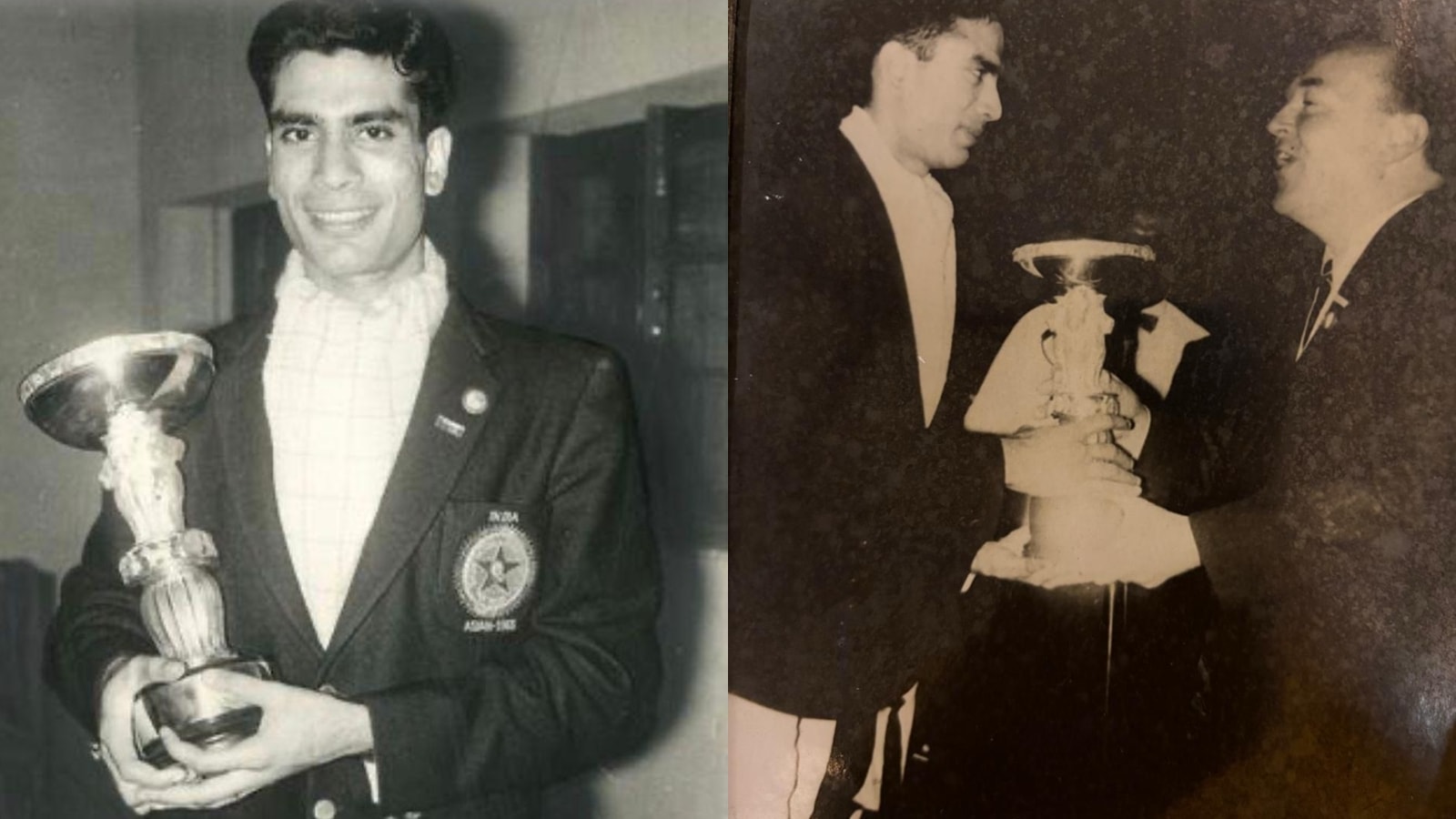 The rolling trophy that Khanna had won at Lucknow in 1965 ended up as a keepsake for the next Asian champion from Indonesia. (Right) Khanna receiving the trophy from David Bloomer, president IBF, now named BWF (Images via special arrangement)
No Indian singles shuttler has won the Asian Championships since. Satwik-Chirag engraved their names in doubles in 2023. But from the outset, the Badminton Asia Championships, which start this Tuesday, and are high on Lakshya Sen’s priority list this season, have seemed a tough title to nail.
A fresh civil engineering graduate from Chandigarh’s Punjab University, Khanna – firmly in the shadow of Nandu Natekar and Suresh Goel – had given himself a year to devote to badminton. In 1963, playing the inter-state, he twisted his knee. An open-knee surgery followed, but on his comeback, he got a good six months of training with the big Indian names, and ended up at the three-week camp at Lucknow as India’s fourth-best singles player.
“The plan was to win a couple of rounds, then sit and watch the top badminton players of the world in action from the stands, because in Amritsar you hardly got to watch great badminton,” Khanna recalls. So he wound up in the quarters against Yoshinori Itagaki, a barely 5-foot Japanese, nicknamed ‘Bouncing Ball’ because of his relentless retrieving.
Khanna, an unapologetic and diligent defensive player himself with no pretension to pretty strokeplay, liked his afternoon naps for recovery and didn’t train much physically outside the court. “My teammates came to me before the quarters and said, ‘Woh toh ek ghante se skipping kar raha hai.’ (Itagaki was skipping for an hour). I said, ‘Main toh rest kar raha hoon. Theek hai, usko skipping karne do,’ (‘I will rest. It’s okay, let him skip,” he recalls.
Story continues below this ad
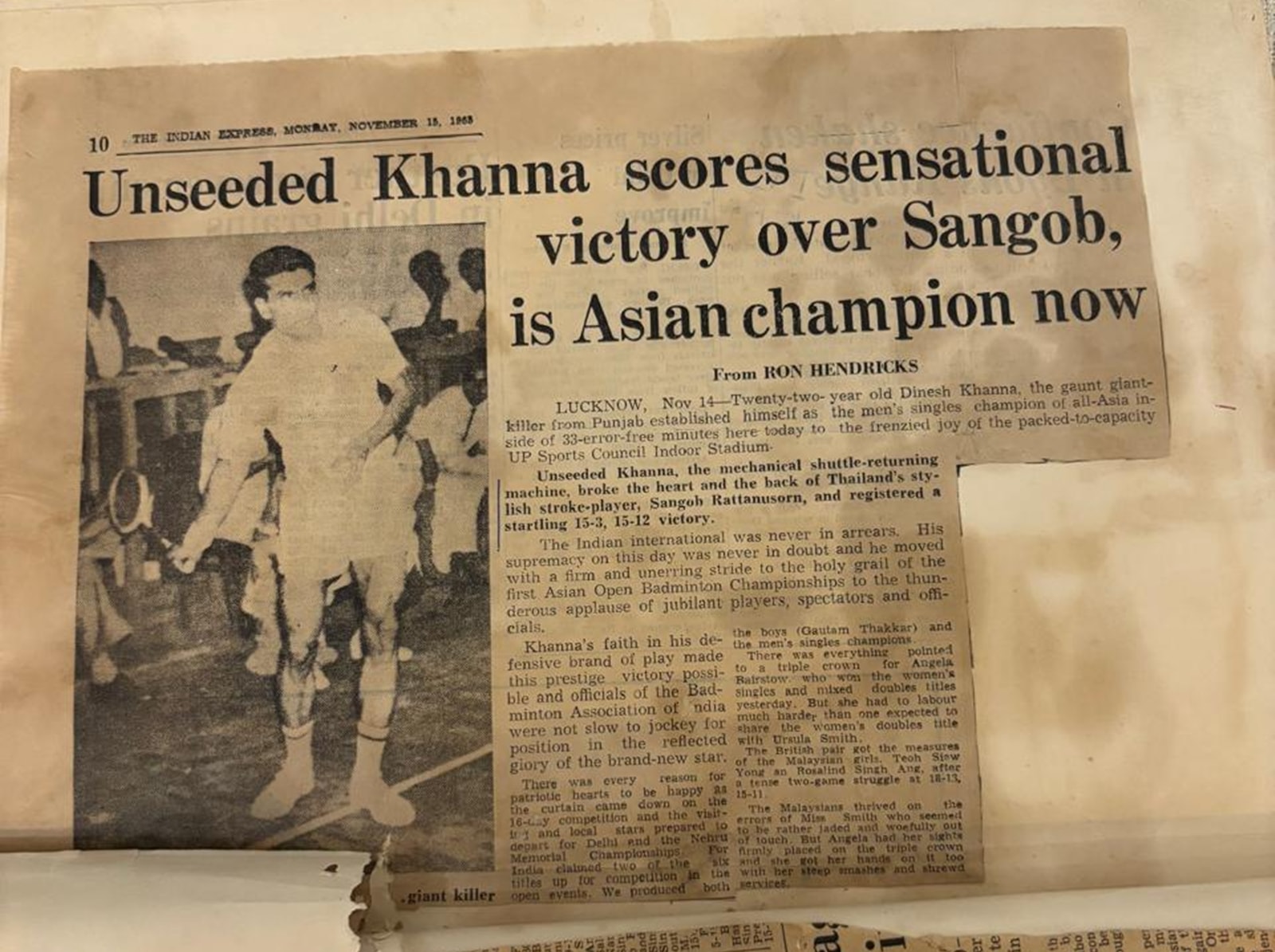 Indian Express coverage of the 1965 title by renowned Ron Hendricks .The press gallery was just behind the base line where Khanna was testing shuttles.
It wasn’t self-confidence or anything. “At engineering college, somebody advised me to skip to improve speed. I must have tried on a hard surface. I couldn’t walk for the next 3 days, so I never skipped after that day,” he says. Itagaki lay in wait. Khanna took the first set 15-1, because the Indian’s impassive defence rattled the Japanese.
In the second, however, the rallies started. “A Hong Kong player with a fetish for stats later told me, the longest rally went to 50 strokes, and there were many of 40, too,” Khanna recalls. At 7-7, his feet had started shaking from exhaustion, but the thought of a third set with Itagaki jolted him at 12-12 to use his backhand to make the similarly tiring Japanese go for overheads, running even more.
The chair umpire would take a small timeout to inform organisers to keep two stretchers ready beside the court.
Not only would Khanna prevail, but he also defeated India’s best strokemaker, Suresh Goel, in the semis. Goel had evicted top seed Yew Cheng Hoe in the quarters. But finding himself in the finals was surreal for Khanna. “I had no tension. Just surprised that I was initially watching from the stands as a fan, but ended up playing the final myself,” he says.
Story continues below this ad
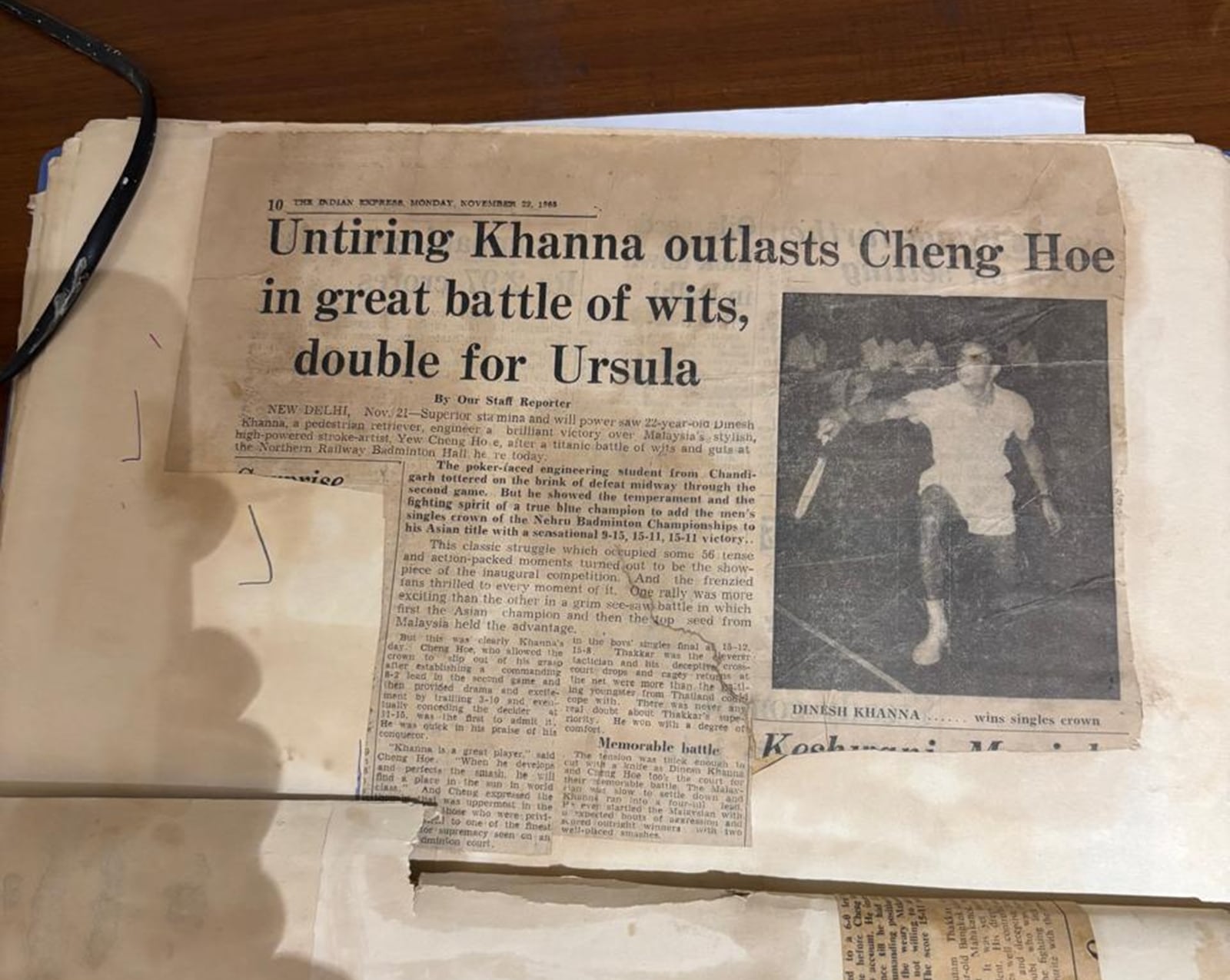 The Nehru Memorial in Delhi that followed the Asian Championships in Lucknow, was virtually another top Asian meet. Khanna faced Yew Cheng Hoe who was the top seed in Asians and Nehru both, and defeated him in the finals of Nehru Memorial.
Inspiration came from a Lucknow legend. “India wasn’t great at sport then. But before the final, KD Singh Babu, who had won Olympic golds with Dhyanchand, shook hands with me and wished me luck. I thought to myself, if this Indian can win gold, why can’t I at least win an Asian Championship! I played freely, stroked well and struck the perfect length,” Khanna recalls.
Leading 12-7 in the second, he suddenly stuttered to 12-11. But Natekar’s advice to cross the shuttle, instead of sending it to the baseline from the net, helped him. “That time, nobody pumped fists. We had to show we were humble. So I was reluctant to raise my hand and announce my own victory,” he recalls.
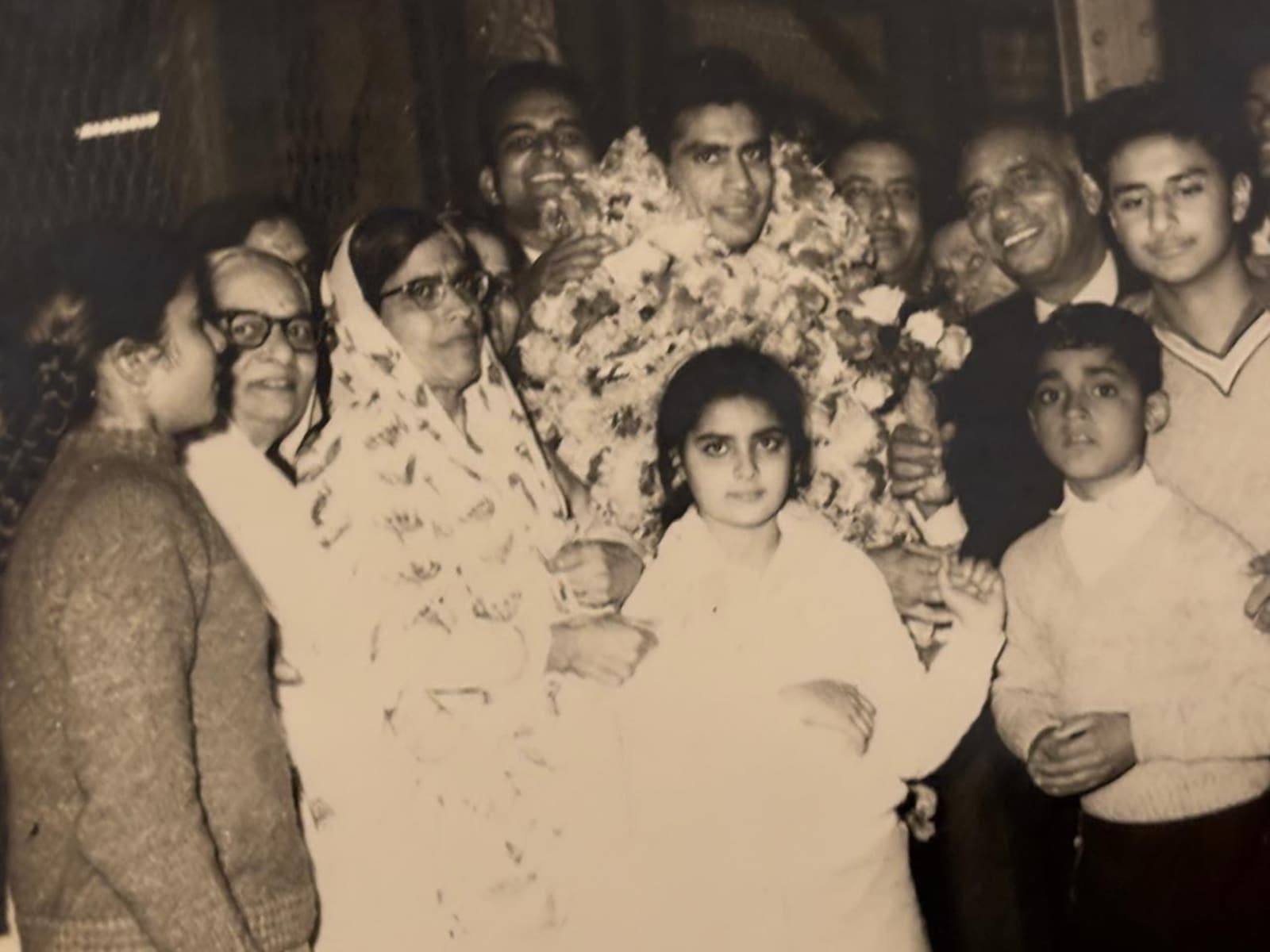 Dinesh Khanna Being received at Amritsar Railway station by family and friends after winning Asian Championships and the Nehru Memorial which followed. (Image via special arrangement)
A week later, he had to prove it was no flash in the pan when the caravan with top players moved to Delhi for the Nehru Memorial – with Khanna pulling off the second straight title. He had only won the state championships before.
Radio commentator Jasdev Singh would grill him about why he played so defensively. He quipped, “I’m born in Gandhi-Nehru’s land, so I choose non-violence.”
Story continues below this ad
It’s also how the storm about the tea cups, of 1965 Asian Championship vintage, quietly subsided, at the wife’s decluttering insistence and Khanna’s quiet acquiescence.