Analysis: Why Keir Starmer resigned
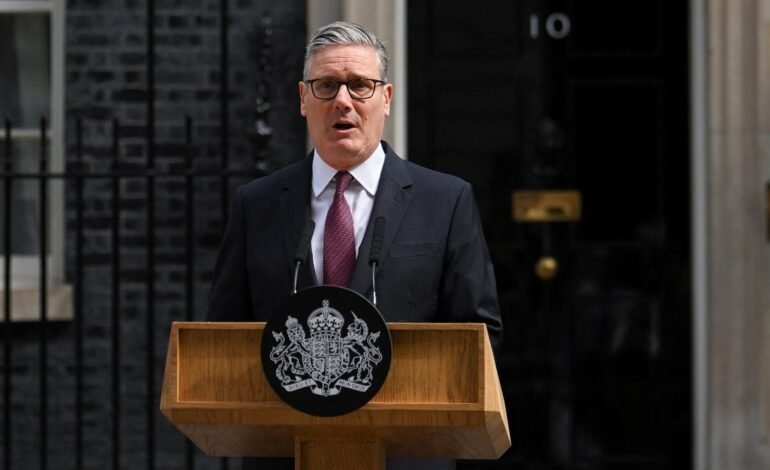

Keir Starmer announced his resignation on Monday (June 22, 2026) morning, just under two years after leading Labour in a landslide victory in July 2024. This happened despite the fact that the U.K. saw some of its important economic parameters improving in the last two years. It had the strongest economic growth in Q1 2026 relative to its G7 peers and inflation had been falling to the Bank of England’s target level of 2%, for instance. The waitlists for medical appointments in the U.K.’s universal healthcare system had also fallen. Net immigration numbers — a hot button — had also declined, though some of this could reasonably be attributed to policies of the Conservative government of Rishi Sunak.
However, the above was not enough to keep Mr. Starmer in No. 10 Downing Street until the end of this Parliament. His popularity within the Labour Party, his historically low performance in opinion polls, poor judgement calls in political appointments, recent electoral losses for Labour and fears around the growth in Reform and other hard right parties were among the reasons he was compelled to resign. His political fate was all but sealed when Labour’s ‘King of the North’, former mayor of Greater Manchester, Andy Burnham won a seat in Westminster (the U.K.’s Parliament) last week, after winning a bye-election.

Labour’s infighting
The factionalism within Labour became evident within a year of Mr. Starmer becoming Prime Minister. The seeds of this were sown earlier when Mr. Starmer moved himself and the Labour party towards the centre. He suspended former left-wing leader Jeremy Corbyn as part of a move to distance the party from a perception of anti-semitism. This does not explain the entire picture either. The domestic and global environment in which the Labour party operated has been fluctuating these past two years, and this has resulted in MPs coalescing around multiple centres of gravity as far as policy is concerned.
While the Conservatives, who were historically the mainstream party of the right in the U.K., being decimated in the 2024 elections, the hard right Reform U.K. party and now, Restore Britain, which is even further right of Reform, have been gaining in strength. Britain has been no exception to the higher levels of political polarization seen world over in the last decade. All of this has created pressure on Labour from both the right (such as from Reform) and the left (such as the Greens).
More than 120 of the 403 Labour MPs in the House of Commons revolted against proposed welfare cuts, forcing Mr. Starmer to walk these back significantly in June 2025. There was further backlash from within the party to changes in immigration policy announced in November 2025, fundamentally changing the model of immigration to the U.K., restricting or prolonging most pathways to permanent residence. Mr. Starmer and his allies have repeatedly argued that certain policies are necessary to keep Reform at bay.

Low popularity in polls
Mr. Starmer’s net favourability ratings have been deep in negative territory, where he has competed with Lizz Truss, who served as U.K. PM for just 49 days. His recent net favourability numbers have been in the -40 to -45 range. British commentators have tried — and struggled — to explain the cause for the Prime Minister’s unpopularity, proffering various reasons for this phenomenon. Explanations have included Mr. Starmer being on the receiving end of general public frustration and impatience for change, to disillusionment from the left flank of Labour’s traditional vote base to his judgement calls on appointments. This unpopularity has been a central reason why Mr. Starmer’s own colleagues have called for him to step down, fearing that Labour will not get past the post in the 2029 general election.
He lost friends within his party and strengthened critics with further evidence emerging in recent months of his poor judgement calls over the appointment of Peter Mandelson as Britain’s U.S. Ambassador, who was sacked from his post in September 2025 over his links to (now deceased) paedophile Jeffrey Epstein. A series of departures from the government around this issue further weakened Mr. Starmer.

Poor results in recent elections
Recent election results where Labour did not fare well have compounded fears of Labour MPs that the party may squander away its 2024 election victory and lose in 2029. It lost a seat to the Greens (who are to the left of Labour on the political spectrum) in a bye-election in Greater Manchester’s Gorton and Denton constituency.
Labour’s National Executive Committee and Mr. Starmer were criticised for not allowing former Greater Manchester Mayor, Andy Burnham, seen even then as a contender for Mr. Starmer’s post, from contesting this election. A decision on Mr. Starmer’s leadership was postponed until the May 2026 subnational elections. However, in May, Labour was handed a major defeat in local elections in England and did not do well in the assembly elections in Wales and Scotland. Reform picked up 1,452 council seats in England, while Labour lost 1,498 seats and control of Welsh politics after more than a century. This was a severe blow for Mr. Starmer’s leadership, with several MPs, including Wes Streeting, the U.K. Health Secretary and contender for the prime minister’ job, quitting the government.
Andy Burnham enters the scene
The final blow to Mr. Starmer’s premiership came last week, when Mr. Burnham won the Mackerfield parliamentary bye-election, winning 55% of the vote, with Reform’s Rob Kenyon just getting 35% of the vote. Reform had won just over half of the eight wards that make up Makerfield in May (i.e., in the local election). Last week’s results are thus being read by many, including Mr. Burnham’s allies, that Mr. Burnham can beat Reform.
Just after the results came in on Friday (June 19, 2026) last week, Mr. Starmer said he would fight a contest for his position if he was challenged. The mood changed over the weekend when Mr. Starmer retreated to his official country home, Chequers, and sought the council of his wife, Victoria, and discussed his future with cabinet members. Several of these ministers had reportedly urged him to step down and put forth an orderly timetable for a transition. Mr. Starmer announced he would step down on Monday (June 22, 2026) morning.
Published – June 22, 2026 07:02 pm IST