

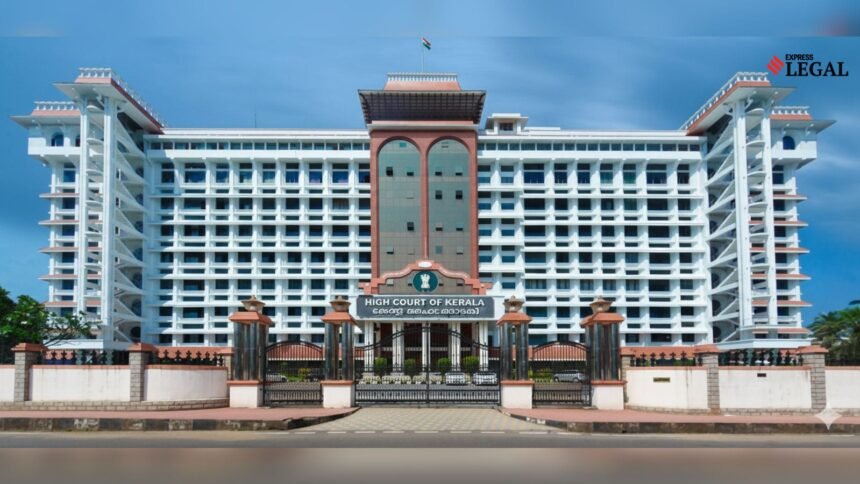
The Kerala High Court has set aside the conviction of a man who spent 14 years in jail for murder, saying the accused had been “denied a fair trial” after being forced to defend himself without legal representation.
Setting aside the conviction of Babu C G, a daily labourer and native of Pampady in Kottayam, in a 2011 case, a Division Bench of Justice Raja Vijayaraghavan and K V Jayakumar said the accused faced a prolonged custodial trial without representation by a competent lawyer. He had to cross-examine six witnesses himself, while several others were examined in his absence.
“The sessions judge (Kottayam) has assumed the role of public prosecutor and conducted chief examination by herself in the absence of the public prosecutor,” the court said.

The charge against Babu under Section 302 (murder) was framed in November 2014, and the trial concluded only in October 2019 after several adjournments. The trial court convicted him to life imprisonment and imposed a fine of Rs 50,000.
On default, he was sentenced to rigorous imprisonment for another six months. In 2020, Babu appealed to the High Court, which set aside the conviction on January 12, 2026.
Advocate V Vijitha, appearing for Babu, said he would, however, remain in prison as he has been convicted in another murder case.
Referring to the trial, Vijitha said the accused lacked resources to hire a competent lawyer and that some counsel had withdrawn while the trial was ongoing.
Setting aside the conviction, the High Court said the accused remained in judicial custody for 14 years “during the investigation, inquiry, trial and during the pendency of this appeal”. “We feel that a direction to conduct a de novo trial [from the beginning] in this matter may not be just, fair and proper.”
The High Court also directed the Registry to forward the order to the Kerala Judicial Academy “for future guidance to the sessions judges to ensure that such episodes would not occur in future”.
Calling the approach of the sessions judge illegal and unfair, the court said: “It is a trite law that the court shall afford a fair opportunity to the prosecution and the defence to adduce evidence in order to substantiate their contentions. The judge herself assumed the role of Public Prosecutor and took up the chief examination by herself and thereby exceeded the powers vested in the court.”
Story continues below this ad
It further said: “It is trite law that the Judge is not expected to act as a mute spectator during the course of a trial. By virtue of Section 165 of the Indian Evidence Act, a Judge can put questions to the witnesses to uncover the truth. However, it is impermissible for a judge to assume the role of a public prosecutor by usurping into the powers of a public prosecutor.”