


India is set to mark its 79th Independence Day on August 15 (Friday), with Prime Minister Narendra Modi leading the celebrations with his early morning address to nation from the Red Fort in Delhi. Like every year, the event will start off with the unfurling of national flag, followed by the PM’s address from the ramparts of the iconic monument.
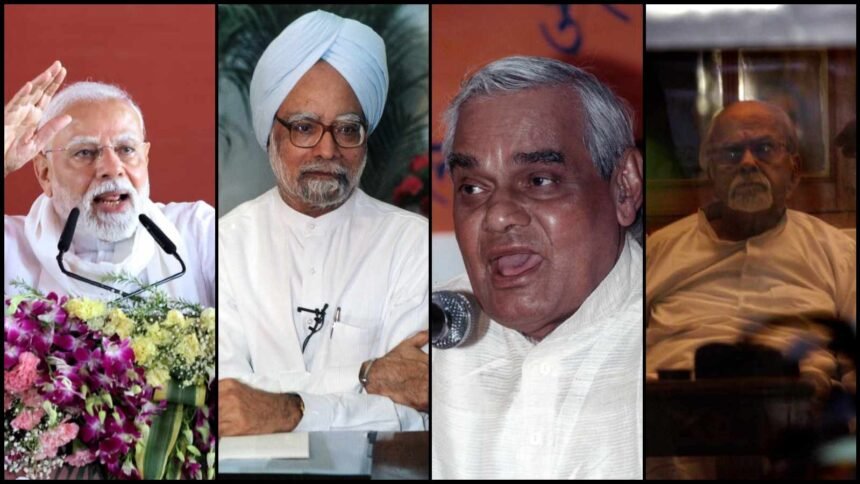
As India awaits PM Modi’s 12th I-Day speech, let us have a look at the first I-day speeches of last 4 PMs India had.

Narendra Modi, August 15, 2014
In his first ever Independence Day speech as a Prime Minister in 2014, Modi, who had recently taken charge of India, spoke of taking India to newer heights. Referring to the 68th Independence Day, he said: “This National festival inspires us to resolve ourselves to lead a life where our character gets refined further, to dedicate ourselves to the nation and our every activity is linked to the interest of the nation and only then this festival of freedom can be a festival of inspiration to take India to newer heights.”
Dr Manmohan Singh, August 15, 2004
Dr Manmohan Singh, who was sworn in as a Prime Minister in 2004, addressed his first Independence Day speech in that year, where he emphasised the need for good governance and “code of conduct for political parties and everyone in public life” to uphold the “values enshrined in the constitution”. He underlined that the power of the people is greater than the power of any government. “But, it is by combining the two that we can make our nation truly great,” he said.
Atal Behari Vajpayee, August 15, 1998
Atal Bihari Vajpayee’s first I-day speech as PM in 1998 came just a few months after the Pokhran tests. Crediting former PM Indira Gandhi for laying the foundation for these tests, Vajpayee reiterated that nuclear tests were not meant for war. He also spoke about resolving all issues with Pakistan and China through discussions.
Inder Kumar Gujral, Augus 15, 1997
Inder Kumar Gujral’s first and last address as India’s Prime Minister coincided with India completing 50 years of Independence on August 15, 1997. Gujral used the occassion to call for a ‘satyagraha’ against corruption. He admitted the ‘hesitation’ in Indian politics to give equal space to women and advocated for equal rights to men and women thereby making gender equity a key theme of his speech.