



Sajan Prakash is obsessed with the idea of getting better by one second these days. One second better than his personal best time in the 200m butterfly event, which came five years ago. Every time he plunges into the pool or enters the gym, a time of around 1:55 is on his mind. For, if he can better his best (1:56.38) by just one second, he walks off from the Glasgow Commonwealth Games in July-August with a medal around his neck.
The 32-year-old believes this will likely be his final year as a competitive swimmer. So, he is determined to go out with a podium finish.

The one-second math in his mind is simple: in Birmingham four years ago, James Guy won bronze clocking 1:56.77, Chad le Clos took silver with 1:55.89 and Lewis Clareburt raced away to gold in 1:55.60. At the recent Singapore National Age Group Swimming Championships, Sajan claimed a silver medal with 1:57.09.
So, he spent all of the last few weeks averaging between 60 to 70 kilometres in the pool. So, he recently travelled to Mangalore for underwater testing, where his actions were slow-mo-ed to figure out whether minor adjustments in technique can help him reduce drag and earn an extra couple of micro-seconds. So, he spent a few weeks at a high altitude training centre in Bhutan and will spend three more weeks at a high-altitude camp in Sierra Nevada in Spain, before heading to the UK for a three-week holding camp before the CWG.
“You train everyday like you’re competing so you can compete in autopilot mode,” Sajan tells The Indian Express at the Inspire Institute of Sport in Vijayanagara, which has been his training base for the last few months. “You feel like s**t when you walk after the hard sessions. Sometimes you cannot move.”
Explaining how hard it is at his level to get better by a second, he says: “After I did the 200m fly in 2 minutes for the first time, reducing that to 1:59 from there took me almost two years. I swam 13 races focusing on finishing a 200m race in 1:59 before it happened. Today, I stand at 1:56.38, which I did in 2021. I have not gone back to that. It’s very hard.”
As Sajan breaks it down, a 200 fly (butterfly) is four laps of the pool, which he manages in about 81 strokes. In the water, he’s acutely conscious of how he will touch the wall, then turn, and how many kicks he does underwater.
Story continues below this ad
Depending on how his body feels, the distance he covers with each stroke varies: he swims about 1.5m to 1.6m per stroke but that drops to 1.45m when he’s fatigued.
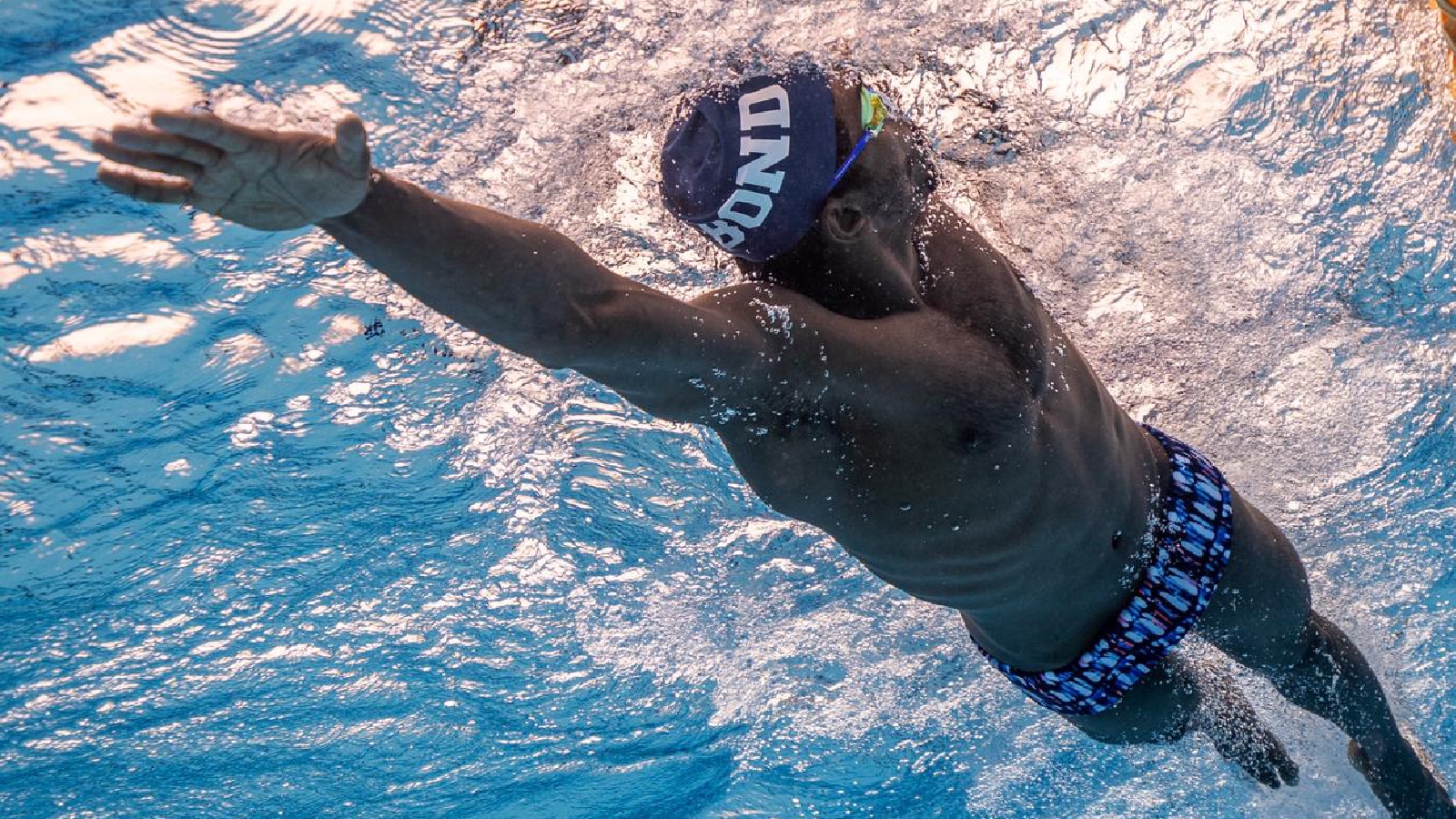 File image of swimmer Sajan Prakash at a training session. (Photo by special arrangement)
Sajan’s challenge
That Sajan’s personal best came five years back tells you about the height of the mountain he’s trying to climb at his age. As Sandeep Sejwal, who has been a teammate, a rival and now coaches Sajan at IIS, explains, the biggest challenge is not putting in the hard yards in the pool, but recovering from the intense workouts.
“When he was 22 or 23, he used to do workouts that others cannot even dream of. He could come back the next day and do it again with the same intensity. Now, it takes him longer to recover,” says Sejwal, who points out that Sajan would do a seven km workout in the morning and repeat the same in the evening.
Their focus, thus, has been on helping him recover faster because if he has to win a CWG or an Asian Games medal, he has to swim fast twice in the same day. Once in the morning to qualify for the final and then in the medal race in the evening.
Story continues below this ad
At the IIS high-performance centre, most other athletes have been told to abstain from taking supplements as much as possible. An exception has been made for Sajan so that he could recover faster, says Samuel Pullinger, head of performance science at IIS.
“Sajan is a special case. He has a very individualised programme, where he has more follow-ups with the nutrition, S&C and performance science teams,” Pullinger says. “We’re seeking marginal gain, trying to get the biggest impact in the shortest window.”
Sajan also has gym sessions every second day where he spends over an hour on strength training. Sejwal points out that after Sajan got the PB in 2021, he suffered an injury that was not managed well.
“He lost a lot of training time because of that,” he says.
Story continues below this ad
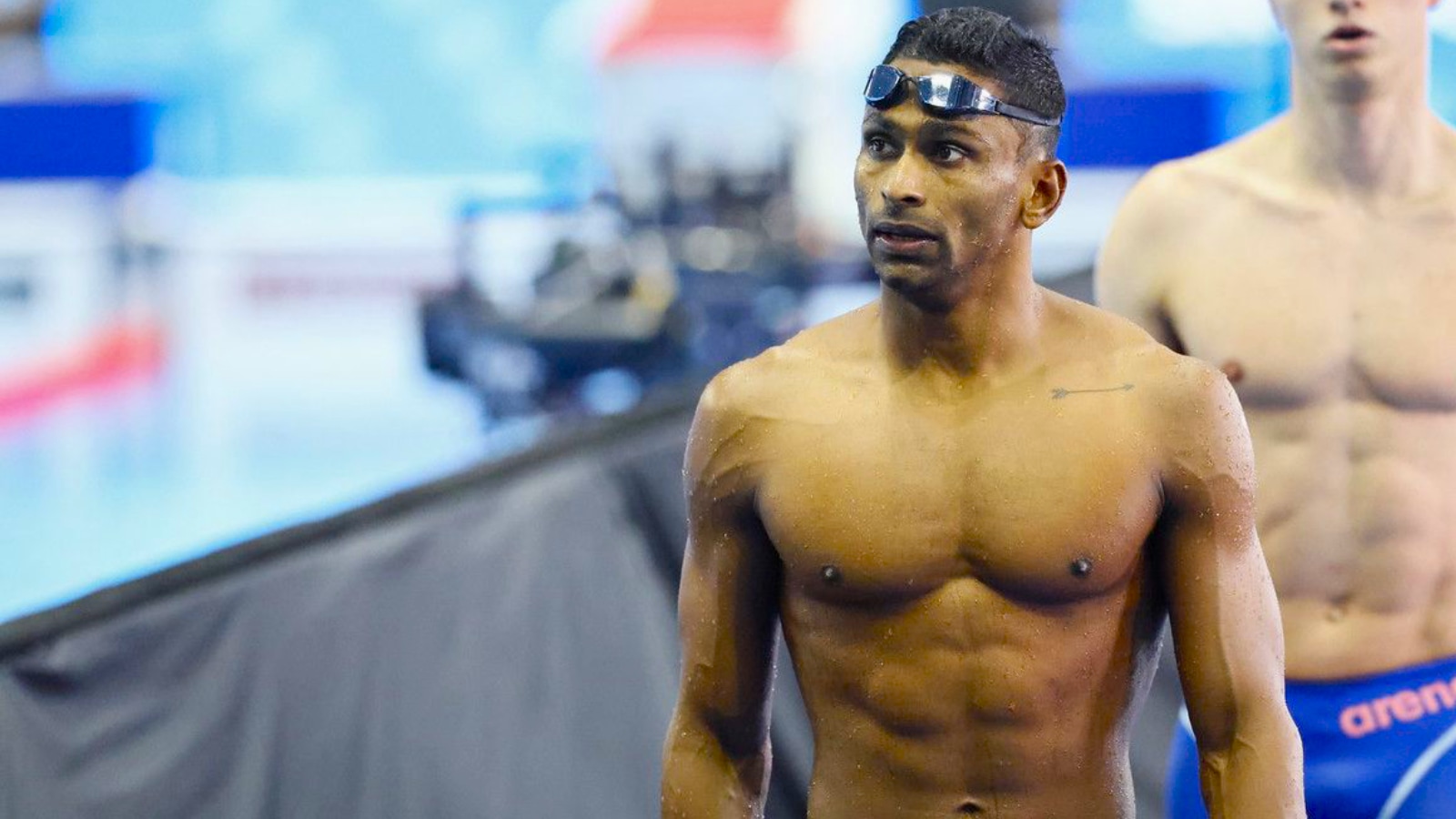 File image of swimmer Sajan Prakash at a training session. (Photo by special arrangement)
What added to Sajan’s challenge was that he quit the sport for around six months in 2025 after feeling a burnout due the rigorous training. His left shoulder and neck have been hurting since 2021. Sajan calls those six months a “big downhill”.
“When I came back from that half-year break, to regain my strength was a challenge. But it was a break that was required,” says Sajan.
Sajan says that in his final year as a swimmer, he’s inspired by the vision of his coach standing on the Incheon Asian Games podium.
It’s why after half a year of downhill, he’s forcing his way against the water, trying to be better than his younger self. “I just want to push myself to end on a high,” says Sajan. “One last push.”
Story continues below this ad
(The writer was in Bellary on the invitation of Inspire Institute of Sport)



