



“You know Gladiator?” asks Shako Bentinidis, and continues without waiting for a response. “He is never thinking about losing, always going for the win. I want to give Indian wrestlers that champion character.”
The funny, eccentric Georgian – who can rattle out dialogues from the Hollywood blockbuster and, in the same breath, recite the spiritual sayings of Sri Sri Ravishankar – will return to India as the men’s freestyle coach. In his first stint as Bajrang Punia’s personal coach, Shako transformed him into an Olympic medallist.
On Tuesday, following an interview, the Wrestling Federation of India (WFI) gave him a bigger responsibility: to coach the national team. “We go next level now,” he says.
Georgia to India via US
Never before has Indian wrestling had an all-foreign coaching staff. Japan’s Kosei Akaishi has been offered the women’s team role, Russia’s Gogi Koguashvili will oversee the Greco-Roman programme, and the USA’s Ian Butler will be the High Performance Director. Once the i’s are dotted and t’s are crossed, the quartet is expected to take over in May.
Among the four, Shako comes in at a very critical moment. India has won six Olympic medals in the last five Olympics in the men’s freestyle wrestling. But there are enough indications of stagnation – or even decline. At the Paris Games in 2024, only one male wrestler – Aman Sehrawat – qualified. Sehrawat has since then been largely off the radar. Sujeet Kalkal, the recently crowned Asian champion in the 65kg category, has filled the void in the Paris to Los Angeles Olympics cycle.
During this period, Shako took up coaching roles with an American University and personal assignments in his hometown, Tbilisi. The US stint was rough, he says, because of homesickness and the American system. “It was good but United States, kill me, kill me. It’s psychological, a very difficult country. Every practice, you are traveling for hours, long distances. And the system is not well, a little bit,” he says.
When the India job came calling, it was a no-brainer even if it meant leaving behind his family once again. “I have watched Indian wrestlers, supported them, seen what has happened in India, the wins, the losses. And I think I can help India,” he says. “100 per cent.”
Story continues below this ad
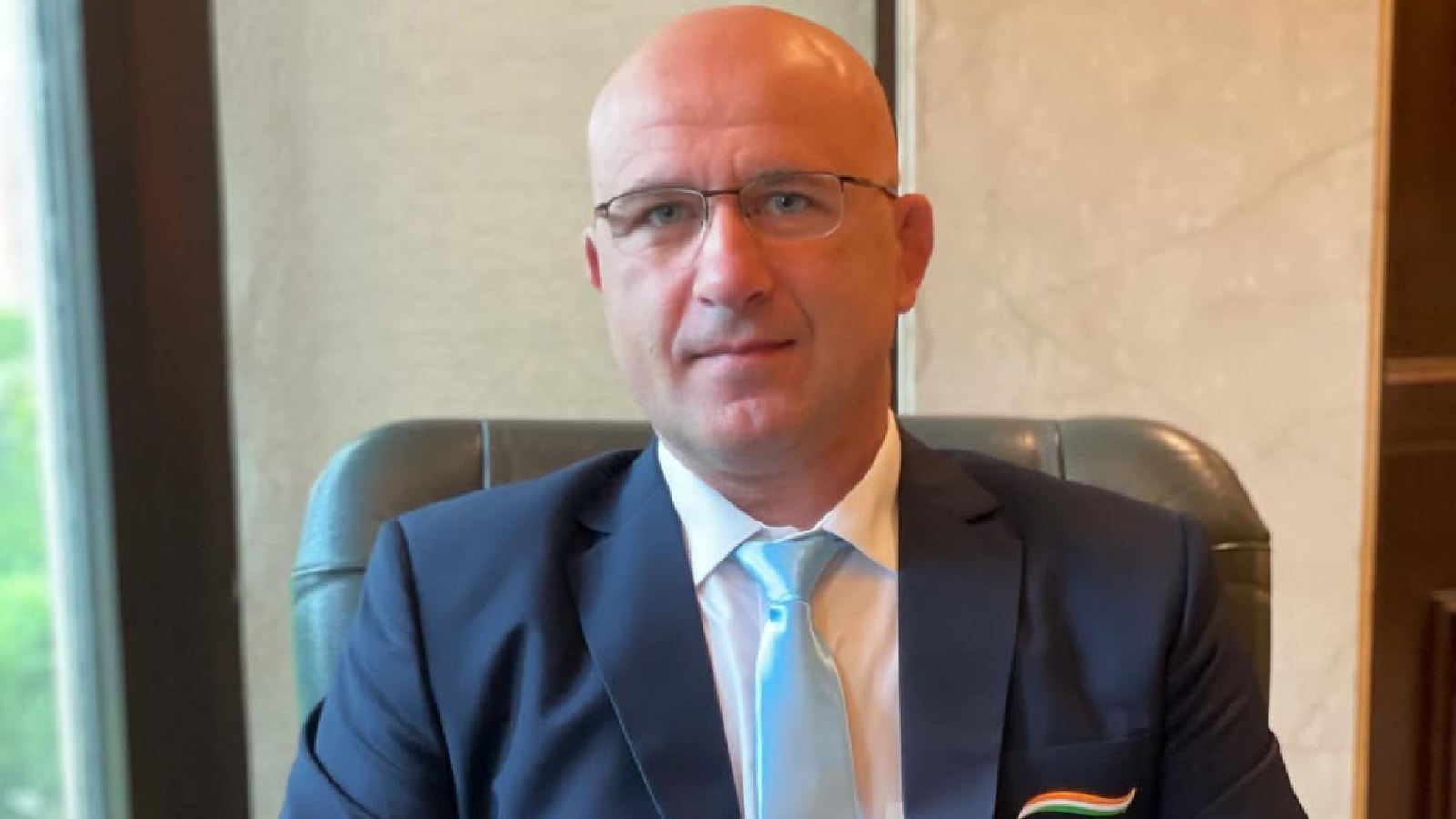 Shako has always been in awe of the unending, relentless stamina of Indian wrestlers. But he also has a peeve. One too many, actually. (Instagram/Shako Bentinidis)
Bajrang certifies this claim. “I benefited immensely. Before I began training under him, I banked more on my stamina to pull through tough matches. He taught me how to balance attack with defence, and more crucially, how to time attacks. I was a much better wrestler technically, and I have no doubt that if he’s given the freedom, other Indian wrestlers will benefit, too.”
‘Winning character’
Shako has always been in awe of the unending, relentless stamina of Indian wrestlers. But he also has a peeve. One too many, actually.
“Physically, I don’t have any doubt,” he says. “But Indian wrestlers don’t have, you know, the winning character. A champion’s character.”
Rather than sparring with international wrestlers abroad, Shako believes the Indians spend a lot of time within the country, training among themselves. “So when you go with a good wrestler, a Russian or an American, an Indian wrestler is thinking, ‘Oh, this is a big country’,” Shako says. “I want them to see their talent, develop a winning mindset, focus like a champion. You can have full power, 200 per cent power, but what’s the point if you don’t have a winning mentality? They must be like a Gladiator. Never think about losing, always go for the win.”
Story continues below this ad
Indians, he hints, must get out of the comfort zones of their akharas. Travel abroad, to places like Dagestan, like Bajrang and Aman did, and even to the US, which has a strong freestyle culture, and expose themselves to different styles, but more importantly, to get rid of the inferiority complex.
His ‘number one priority’ will be to conduct international camps. “The more you train with Russian wrestlers, Georgians, Americans, you understand them, you remember, ‘Ah, I won that time in practice.’ You aren’t just watching them on TV and thinking they are from a different planet. The first time you play, you win a point. The second time, you win a match. And then, you develop a mentality, a character.”
‘Uthak-baithak and gym’
The challenges come from within, too. Shako is intricately aware of the Indian wrestling system with all its roadblocks and arbitrariness.
When he trained Bajrang at the Sports Authority of India’s Sonepat Centre, a wrestling hub, Shako was stunned at the lack of discipline in most athletes. “If there were 100 wrestlers in the line, 15 would come without shoes. The coach would ask, what happened, and they’d go, ‘I have this problem, I have that problem’,” he says. “But now, in my time… no, no. Everybody has to train. If you have a genuine problem, then you go and rest. But only with discipline will you get results. Of course, somebody can maybe win an Asian medal but not the gold. Without discipline, no chance.”
Story continues below this ad
The training sessions can be relentless, as Bajrang experienced. The biggest change in Bajrang’s routine was replacing all gym sessions with technique and speed work on the mat. To build strength, he’d lift his sparring partners. This emphasis on technique showed results – Bajrang started beating almost every wrestler he’d earlier lost to, and also won matches from tight situations.
It’ll be more of the same going forward, Shako says. “You replay techniques. Not 10 times, 20 times, but practice it 200 times. If you don’t understand a technique, how will you learn it? In India, technique is difficult. Everybody goes, uthak-baithak and gym… uthak-baithak and gym (squats and gym, squats and gym).”
Sujeet, ‘amazing wrestler’
Perhaps that’s why Shako gushes when he is asked about Sujeet Kalkal, who wrestles in the same weight category that Bajrang once dominated.
While most Indians, be it Sushil Kumar or Bajrang, have relied on stamina more than technique and aimed to tire out their rivals, Sujeet does the opposite – he puts into practice all the technical drills – his father and coach Dayanand made him do what Shako professes, hundreds of repetitions of each technique – learnt over the years.
Story continues below this ad
“Amazing wrestler, amazing,” Shako says of Sujeet. “With a little bit of tactical advice, with a little bit more power, 10 per cent more power, he will be a dangerous wrestler in Los Angeles in that category.”



