


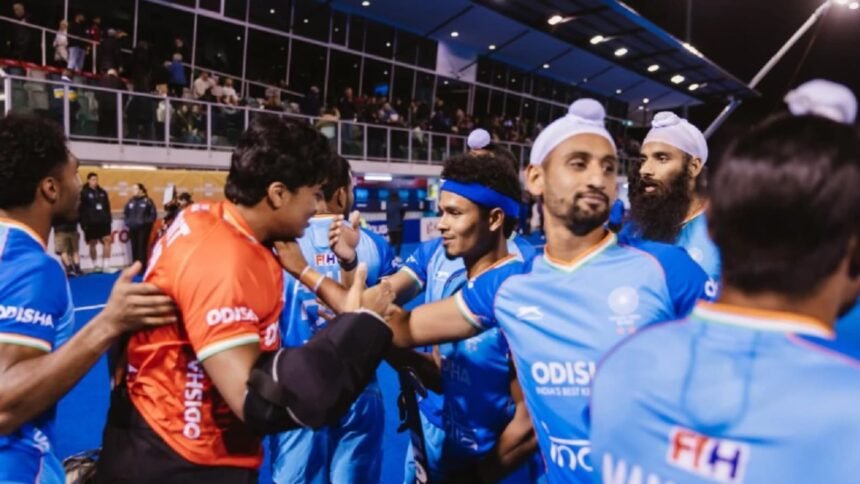
“Our complete focus is on the Asian Games. We can’t rule out the possibility of sending two different teams to the two tournaments (Asian Games and World Cup).” — Dilip Tirkey, Hockey India president.
“We are going to have one squad and are going to base it (the team selection) around that.” — Craig Fulton, India head coach.
When selection trials take place this week, the think-tank must balance two approaches: go all-out in both tournaments, as Fulton suggests, or prioritise the Asian Games, as Tirkey prefers.
India, arguably Asia’s strongest World Cup contender, is caught in a scheduling bind. The World Cup ends on August 30 (or August 28 if they don’t go beyond the semifinals), and within two weeks the team leaves for Japan, where the Asian Games men’s tournament begins on September 18.
The only tighter turnaround was in 1986. India won the bronze medal at the Asian Games on September 29 in Seongnam, South Korea. Six days later, on October 5, their World Cup campaign got underway in London with a defeat to Poland. It was no coincidence that two teams that finished on the podium at the 1986 Asian Games — Pakistan (silver medallists) and India — ended up finishing 11th and 12th respectively at the World Cup.
There has been a gap of at least two months between the two major events since then. Until this year.
A Euro-centric calendar has left Asian teams squeezed.
Story continues below this ad
“If you say that to any of the European teams — that you play the World Cup and, a few weeks later, the European Championships, which is also an Olympic qualifier — they would say, ‘No way, we are not playing.’ But it’s just our situation,” Fulton told PTI last week.
After returning to the Olympic podium, India’s next obvious target would be to end the 51-year wait for a World Cup medal. The recent performances in the FIH Pro League don’t inspire confidence. However, Fulton’s India has been a big-tournament team, evidenced by the gold medal at the previous Asian Games, a bronze at the Paris Olympics and the Asian title last year.
The Asian Games, even though less prestigious, offers direct Olympic qualification — and with it, two clear years of preparation. Tirkey’s caution may stem from being part of the only Indian team to miss the Olympics in 2008.
Ball in Tirkey’s court
Former India coach and captain V Baskaran flagged the risk of the players landing in Nagoya fatigued if the same squad competes in both tournaments.
Story continues below this ad
“You are going to play almost 7-8 games at the World Cup, including the classification matches. Will the players be able to recover after these games in 15 days? Will Fulton and his team be able to pull off the magic in 15 days? There’s also the challenge of staying injury-free, since the World Cup games will be more physically challenging,” Baskaran told The Indian Express.
He urged Tirkey to make the decision, rather than leaving the call in Fulton’s hands. “Asian Games, to me, is an easier way to qualify for the Olympics. I am going by past performance,” Baskaran said. “Dilip Tirkey, who has played at the highest level, himself has to make a decision. Why has Hockey India remained quiet on this issue? They should tell Fulton which team to take where. I have the utmost respect for Fulton, but who will answer the people of India if we do not do well?”
A national team selector, requesting anonymity, said at selection meetings, they are the ‘sounding board’ for the chief coach’s ideas and ultimately, his say is given more weightage. Unlike Tirkey’s idea of having two different teams, Fulton has suggested a squad of 24 players and picking the 18 for both tournaments from that group.
“That’s why 14-15 months ago, we started the India A team, and we have been building depth in our squad so that we can cover two tournaments. So it’s all part of our plan,” Fulton said last week.
The selector concurred with Fulton’s plan.
Story continues below this ad
“If we pick two completely different teams, the group for the Asian Games won’t get to play competitive games for at least a month, which isn’t ideal. Also, the World Cup is way too prestigious for us not to send our best players. The middle path would be to keep the core the same for both tournaments, and rotate just 3 or 4 players. Some players may not be able to handle the load of both tournaments in such a short time. So, the inputs of the coach and the scientific advisor will be essential too.”
In this schedule quagmire, India’s dilemma is clear: play it safe, as the federation chief demands; or push for double glory, what the coach aims for.
Tight schedule
The turnaround time between this year’s World Cup and the Asian Games is the shortest since 1986
1986: 6 days
1990: 7 months, 1 day
1994: 1 month, 10 days
1998: 6 months, 5 days
2002: 6 months, 21 days
2006: 2 months, 25 days
2010: 8 months, 2 days
2014: 3 months, 5 days
2018: 3 months, 8 days
2023: 7 months, 26 days
2026: 21 days