

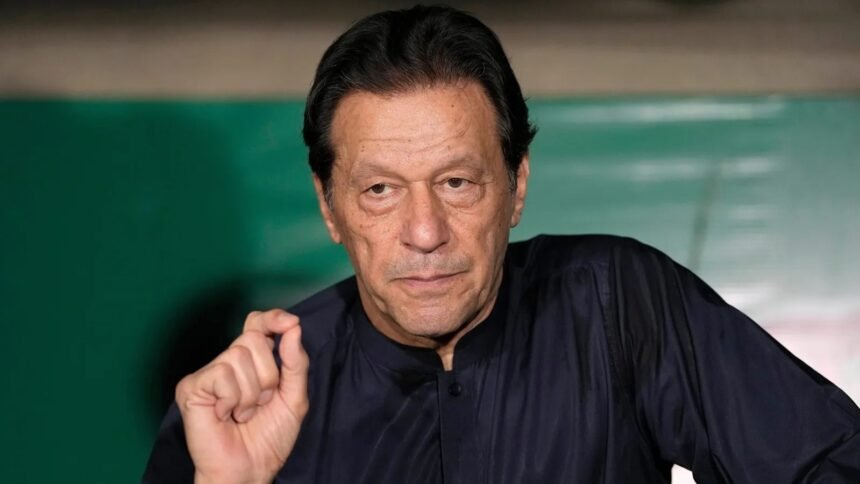
When former Pakistan captain Imran Khan was first arrested in May 2023, before being transferred to Rawalpindi’s Adiala jail following a second arrest later that year, nobody could have envisaged that his imprisonment would approach 1,000 days.
His incarceration has drawn sustained concern over prison conditions and his health, particularly reports of deteriorating eyesight in his right eye, as well as restricted access for family members and his personal doctor.

His sons, Sulaiman and Kasim, spoke to their father last week after almost a two-month silence. The senior Khan began with life lessons before allowing his sons to speak.
“We usually start by asking how he is, but we quickly realise that he’s quite keen to give us the lessons that he wants to teach us because he feels he has learnt so much more since he has been in prison, and he’s finally had time to think and gather his thoughts. So he normally tries to give us a life lesson in the first ten minutes, and then we tell him what we’ve been doing with our lives,” Sulaiman told The Times.
His younger son, Kasim Khan, suggested that while Imran has downplayed his physical struggles, there remain concerns within the family.
“We asked how he is physically, but he’s quite dismissive of that stuff. He said, ‘I’m doing OK,’ and he said his eyesight is getting a little better, so I took that as a positive. He was especially concerned this time about his wife; apparently, her conditions are just as bad as his. He said they know they are never going to break him, and he feels that he can handle anything, but when family and other people are involved, it gets tougher,” Kasim said.
Despite this, he indicated that his father has adapted mentally to the environment.
Story continues below this ad
“He’s come so far mentally and spiritually that I think in his mind he sees this as a trial he has to go through. I don’t think he’s affected in a way he would have been even, say, ten years ago. He’s in a place where he thinks if it has happened this way, then that is how it has to happen, despite how harsh and brutal the conditions are and how detrimental they are to his physical well-being,” Kasim said.
“There would be these blackouts. He’d say the first two days were brutal, but from then he just got into this kind of meditative state and learnt how to meditate and go inside of himself. Funnily enough these torture tactics have taught him how to stay in there for longer,” he added.
Kasim also alleged restrictive conditions inside the jail, pointing to what he described as attempts to limit access and visibility.
“What they [the authorities] fear I think is public attention; they just want to keep everything quiet; keep them silently hemmed in and just slowly whittle away any kind of strength from the movement. You can see that in their petty tactics when people challenge the conditions [that Imran is in]. They try and silently remove small liberties. Like he’s not allowed any new books or they will turn off the power in the cell,” he said.
Story continues below this ad
The concerns have also drawn intervention from the cricketing world last month, with Sunil Gavaskar, Kapil Dev and a group of former international captains writing to the Pakistan government seeking “humane treatment”. The letter flagged worries over his deteriorating condition in jail, particularly reports of vision loss in one eye, and called for proper medical care and dignified treatment.
Reflecting on his father’s political life, Sulaiman also acknowledged the risks that came with it.
“I used to hate him being in politics when I was younger. I’d wish he’d do cricket analysis or something. I remember when he had a stand-off with a politician in Karachi, a mafia sort of character. I’d beg him to get out of politics but he’d laugh it off and I basically came to realise that he wouldn’t be happy if he wasn’t doing politics or something that he felt was really impactful and risky, so I’ve got used to it as I’ve got older,” he said.