

4 min readJammuMar 23, 2026 10:05 PM IST
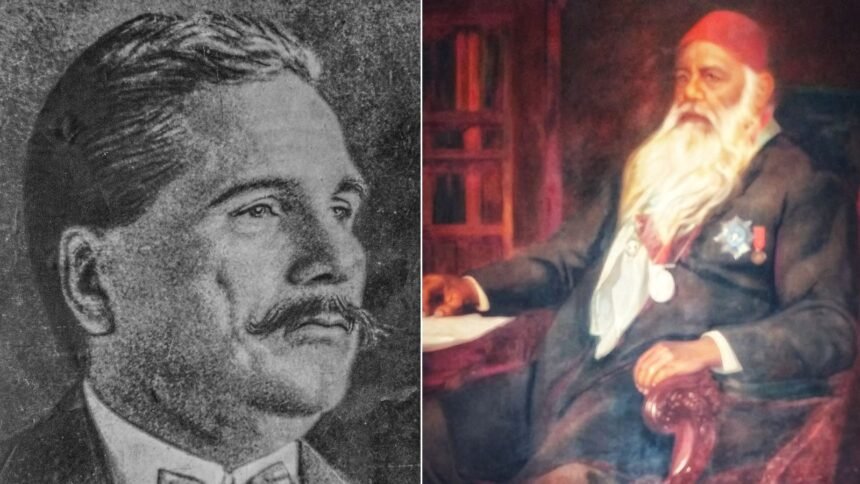
The recommendation by a Jammu University committee to remove topics related to Muhammad Iqbal and Sir Syed Ahmed Khan, along with a topic on Muhammad Ali Jinnah that had sparked a controversy, from the Political Science department’s curriculum has been criticised by ministers of the Omar Abdullah-led J&K government as well as by members of the Opposition BJP.
The recommendation came on Sunday, following a controversy over the inclusion of Jinnah in a chapter on “minorities and nations” in the syllabus of postgraduate courses at the department. The ABVP protested this, arguing that it portrayed Jinnah as a leader of minorities in India. Subsequently, Vice Chancellor Umesh Rai set up a committee headed by Professor Naresh Padha of the Physics department to examine the Political Science syllabus. The committee recommended the removal of topics on not just Jinnah, but also Iqbal and Sir Syed.

Describing the recommendation as “laughable and an anti-scholarly act of intellectual vandalism”, Javed Ahmed Rana, minister for Jal Shakti, Forest and Tribal Affairs in the J&K government, said that “by erasing these foundational figures of political thought, JU is transitioning from a site of critical pedagogy into a propaganda apparatus for RSS supremacism”.
“This is a deliberate attempt to manufacture ideological bigots rather than nurturing inquisitive citizens,” he said in a post on X.
He called on the university to “stop acting as a laboratory for historical revisionism” and said, “It should instead leverage its academic autonomy to promote a culture of dialectic enquiry and intellectual pluralism, making students restless and inquisitive rather than mere docile propagandists.”
Meanwhile, a BJP leader from Jammu and Kashmir’s Chenab Valley region, Dr Jahazaib Sirwal, in a letter to the Union Minister for Education, appealed for reconsideration of the proposed omission of topics on Sir Syed Ahmad Khan and Muhammad Iqbal from the syllabus.
Describing the matter as being of “considerable gravity”, he described Sir Syed and Iqbal as two luminaries whose names are woven indelibly into the tapestry of modern India’s intellectual and moral awakening. “This proposed step, however well-intentioned in its immediate academic framing, carries within it the unintended peril of diminishing the very inheritance we are duty-bound to transmit to succeeding generations,” he said.
Story continues below this ad
Sir Syed Ahmad Khan was no ordinary reformer, Sirwal said, adding that he stood at the crossroads of tradition and modernity when the nation itself was in ferment. Through the establishment of the Muhammadan Anglo-Oriental College — the seed from which Aligarh Muslim University grew — he sought not merely to impart knowledge but to reconcile faith with reason, loyalty with progress, and community pride with national belonging, he added.
Sir Syed’s was a labour of reconciliation in an age of fracture; his writings on the events of 1857 and his persistent advocacy for scientific temper remain among the most lucid contributions to India’s quest for self-understanding, said the BJP leader.
On Iqbal, Sirwal said the poet gave voice to the deepest aspirations of the Indian spirit. His verse, Saare jahan se achha Hindustan hamara, “is a declaration of belonging, a hymn of love for this ancient land that has been sung by children and statesmen alike across every divide of creed and region,” Sirwal said.
“To remove such voices from the syllabus of Political Science — a discipline concerned precisely with the ideas that shape polities and peoples — is to risk impoverishing the very discourse through which we seek to comprehend our shared past and imagine our common future,” he argued.
Story continues below this ad
Lauding Prime Minister Narendra Modi for pursuing the “noble path of integration, healing and shared destiny”, Sirwal said that “any action that appears to selectively erase figures of such stature must give us pause”.