


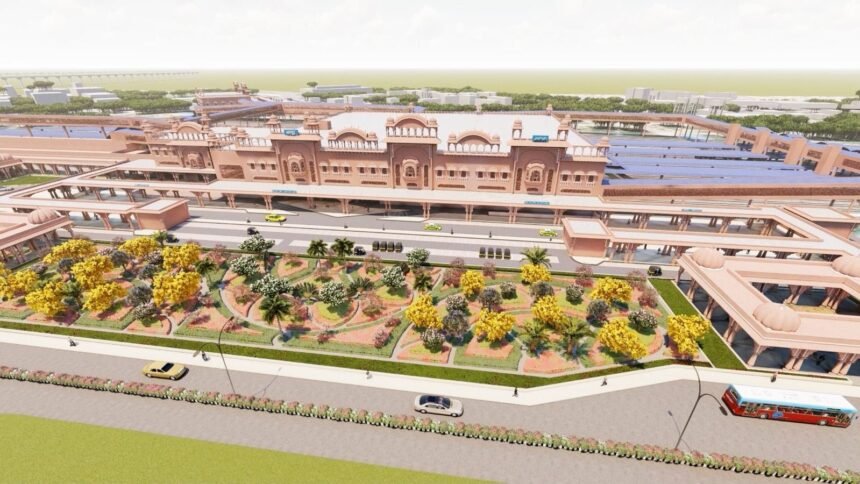
Jaipur railway station: The Ministry of Railways is planning to develop new terminals to reduce congestion at 151-year-old Jaipur Junction railway station. The initiative aims at strengthening suburban railway stations, reduce pressure on the busy Jaipur Junction by diverting passenger traffic to other stations across the city. The Jaipur Junction railway station falls under the administrative control of North Western Railway (NWR) zone.
Presently, Jaipur Junction is one of the busiest stations in the region, with around 268 trains operating daily and more than one lakh passengers boarding or deboarding every day. This railway station was established in 1875 during the reign of Maharaja Sawai Ram Singh II. It is one of the oldest and busiest railway stations in Rajasthan. It was built as a major link between Jaipur and Bandikui under the Rajputana-Malwa Railway.

Speaking to Indianexpress.com, Amit Sudarshan, Chief Public Relations Officer (CPRO), NWR said the heavy passenger footfall has made it necessary for the railway administration to adopt a decentralised terminal strategy, under which suburban stations will be upgraded to handle a larger share of passenger and operational traffic.
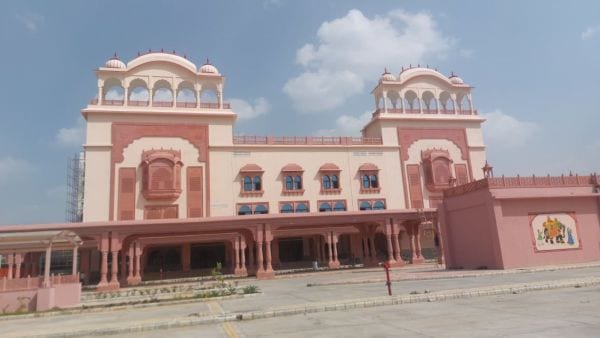 Jaipur Junction railway station (Image: NWR)
New terminals to ease rush at Jaipur railway station
The national transporter has decided to upgrade existing terminals with additional platform lines, stabling lines, pit lines and advanced shunting facilities to improve the handling capacity of coaching trains. It also planned to develop new railway terminals within and around the urban area. The new terminals will include facilities such as Mega Coaching Complexes, enabling the railway system to manage increasing train operations more efficiently.
In addition, the NWR also planned to improve infrastructure facilities such as signalling upgrades, traffic facility works, and multi-tracking of rail sections to accommodate a larger number of trains.
Gandhinagar Jaipur railway station
Gandhinagar Jaipur railway station is set to play a significant role in the coming years. In the last few years, stoppages have been provided for 82 trains at this station, resulting in around 14,000 passengers using the station daily.
Development of Khatipura station as satellite terminal
The Railways also planned to develop Katipura railway station as a satellite terminal. This will help in improving train punctuality, operational flexibility, and the possibility of introducing new routes.
Story continues below this ad
Currently, the station handles around 2,500 passengers daily with 16 trains halting there. To enhance its operational capabilities, a Coach Care Complex is being developed at the station with an estimated cost of Rs 205 crore.
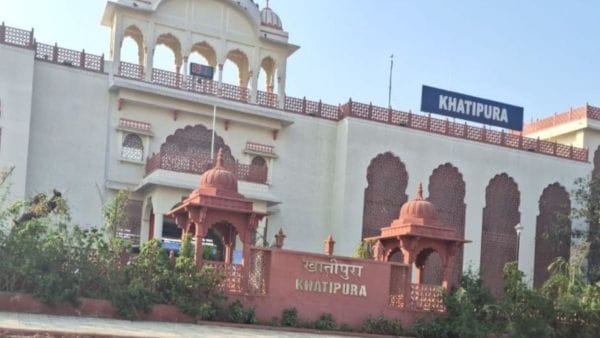 Khatipura railway station (Image: NWR)
This facility will expand the station’s train maintenance capabilities by introducing new railway lines, washing pits, stabling lines, and other technical infrastructure, he said.
The complex will be capable of maintaining various types of rolling stock including Vande Bharat trains, LHB coaches, and DEMU rakes, enabling centralized maintenance for multiple train categories.
Development of Dahar Ka Balaji railway station
The zonal railway is upgrading Dahar Ka Balaji station to handle more trains and passenger traffic. Currently, about 26 trains halt at the station each day, catering to nearly 4,500 passengers daily. It is developing a second entrance at a cost of Rs 13.5 crore. In addition, the installation of two lifts is underway, and a proposal to expand the platform shelter is also in progress.
Story continues below this ad
Coaching terminal at Bhatton Ki Gali
According to the proposal, the NWR will develop Bhatton Ki Gali railway station near Dher Ka Balaji railway station as a Mega Coaching Terminal. The first phase of the proposed Bhatton Ki Gali terminal involves an investment plan of about Rs 800 crore.
The project will include advanced railway infrastructure such as: pit lines, washing lines, stabling lines, sick lines for coach maintenance. These facilities will allow the maintenance and servicing of Vande Bharat and other modern train rakes, thereby strengthening Jaipur’s railway maintenance ecosystem. The development of this terminal will not only reduce operational pressure on Jaipur Junction but also improve rail connectivity toward the Sikar region and northern rail corridors.
Redevelopment of Sanganer railway station
The Sanganer railway station is being redeveloped under the Amrit Bharat Station Scheme with an investment of around Rs 107 crore. Currently, around eight trains halt at Sanganer station, serving nearly 1,500 passengers daily. The redevelopment project will introduce modern passenger amenities such as: lifts and escalators, improved waiting halls and sanitation facilities, renovated station buildings and separate entry and exit points.
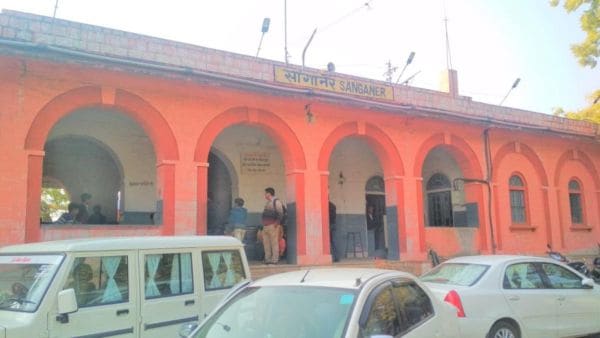 Sanganer railway station (Image: NWR)
These improvements will benefit passengers from the southern parts of Jaipur, particularly residents of Pratap Nagar and Sitapura, and will also support business travellers heading toward major destinations such as Kota and Mumbai.