


3 min readJaipurMar 11, 2026 07:09 AM IST
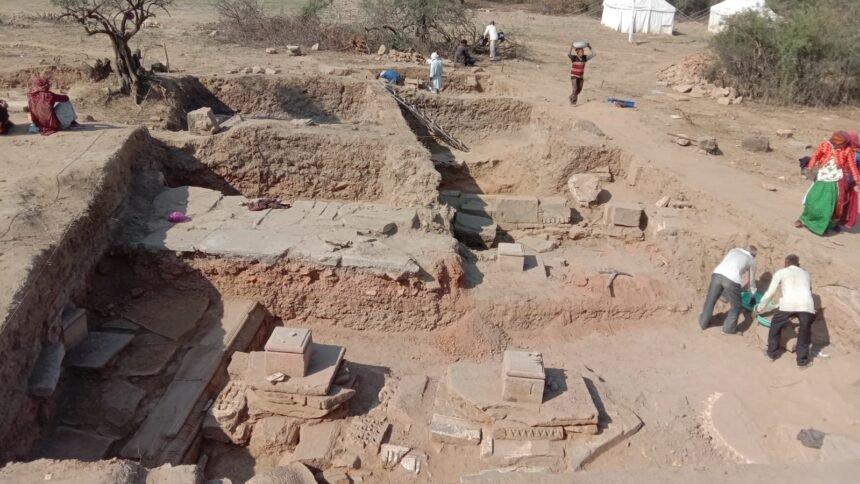
Archaeological excavations at Ridh Ka Tila (Raida), near Tyonda village in Khetri tehsil of Rajasthan’s Jhunjhunu district, are offering fresh insights into the ancient history of the Shekhawati region. The excavation, being carried out by the Rajasthan State Department of Archaeology and Museums, has unearthed a wide range of antiquities indicating that the site remained an active centre of human habitation and religious activity from ancient times up to the early medieval period of the 10th to 12th century.
The mound, locally known as Reeḍh ka Tila, has yielded significant archaeological material during the ongoing excavation. Among the most notable discoveries are fragments of stone sculptures, architectural components related to temple structures, terracotta objects, metal tools and a large quantity of pottery.

Dr Vineet Godhal, Superintendent (excavation) at the State Archaeological Department, told The Indian Express, “Several fragments of stone idols have been recovered during the excavation, including pieces believed to depict the Hindu deities Lakshmi and Ganesha. The stylistic features, carving techniques and overall craftsmanship of these sculptures indicate that they likely date back to the 11th–12th centuries CE.”
Multiple architectural elements associated with temple construction have also been uncovered. These include carved stone pillar fragments, portions of doorframes, decorative stone blocks and foundation stones. Based on these findings, experts believe that a sizeable religious structure may have existed at the site, serving as a focal point for the surrounding community.
 Multiple architectural elements associated with temple construction have also been uncovered.
Dr Godhal said that in addition to monument remains, numerous smaller artefacts have also been found. These include miniature terracotta figures and decorative objects, which provide glimpses into the social life, aesthetic preferences and craft traditions of the people who once lived in the region.
Metal objects discovered include iron nails, clamps and fragments of tools. Such items offer important insights about construction methods and technological knowledge during the early medieval period. Small fragments of copper and other metals recovered from different parts of the mound also indicate the use of diverse materials in everyday activities and craftsmanship.
Officials further said that a particularly large collection of pottery fragments unearthed belong to the red ware category and appear to have been made on a potter’s wheel. The remains include parts of storage jars, bowls, cooking vessels (handis) and other domestic containers of varying sizes and shapes. “Burn marks found on several vessels suggest they were regularly used for cooking and household purposes. Taken together, the sculptures, architectural remains, pottery and other artefacts suggest that Reeḍh ka Tila functioned as an important settlement and religious hub in the region,” said Dr Godhal.
Story continues below this ad
Pottery fragments, terracotta pieces and stone architectural remains have been found at various levels of the excavation trenches, indicating that the site witnessed multiple stages of occupation.
Archaeologists believe that continued excavation and detailed study of these findings will provide further insight into the long cultural sequence of the region.