


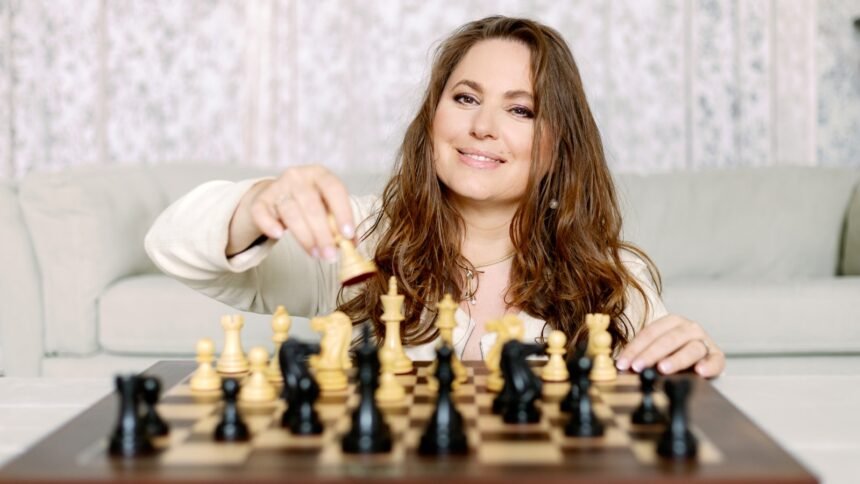
Tracing the career of one of the greatest players in chess history, the documentary by Rory Kennedy focuses on Polgar’s quest to prove to the world that a woman player can be among the best in the world. On her way to doing so, she ventured off the comforts of the path well travelled to compete only in open events, defeating 11 world champions and entering the top 10 in the world.
In an exclusive interview with The Indian Express, Polgar opens up about the documentary, her rivalry with top players like Garry Kasparov (who opens up in the documentary about the ‘touch-move’ controversy in a game where Polgar could have defeated him), and the lessons she hopes today’s generation can take from her career.
Excerpts:
The Queen of Chess focusses on your journey to being among the best in the world rather than just being the top female chess player. From your career, what are the lessons that you wish current players, especially women players, pick up?
Judit Polgar: There are some things they cannot control, like what family support they have. But when the girl gets older, she can control which coach she’s working with. It’s very important to have a support system around you, which believes in your capability of chess and not as a woman or a woman player in chess. They believe in your talent, your dedication, your devotion to the game. That’s very important because a mindset — what she believes she can do — defines where a person will reach. You don’t need many people who support you a hundred percent. You need one or two people who believe in you. The others who are sceptical about you can even fuel your success, which was in my case as well because there were so many people saying negative things. But you have to have a support system in order to be able to move forward, handle the losses, the bad events, to be able to stand up and fight again.
You set an example for female players because you defeated 11 world champions. You showed them the path. Do you feel that more female players should be playing in open tournaments right now?
Judit Polgar: I think India is the right place where actually there are some talents, girls who are actually going in open competition and playing games with boys mostly. I do think that it shouldn’t be an issue whether you play with girls or in open competition. The question is always about the strength of competition you play in. Girls can be just as good as boys when they are eight years old. So it doesn’t really matter whether the girl or a boy is a 1200-rated player. The important thing is that the strength of the competition you play in is a challenge for you. I would just put the whole girls-boys distinction aside. I would see what level of players they are playing and what is the best for them to improve at the level they are standing at the moment. It’s very important that the parents keep their patience, which is maybe the most difficult, because in chess, you may work hard every day and you don’t see a result. I think when the kids are small, patience is more important for the parents than the kid.
Story continues below this ad
ALSO READ | Judit Polgar interview: ‘I believe the next Judit Polgar should come from India’
What were your feelings when you saw the documentary yourself? Was it a strange experience to see your life immortalised, but also watch the archival footage that you may not have seen before?
Judit Polgar: It was a long journey for me until I could see it on the canvas in the cinema. After The Queen’s Gambit, there were a lot of filmmakers who reached out to me and my team. And by the time Rory Kennedy connected with me, I had four different documentary makers who were in contact. I even had some initial meetings with two of them. And then suddenly, Rory Kennedy writes an email to us saying that she just saw the pitch (for the documentary) and she’s so excited. Can we have a talk? I had this meeting with Rory and it was amazing to hear that she was so enthusiastic about the idea. It’s incredible that she knew about Garry Kasparov and Bobby Fischer, but she said: “how is that possible that I have never heard of you? This is a story which everybody should know.” This is how we started out.
It was very challenging. Because when you make a documentary, basically you pick someone who you trust, you give your life into her hands and you’re praying about what will come out of it. Will it be something that you like? Will you like things about yourself? About your family? About how authentic (it is)? In my life, there are so many different threads that it’s not so easy to decide which one you’re picking. So the part of my life that ended up in the documentary is only half of my life.
Story continues below this ad
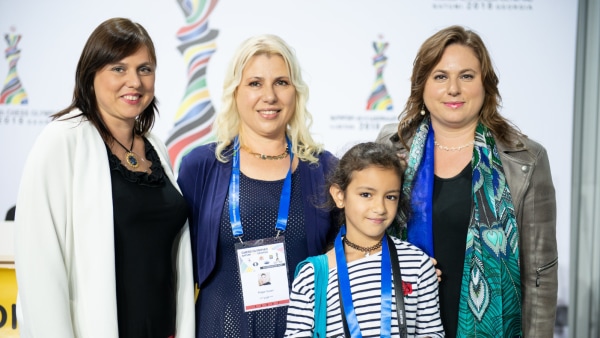 Susan Polgar (centre) and Judit Polgar at the Batumi Chess Olympiad in 2018. (PHOTO: FIDE/David Llada)
To get the archival footage, I was helping her quite a lot to connect with people who are in the film. Garry Kasparov was last in the line to do the interview. I actually saw the movie just a few days before it was streamed. I had watched some parts for fact-checking and so on. But when I finally saw it, it was great. It was a very special experience when at the Sundance Festival, where it was aired, there were 1,200 people watching it.
So the director had not heard of you before. She’d heard of Kasparov, she’d heard of Fischer, but not you?
Judit Polgar: She had nothing to do with chess in her life. She’s a documentary maker. She’s in politics in some ways and her family has a huge history. But she was just not close to chess. And in America, chess was not so popular anyway. After Fischer, it was drowning. And Kasparov lives in the United States, so she had heard of him, but she was not at all connected to chess by any means.
ALSO READ | Judit Polgar believes ‘there’s big question mark on Gukesh remaining world champion’ at end of this year
Story continues below this ad
How complicated was it to convince Garry Kasparov to come on board? There are things about the ‘touch-move’ controversy. So for him to come and speak about it, when he knows that he might come off as not so good. How complicated was that?
Judit Polgar: I only connected the director with Garry Kasparov and his team. After that, it was their move to figure this out. First of all, Garry and I have a very sound, very good relationship. We have great respect for each other, which comes across in the film also. But basically, he did not give much time to Rory for this. What he did understand was that obviously, with him or without him, this incident will be part of the movie. And then he had to make his decision on how much he wants to be part of it in person. Rory reached out to him personally, and then somehow she convinced him that it’s so much better not only for the film, but also for him, to be able to tell his own version of the incident.
ALSO READ | Move over, Beth Harmon: New documentary on Judit Polgar details the gambits that shaped a queen
A significant portion of the documentary focuses on your rivalry with Garry. What was that like from your perspective?
Story continues below this ad
Judit Polgar: When I started to become good at chess, I grew up in a family where everything was set up for me to be able to dream and set my mindset so that I can reach the highest level. The film focuses on this rivalry with Garry. But of course, I had many people who were rivals for me in the top 10. With Kasparov, basically, I won only one game. I made this double draw in Linares in 2001, which was the key game in my life with Kasparov, because chess-wise, it was so tense. I had many big matches with the big guys. Anand was one of the guys who had a rivalry. In 2003, when I entered the top 10, there was a race between Anand and me for first place in Wijk aan Zee. So, I had many big matches and big fights against the very top players. And for me, of course, it is at least as important as the rivalry with Kasparov.
In a film, they had to pick some very clear thread, which goes very well for the audience of chess players as well as for someone who never heard of chess or about my name. What I found amazing is that the work she did gets me continuous feedback from people who have no idea about chess, but also from people like Levon Aronian who wrote a fantastic post about how much he treasured my achievements.