


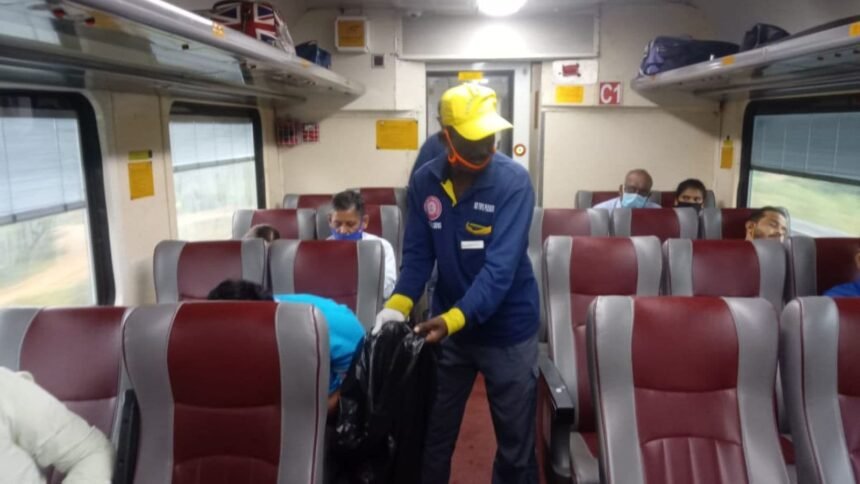
Train waste disposal norms, Indian Railways waste management: To enhance cleanliness and ensure a more comfortable travel experience for passengers, Indian Railways (IR) has issued strict guidelines for the systematic collection and disposal of garbage from trains during the journey. Recently, the Railway Board (RB) released detailed instructions to all Zonal Railways to enforce proper waste management throughout the journey.

Waste management in Indian Railways
The Railway Board’s instructions reinforce a mechanism where On-Board Housekeeping Service (OBHS) and Pantry Car staff are mandated to collect garbage from passenger compartments and dispose of it in sealed bags at specifically nominated stations enroute. This aims to maintain the cleanliness of both the train interiors and the railway infrastructure.
Train waste disposal new guidelines
A key focus of the new order is the role of the on-board staff in delivering a hospitable and comfortable journey. “By ensuring a clean and waste-free environment within the coaches and toilets, the staff contribute significantly to passenger comfort and safety.
The Board has directed that these frontline staff, who are largely contractual, must be adequately trained and equipped by the Zonal Railways to fulfil these responsibilities effectively, reflecting a spirit of service,” it said in a statement.
Story continues below this ad
Indian Railways waste disposal mechanism on trains
The Railway Board’s instruction also highlights a strict compliance mechanism. “The licensees of OBHS and Pantry Car services will be formally counselled on these guidelines. Any violation will be treated as a major breach of contract, initiating termination proceedings against the defaulting parties,” the RB said.
The RB’s new initiative builds upon earlier instructions issued in July 2024, which outlined a system for mandatory en-route garbage disposal. According to release, that system included conducting work studies to assess garbage generation, fixing a minimum number of garbage bags to be disposed of at designated stations, and entering this data into a centralized management system (CMM system of CRIS) for effective monitoring.


Stay updated with the latest – Click here to follow us on Instagram
© IE Online Media Services Pvt Ltd